Physical Address
Bankura, West Bengal 722142
Physical Address
Bankura, West Bengal 722142


Most travel aggregators and automated map apps will confidently tell you the Gangtok to Darjeeling distance is 98 kilometers and the drive takes exactly 3 hours and 30 minutes. Some blogs even talk about flight and train options just to stuff their pages with keywords.
Don’t believe them. You can’t fly, and there are no direct trains. You will also never finish this drive in three and a half hours. The trip takes at least 4 to 5 hours. You have to fight heavy mountain traffic, wait behind slow army trucks, and climb the very steep Peshok road.
At Brief Voy, we only give you the real facts. Below, you will find the actual routes, the exact 2026 taxi prices, and what the roads really look like in different seasons. Here is everything you actually need to know about crossing from your tour of offbeat places in Sikkim into West Bengal.
If you just want the basic details right away, here is exactly what to expect.
| Transport Type | Travel Time | Cost | Where to Get It in Gangtok |
| Shared Jeep (Sumo) | 4.5 to 5.5 Hours | ₹400 – ₹600 a seat | Deorali Taxi Stand |
| Small Private Car (Swift/WagonR) | 4 to 4.5 Hours | ₹3,000 – ₹3,500 total | Hotel Pickup or Taxi Stand |
| Big Private Car (Innova/SUV) | 4 to 4.5 Hours | ₹4,000 – ₹5,500 total | Hotel Pickup or Taxi Stand |
| Train | None | None | No train tracks connect them |
| Direct Bus | None | None | Read the warning below |
Trying to find a cheap government bus directly from Gangtok to Darjeeling? Stop looking. They do not exist. If you really want to travel by bus just to save money, you are going to put yourself through a massive detour.
First, you have to get on an SNT (Sikkim National Transport) bus heading down from Gangtok to Siliguri Junction. That leg alone eats up 4.5 to 5 hours. Once you reach Siliguri, you will be stuck waiting around the chaotic bus stand for 1 to 2 hours until the next connection arrives. Finally, you board an NBSTC (North Bengal State Transport Corporation) bus and spend another 3.5 to 4 hours driving all the way back up the mountains into Darjeeling.
Think about the math. A straightforward 98 km taxi route takes four and a half hours. The bus route forces you into a 180 km loop that wastes 8 to 9 hours of your day.
Losing a whole day of your vacation to save ₹200 is a terrible trade. Just walk down to the Deorali taxi stand and book a seat in a shared jeep.
The drive between Gangtok in Sikkim and Darjeeling in West Bengal is never a straight flat line. You don’t just drive across the mountain tops.
First, you have to drive all the way down to the river valley at Teesta Bazaar. Then you cross the state border. After that, you face a brutal, steep climb right back up into the hills of West Bengal. The whole journey is basically a giant “V” shape. That huge drop and climb is exactly why a short 98 km trip eats up half your day.
Your map app might say the trip takes exactly 3 hours and 30 minutes. The app is guessing that your car will cruise at a steady 30 km/h without ever hitting the brakes. But out here, that never happens.
First off, you will hit the Rangpo Checkpost. This is the state border, and police check all the commercial vehicles here. Expect to sit in dead traffic for a good 20 to 30 minutes.
Once you get past that, you are on NH10 in the Teesta Valley. This is a very narrow two-lane road packed with heavy army trucks and supply lorries. If you get stuck behind one slow-moving truck, you are trapped for miles.
Finally, you reach the famous Peshok climb. Driving from the river up to Darjeeling is insanely steep with blind hairpin turns. Even good drivers are forced to drop their speed down to just 15 km/h on this stretch.
You only have two realistic ways to drive between Gangtok and Darjeeling. Most drivers will take Route 1 automatically. You still need to understand Route 2, though, especially if a rockfall shuts down the main highway.
This is the road almost everyone takes. You drive along National Highway 10 right beside the Teesta River all the way to Teesta Bazaar. Once you get to the bazaar, your car swings right and starts heading up Peshok Road.
Watch Out for Motion Sickness on Peshok Road: This uphill run gives a lot of people severe carsickness. You start down near the river basin close to sea level and shoot straight up to 7,000 feet in very little time. The road is just non-stop, tight curves one after another. If you usually get dizzy or sick in the hills, take your motion sickness pills before you hit Teesta Bazaar, not after the climb begins.r.
Google Maps will almost never tell you to go this way. Taking this road adds about 20 km to your trip and costs you an extra hour and a half of driving.
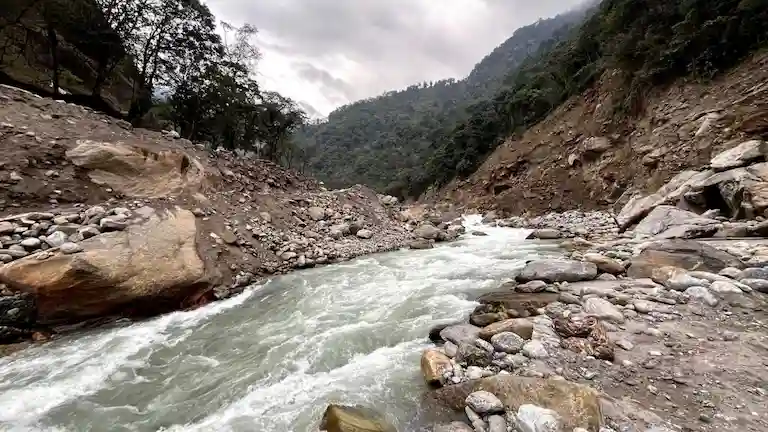
But you absolutely need to keep this route in the back of your mind. During the heavy monsoon rains, the river floods and completely washes away sections of the lower NH10 highway. Once that main road collapses, the police force all traffic to climb up and over the mountain through Kalimpong. Yes, the drive takes much longer. But when the rain is pouring down, this higher road is the only safe way across.
Most blogs just call this drive “scenic” without telling you where you can actually pull over—or how much extra cash drivers will demand while they wait for you. Here are the three stops actually worth making, plus the ground rules for each:
You will hit this spot right around the halfway mark near Teesta Bazaar.
You will find this lookout point right in the middle of that steep Peshok Road climb.
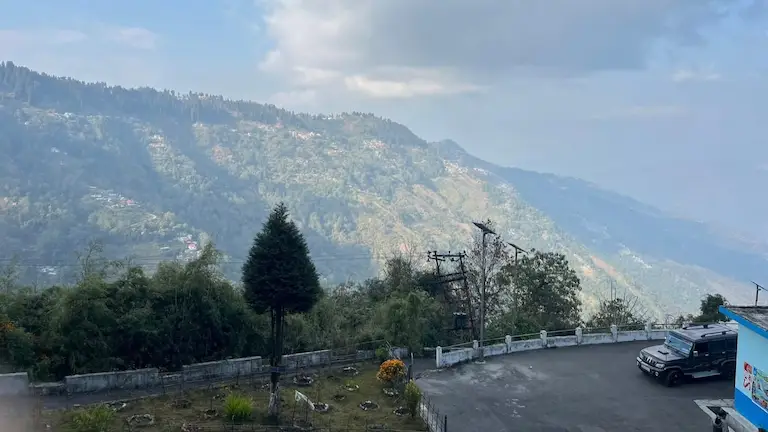
This sits further up the mountain ridge, roughly one hour before you reach Darjeeling town, making Lamahatta Eco Park one of the most popular offbeat places near Darjeeling to explore on the way.
When you decide to make this trip matters a lot. NH10 is known for falling apart in bad weather, so you have to time it right.
This is your safest window by far. Road crews patch up the asphalt after the rainy season, the skies stay completely clear, and you rarely see landslides. The only catch? Peak tourist season kicks in, so taxi rates spike. Expect to shell out ₹4,500 or more for an SUV.
The roads stay completely dry, which makes driving easy. But it is freezing outside. The real danger isn’t the cold—it is the fog. Right around 2:00 PM almost every single day, a thick white fog rolls over Jorebungalow and Darjeeling. You literally cannot see the road in front of your car. If you are doing this drive in the winter, make sure you leave Gangtok by 8:00 AM so you arrive before the fog ruins your view.
The roads are in decent shape, but you will hit the massive summer holiday crowd. Expect bad traffic choke points at the Rangpo border checkpost and inside Darjeeling town, which will easily tack an extra hour onto your ride.
This is the risky time. Nonstop rains trigger constant mudslides at infamous trouble spots like Seti Jhora and Likhubhir. NH10 shuts down frequently, forcing every car to take the much longer detour up through Kalimpong. If it has been pouring hard for two straight days, do not travel. Stay at your hotel until the weather clears.
Don’t bother opening your phone to check Uber or Ola. App-based cabs don’t work up here. You have to arrange everything through the local taxi stands.
Got a family or heavy bags? You will need to book a whole car. Just keep in mind that the rates jump around a lot based on how many tourists are in town.
A small hatchback will run you about ₹3,000 to ₹3,500. This size is fine for two or three people with light bags. But watch out—an older small car carrying a full load will really struggle to get up the steep Peshok climb.
Bigger vehicles cost between ₹4,000 and ₹5,500. If your group has four to six people, you absolutely need one of these. They handle the mountain potholes much better and make the long ride comfortable.
How to get the real price: One major tip—do not let your hotel book the cab for you. The hotel staff will usually add a 20% extra fee just to keep for themselves. Do yourself a favor and walk down to the taxi stand the night before you leave. Talk to the drivers face-to-face to get the honest rate.
If you are traveling solo or just want to save money, catching a shared jeep is the way to go. You will usually ride in a Tata Sumo or a Mahindra Maxx.
A single seat costs between ₹400 and ₹600. But be ready for a very tight ride. The drivers pack 10 people into a vehicle that was only built to hold 7. You will have almost zero room for your legs. As for your luggage, they just tie it up on the roof under a plastic tarp.
To catch one, you need to head down to the Deorali Taxi Stand. It is located about 2 km down the hill from MG Marg in Gangtok.
These shared cabs do not run all day long. They only leave in two fixed batches. The morning group heads out between 7:00 AM and 9:00 AM. The afternoon group leaves between 12:00 PM and 2:00 PM.
One massive warning: Do not show up late. If you arrive at the stand after 3:30 PM, you will not find a single shared jeep going to Darjeeling. At that point, you will be stuck paying the full price to hire a private car.
Before you set off to cover the Gangtok to Darjeeling distance, you need to be ready for how things actually work out there.
Forget about using GPay, PhonePe, or credit cards once you leave Gangtok. Your phone network will completely die in the valleys along NH10. If you want to buy food at the roadside stalls near Teesta Bazaar or just use the public toilets, you must have physical money. Always carry at least ₹3,000 in small notes.
Never travel these mountain roads in the dark. Make sure you leave Gangtok by 8:00 AM at the latest. Starting early helps you skip the massive midday traffic jam at the Rangpo border crossing. More importantly, it means you will drive up the steep Peshok climb while the sun is still out—long before the thick Darjeeling fog rolls in and ruins your visibility.
Do not try to drive your own city car or a self-drive rental on this trip. Unless you drive manual cars on steep mountain roads all the time, this route is just too tough. Bringing a rental car, or driving the entire Kolkata to Sikkim distance yourself, just to cross over to Darjeeling is a massive headache.
Here is why you should not drive yourself:
Other blogs skip this part. Let’s say you get stuck in a massive traffic jam next to the river. Nobody is moving. Don’t just sit in the car for four hours hoping it clears up. Here is what you actually do:
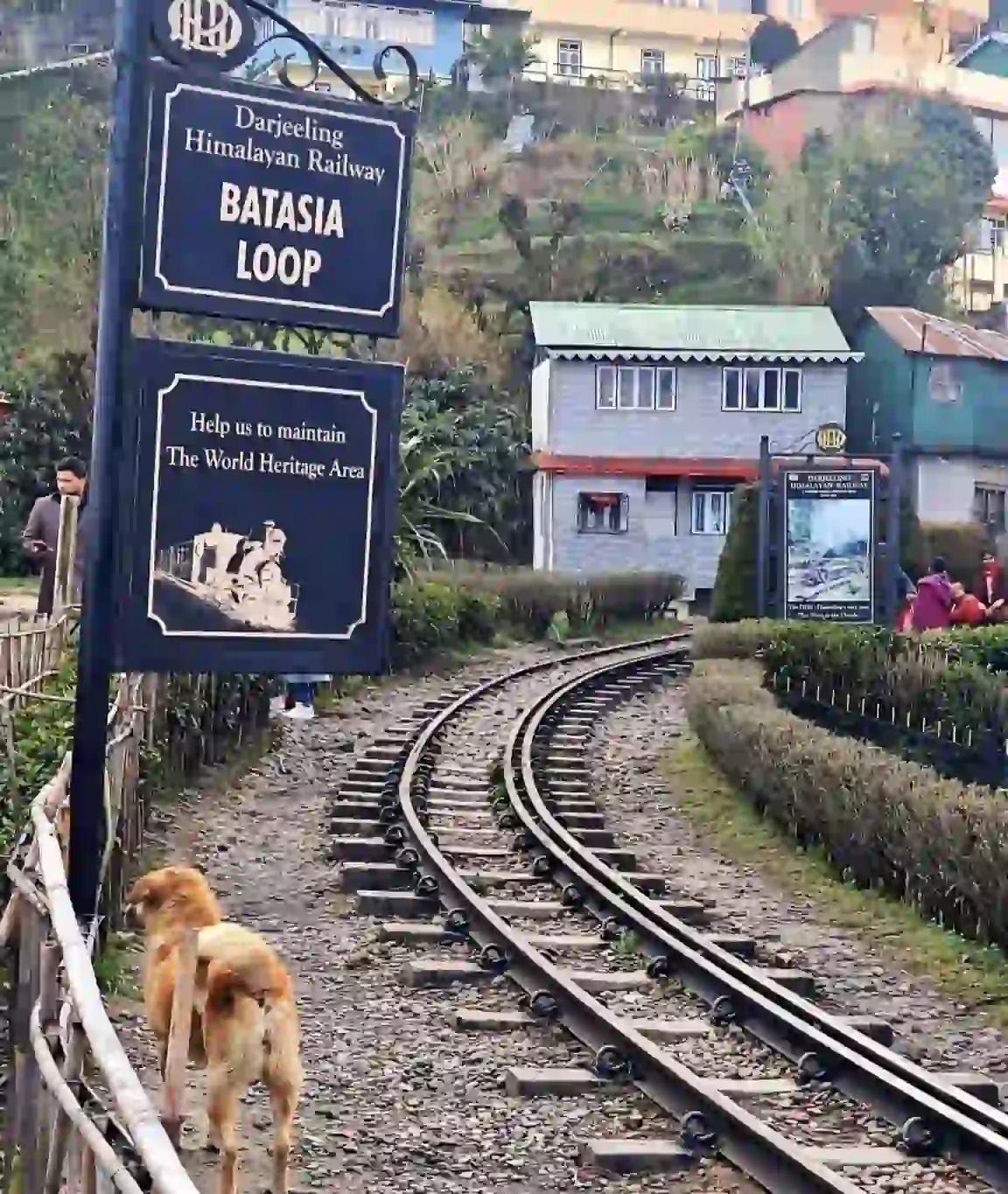
Nope. There are no train tracks connecting these two mountain towns. You might have seen pictures of the famous Darjeeling Toy Train, but that only runs inside West Bengal. It doesn’t go anywhere near Sikkim. You have to take the road.
If you go during the dry season (October to May) and hire a local driver who knows the mountains, yes, it is perfectly safe. The monsoon season is a totally different story. From June to September, heavy rains cause rockfalls and parts of the highway actually sink. Try your best to avoid driving this route when it pours.
Mountain drivers rarely charge per kilometer for a direct trip. They charge a fixed flat rate for the whole car. If you are booking a custom multi-day trip, expect to pay around ₹20 to ₹25 per kilometer for an SUV.
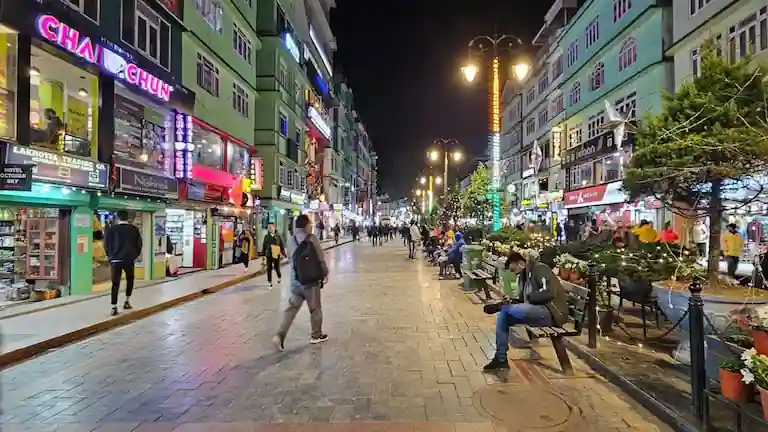
Shared cabs from Gangtok will drop you at the Chowk Bazaar taxi stand at the bottom of the town. From there, you have to walk up a steep climb to reach the Mall Road (Chowrasta) area, or you can hire a local porter to carry your bags up the stairs.
About the Author: Bijoy Pal is the creator of Brief Voy and lives in West Bengal. He spends most of his time traveling across mountain roads and hidden routes in the region. Bijoy started Brief Voy to cut through fake travel blogs by publishing honest destination guides. He shares real taxi fares, honest road conditions, and simple facts so regular people can travel without getting lost or overcharged.


