Physical Address
Bankura, West Bengal 722142
Physical Address
Bankura, West Bengal 722142

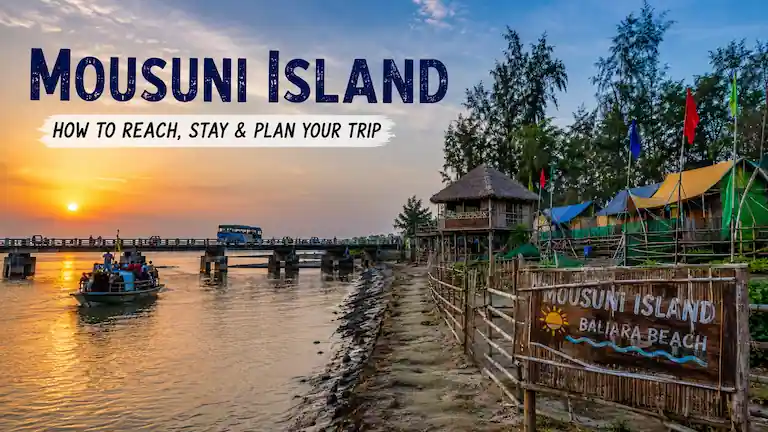
Most people visit Mousuni Island expecting a regular beach holiday near Kolkata. But when I went there earlier this year, I quickly saw that it is much quieter and wilder than what travel books say. If you want big hotels, central AC, or fast room service, do not come here. There are no fancy resorts.
The island is very simple and beautiful. It sits right where the Chinai River meets the sea. It is a peaceful place filled with local fishing boats and flying birds. A weekend trip to Mousuni Island is the best way to escape the noisy city.
I am writing this guide because I know it is annoying to read old information online. Sometimes you just want to turn off your phone, stop checking work emails, and watch a quiet sunset. Planning a trip to hidden places near Kolkata can be hard at first. That is why I wrote down my exact paths, where I stayed, and what to expect. There are no confusing words, no stress about boat times, and no getting stuck in the mud. Let’s look at why you should visit this island.
Most people do not know this island is here until they really look for a quiet beach trip. On a map of West Bengal, it is at the very bottom of the South 24 Parganas area. It is just a small spot where the river meets the sea. Forget about busy places like Digha. You will not find big crowds, loud hotels, or bright lights here.
Most tourists go to Bakkhali because the drive is easier. But Mousuni feels very different. A river cuts the island off from the main road. This keeps all the city noise away. Life is very slow here. There is no traffic and no car horns. You will only see local people fishing or farming. Since it is part of the Sundarbans area, nature is completely wild. The sea waves are strong, and they change the shape of Baliara Beach every day. It is muddy, natural, and very real.
If you read older blogs, they will tell you to take a slow ferry boat across the river at Namkhana. You can skip that problem now. The new Namkhana Bridge is fully open. This means buses and cars can drive straight across without waiting.
But, your exact path depends on if you take a train or a bus. Here is the best way to travel without getting confused or paying too much:
This is the easiest and most common way that I used:
Depending on which camp you book, the manager might tell you to enter from a different place:
The highway up to the Namkhana Bridge is actually very good. But as you get closer to the boat areas (ghats), the smooth road ends. It turns into narrow and bumpy village roads.
Once you cross the river and reach the island, forget about normal city roads. You will mostly travel on narrow brick paths, mud, and loose sand. Cars cannot drive here at all. Local Totos are the only vehicles that can drive on these bumpy island lanes. It is a very shaky ride, but the beautiful views make it worth it.
Are you driving? Take Diamond Harbour Road (NH 12) past Kakdwip to Namkhana. It is about 120 km long, but the highway traffic is usually very heavy. The good news is the new bridge at Namkhana lets you completely skip the long lines for the old car ferry. Just be ready for some bumpy roads before you reach the boat areas (ghats).
The Google Maps Problem: Do not just follow your GPS blindly here. If you just type in “Mousuni Island,” Google Maps will keep taking you straight down the highway toward Bakkhali, and you will miss your turns.
Once you reach Durgapur Ghat, Hujuter Ghat, or Patibunia Ghat, you cannot drive anymore.
Going to Mousuni is very cheap. I took the local train from Kolkata, then a bus, and then used Totos and small boats. This made my one-way travel cost only ₹300 to ₹500 per person.
Important Cash Warning: Take out plenty of cash before you leave. Make sure to get small notes like ₹10, ₹20, ₹50, and ₹100. There are no ATMs on the island at all. Do not rely on online payments (UPI) either. The phone network on the beach is very bad, and online payments fail all the time.
Because heavy rains wash away parts of Baliara Beach, all rooms here are made from simple, natural materials. You can choose from three basic choices:
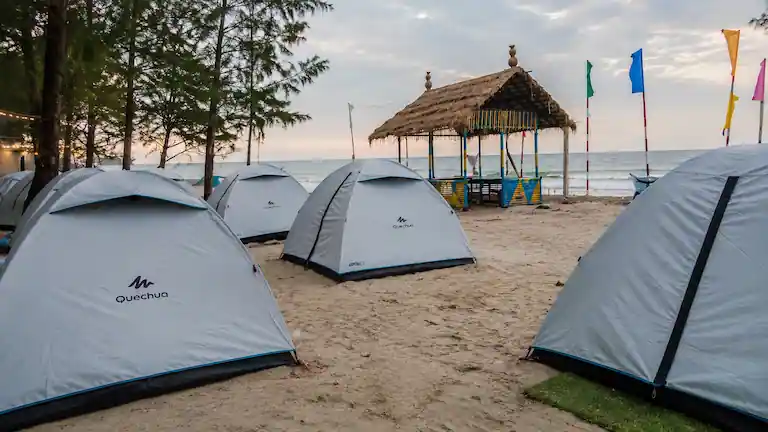
Price. If you want a nice AC room, the price starts at ₹2,200 per person. The best part is that these prices almost always cover your four daily meals.
| Accommodation Type | Average Price (Per Person/Night) | Best For | Key Features |
| Beach Tents | ₹900 – ₹1,200 | Budget Travelers | Mattress on the floor, fan, shared bathrooms. Gets very hot during the day. |
| Mud/Bamboo Huts | ₹1,400 – ₹1,800 | Couples, Small Groups | Private bathroom, doors with locks, keeps the wind out better. |
| AC Bamboo Cottages | ₹2,200+ | Families, Comfort Seekers | Private bathroom, AC (only works from 12 PM–3 PM & 9 PM–5 AM). |
Note: Your payment mostly covers a set 4-meal package (Lunch, Evening Snacks, Dinner, and Breakfast).
There are no other restaurants or cafes on Mousuni Island. You have to eat the food made by your camp’s kitchen. Almost every stay comes with a fixed 4-meal plan. Do not expect a big buffet or Western food here. The food is just simple, real Bengali village meals.
When I visited, the food came at the same times every day:
My best food tip: You cannot pick items from a menu. The kitchen cooks one large meal for all guests at the same time. If you cannot eat certain foods or need special baby food, you must bring it with you from the main town. The small shops on the island only sell basic snacks like biscuits and chips.
Since the internet is very bad on Baliara Beach, camp managers almost never check emails. You must do everything over a phone call or WhatsApp. To fix your booking, you have to pay 30% to 50% of the money online before you go.
Camp Contact List
To help you choose if this island is right for your weekend trip, here is a simple list of what I liked and what was hard.
When I was on the island, I saw a few different camps made for different types of travelers. Do not book without knowing what you are getting. Here is my review of the most popular places on Baliara Beach:
Note: Because the internet does not work well on the beach, you must book your stay over a phone call or WhatsApp before you arrive. You will usually need to pay 30% to 50% of the money in advance to fix your booking.
If you want a normal beach holiday with old buildings and concrete walking paths, you are on the wrong island. Everything I did here depended on the high-tide times and catching local Toto drivers.
Here is exactly how a real day looks out there:
Set your alarm for 5:15 AM and get a plastic cup of sweet lal cha (red tea). Because the water goes very far out in the morning, the beach becomes a huge, flat, wet area of dark sand. It looks like a giant mirror. The beautiful pictures you get make the lost sleep completely worth it.
By 9:30 AM, go north to Kakramarir Chor, where the river meets the sea. It is a quiet, muddy area. If you sit completely still on the mud wall for five minutes, thousands of tiny, bright red crabs will start coming out of their holes.
After a big Bengali lunch of rice and fresh fish, take a Toto to the Salt Gheri area around 3:45 PM. You will walk on top of huge mud walls. The villagers build these by hand every year to stop high waves from washing away their homes. It shows you how hard life is on an island that is slowly sinking. There are no fake tourist spots here.
For the best sunset, leave the main beach around 5:00 PM and take a Toto to Bagdanga Ferry Ghat. Pay a local fisherman with a small wooden boat about ₹200–300 to row you into the quiet river creeks. If you love coastal wildlife ecosystems, check out my guide to the olive ridley nesting sites here.
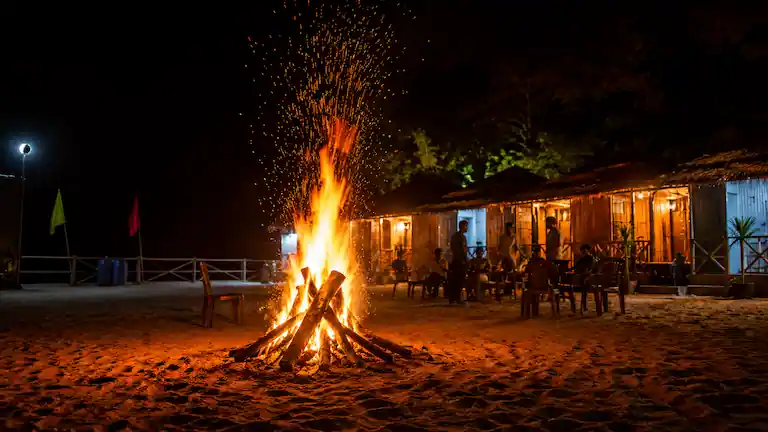
Mousuni still has no main power lines. When the camps turn off their generators at night, everything goes completely dark. Sitting by a small wood fire with some simple chicken barbecue on the sand is a great experience. Between November and February, you can easily see moving satellites and bright stars with your own eyes.
Mousuni has no modern shops or comforts. Pack these important things:
Only drink packed mineral water bottles. The local water can easily make your stomach sick. Always ask the camp staff about high-tide times before you go into the water, because the deep currents are very dangerous. Finally, call your family to tell them you arrived safely before you cross the river. Your phone signal will drop to zero as you get close to the beach.
Mousuni Island taught me to slow down. You cannot rush the ferry boat, and you cannot hurry a Toto driving through muddy paths. It forces you to leave your fast city life behind and just relax. If you want loud parties, this is not the right place for you. But if you want to turn off your phone, see real village life, and watch the ocean, it is the best place to be.
If you love this raw island vibe, make sure to check out my destination guides for Fraserganj and Hukitola too!
Yes. Because the island makes its money from tourism, the local villagers keep the beach safe to protect their good name. There is very little crime here. But, because the beach gets completely empty after dark and there are no street lights, it is not a good idea to walk outside your camp after 9:00 PM.
No. There is no main electric line from the city. Simple tent camps use solar power and generators to give light from about 6 PM to 11 PM. Nice AC huts use their own generators to run the cooling during the hottest parts of the day.
No. There are no bridges for cars to reach the island. You must park your car at paid parking spots on the main land (for about ₹100 to ₹150 a night) and take a local boat across the river.
There are no big concrete luxury hotels, but AC rooms are available. Camps like Bonfire Nature’s Camp have beautiful bamboo cottages with private bathrooms and air conditioning.
Very bad. Jio and Airtel work okay near the village markets. But when you go down to the beach, the internet is very slow or goes away completely. Treat it like a nice break from your phone.
I do not recommend it. From July to September, heavy rains and huge sea waves make the wooden boat rides very dangerous. Also, almost every camp on the beach closes down completely during this time. It is much safer to wait until October.
About the Author: Bijoy Pal is a web writer who loves finding hidden travel spots in West Bengal. He writes simple, honest travel guides. His tips help you avoid busy tourist traps so you can enjoy real village life and local culture.