Physical Address
Bankura, West Bengal 722142
Physical Address
Bankura, West Bengal 722142

Important Visitor Notice: Gahirmatha Beach is a heavily guarded, safe space for wildlife. Because of that, you simply cannot visit all by yourself. You absolutely must get a special pass from the Forest Office over in Rajnagar before your trip.
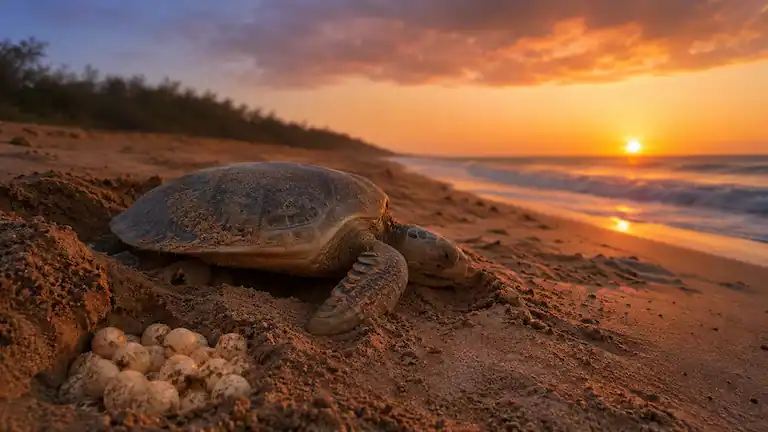
Gahirmatha Beach is not a regular vacation spot. It is the biggest home in the world for Olive Ridley sea turtles. These turtles are in danger and really need our help. If you walk on this quiet sand, the only footprints you will see belong to the turtles that have come here for millions of years.
That is exactly what this guide is for. It tells you everything you need to know—like how to follow the strict rules, secure your pass, and safely enjoy this amazing place.
Think of a place where time just seems to stand still. There are no bright lights, noisy crowds, or big hotels around. Instead, you only hear the soft waves of the Bay of Bengal meeting the deep green forests. This exact spot is home to one of the most incredible animal events on earth. It’s called the Gahirmatha Marine Sanctuary. This quiet Odisha coastline remains one of India’s last truly wild places.
Most people go to the beach to rest and play, but a trip near Gahirmatha Beach is very different. You are not visiting a playground. Instead, you are walking near a safe home for wild animals. It is the best place in the world to see the Arribada, which just means “arrival.” At this time, many thousands of sea turtles leave the deep water and crawl onto the sand to lay their eggs. Seeing this special place really shows why we must protect nature.
Gahirmatha is never really the same beach twice. You can’t just check a map and expect the shoreline to look the way it did last year. The strong, fast waters pouring in from the Brahmani and Baitarani rivers are constantly reshaping it. Since the sand sits right where these massive rivers crash into the salty sea, the ground is basically always on the move.
By the time the rainy season rolls through, the whole layout of the sand shifts. The ocean might completely swallow a huge chunk of the beach one year, only to dump a massive, clean stretch of fresh sand the very next. Honestly, this endless shifting is exactly what makes it such a perfect, secure nursery for baby turtles. It guarantees the shoreline stays wild and free of any human buildings. Standing out there, you get to see nature doing its own thing, miles away from city noise and concrete.
Even though Olive Ridley turtles are the most common sea turtles, they are still in danger. They really need our help. India has strong laws to keep them safe from harm. These amazing animals swim thousands of miles across the big ocean. They use the stars and the Earth’s natural magnetic pull like a compass to find their way. Mother turtles have a special sense. This sense helps them swim right back to the exact beach where they were born so they can lay their own eggs.
The yearly turtle schedule at Gahirmatha happens in three simple steps:
April to May (Hatching Time): The eggs stay warm in the sand for 45 to 60 days. Then, millions of tiny baby turtles dig their way out and run down to the sea.
November to January (The Meetup): Long before coming to the sand, the turtles meet and mate in the shallow water near the coast.
February to March (The Arribada): When the wind and moon are just right, hundreds of thousands of mother turtles leave the water at the exact same time. They crawl onto the beach at night to lay their eggs.
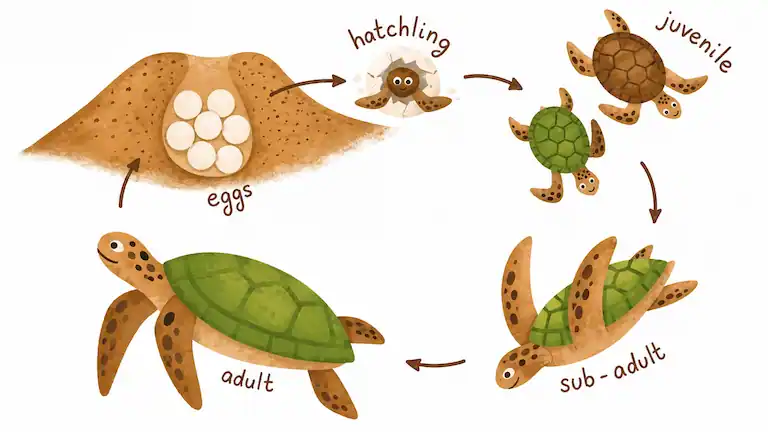
Open Ocean Swimming ➔ Nov: Ocean Mating ➔ Feb-Mar: Mass Egg Laying ➔ 45-60 Days in Sand ➔ Apr-May: Babies Hatch
Most other sea turtles prefer to lay their eggs all alone. Olive Ridleys are totally different. They stay safe by showing up in a massive group called an arribada (which just means “arrival” in Spanish). Having all their babies hatch at the exact same moment is a brilliant survival trick. It totally overwhelms hungry animals like crabs, wild dogs, and birds. There are simply way too many baby turtles for those predators to eat. Because of this, most of the little guys make it safely to the sea. For the eggs to actually survive, the beach must stay perfectly dark, super quiet, and incredibly clean. That is exactly why the guarded sands of Gahirmatha make up the biggest and safest turtle home in the entire world.
If you study animals or nature, visiting this spot takes a lot of planning and real respect for the rules. The Odisha Forest Department is in charge of Gahirmatha, and their number one job is protecting the environment. You truly can’t just show up at the river and expect to hop on a boat.
Any trip out onto the water requires a special pass from the forest office in Rajnagar. Before you even pack your bags, you have to contact them to ask for permission to visit and learn. You also need to keep your original government ID card on you the entire time. Forest guards check every single person closely. They will easily turn back any boat missing the right papers. This isn’t just boring paperwork, either. It serves as a strict shield to keep the beach completely safe from massive tourist crowds.
| Category | Official Details |
| Entry Status | Highly Restricted (Marine Sanctuary) |
| Indian Visitor Fee | ₹20 (for 1–9 people); ₹10 (for 10+ people) |
| International Visitor Fee | ₹1,000 (for 1–9 people); ₹200 (for 10+ people) |
| Required Documentation | Valid Government Photo ID (Original required) |
| Primary Authority | Mangrove Forest Division (Wildlife), Rajnagar |
| Official Website | forest.odisha.gov.in |
Note: These fees are subject to revision by the Odisha Forest Department. Furthermore, Gahirmatha Marine Sanctuary is subject to seasonal total closures during mass nesting (Arribada) periods to protect the turtles. Access is always subject to final approval by the Forest Range Officer in Rajnagar.
Even if you are only visiting the edges of Bhitarkanika National Park, the way you behave out there really matters. This whole place is a giant web. It proves exactly how the trees, crocodiles, birds, and sea animals all rely on each other just to stay alive.
Right off the bat, you need to stick to a strict zero-trash rule. Whatever you carry onto the boat or the land, you have to pack it right back out with you. In a spot this fragile, leaving a plastic bag or a food wrapper isn’t just making the place look bad. It is deadly. A sea turtle can easily mistake a floating plastic bag for a jellyfish, and eating it causes terrible harm. Simply taking your trash home is the easiest way to help keep the beach safe.
Also, always listen to the local boat drivers and forest guards. They are the actual protectors of this wild space. If they tell you to turn the boat around or head back early because the water is changing, just listen. Don’t argue with them. Nature really doesn’t care about your travel plans at all. It only runs on its own clock.
Behind every safe Arribada is the endless hard work of the local forest guards. These men and women live in far-away camps for months at a time. They work in hot, sweaty, and incredibly tough conditions. Day and night, they watch the coast to protect the turtles from illegal fishing boats and hunters. They patrol those dark, bug-filled waters and just never give up. When you visit, keep in mind that this safe space only exists because of their hard work. Treating the forest staff with total respect and following their rules is honestly the best way you can help the sanctuary.
If you want to see the pretty Odisha coast and help keep it safe, there are safe and proper ways to visit. Bhitarkanika National Park is right next to Gahirmatha Beach. This park has boat rides run by the government. These trips let you safely look at the amazing trees and see lots of birds without breaking any rules.
These official tours teach you about nature without bothering the resting turtles. When you pay for a trip, your money goes straight to the forest team that protects Gahirmatha. To view official tour itineraries and stay options in the surrounding Bhitarkanika area, you can visit the official Odisha Eco-Tourism portal.
If you want to learn more about how unique tidal forests protect our coastlines, read our comprehensive guide to the Bichitrapur Mangrove Sanctuary.
It is very important to know that Gahirmatha is not all by itself. It is a big part of the whole Bhitarkanika area. The turtle sanctuary covers the ocean and the beach, while Bhitarkanika covers the maze of rivers right behind it. The thick trees act like a giant water filter. They clean the river water before it ever hits the sea. This creates a safe area full of food for the baby turtles. This perfect teamwork is exactly why Gahirmatha is so successful. The trees act like a strong shield, and the beach acts like a safe bed for the babies.
This strong link between the land and the water is why this area is so healthy today. Sadly, many other beaches in the world are ruined by huge cities and dirty water. By keeping the river forests safe, we are actually saving the beach down below for many, many years to come. If you love the quiet, undisturbed beauty of this coast, you should also discover the red crabs and peaceful shores of Talsari Sea Beach.
You will need to plan things out a bit before heading here. Since the main beach is fully blocked off to protect the turtles, you cannot actually walk on the sand. Instead, your trip will focus on reaching the forest gates at Rajnagar or Chandbali, or checking out the park from a few approved viewing spots nearby.
By Road: Driving here is quite easy using National Highway 16 (NH16). From Bhubaneswar or Cuttack, just head straight toward the forest gates. Your route will take you through the Kendrapara district, passing right through Kendrapara town and then Rajnagar. Renting a car is the best choice, as local buses often run late.
By Air: For those flying in, you will want to book a ticket to the airport in Bhubaneswar. From there, the drive out to the Rajnagar gate runs anywhere between 140 to 171 km, depending on which exact road you take. The easiest option after you land is to just grab a private taxi right outside the airport and head straight down.
By Train: If you prefer the train, the nearest major station is over in Bhadrak, roughly 49 km away. Another good choice is taking a train into Cuttack, which sits about 141 km from the entry gates. No matter which station you jump off at, you will easily find local cars for rent right outside to drive you the rest of the way to Chandbali or Rajnagar.
Because Gahirmatha is a safe zone for sea animals, building hotels or sleeping on the beach is not allowed at all. Not having places to sleep on the sand is not a bad thing for visitors. In fact, it is a huge win for nature.
Since you cannot sleep on the main beach, you can just stay in safe, approved spots right next door in the Bhitarkanika area.
Alternative Beaches: If you want to walk on the sand without bothering the turtles, skip Gahirmatha. Just head to the nearby Ekakula Sea Beach or Pentha Sea Beach instead. These places let you enjoy the beautiful ocean without breaking any rules.
Historical Sites: You can take a quick trip to see the old Baladevjew Temple. You can also take a boat to explore the famous Hukitola Island.
Dangamal (3.3 km away): This is the best place to stay. The forest department runs great Nature Camps right here. During your stay, you can take official boat rides to see saltwater crocodiles, wild boar, barking deer, leopard cats, and rare jungle fowl living in the trees.
The beach is busy at different times of the year. But the best time to visit and learn really depends on the turtles’ lives:
Besides the turtles, this coast is also a very important home for horseshoe crabs. These animals haven’t really changed in 400 million years! That is exactly why people call them “living fossils.” They are a huge part of the food chain, and finding them means the water is really clean. The muddy spots around the beach are perfect for these crabs to lay their eggs. This just gives the world another huge reason to protect this special part of the coast.
You can also visit Hukitola Island to see more wildlife and learn about the interesting history of the Odisha coast.
Even with all the strict rules, Gahirmatha Beach still faces some huge problems. Old, broken fishing nets wash up on the sand all the time. These nets are incredibly dangerous because they easily trap the mother turtles. Plastic trash is a constant battle too, even with the forest guards working so hard to clear it away. On top of all that, rising ocean water is slowly washing the actual beach away. We really have to figure out how to save the sand and protect this wild home. The turtles pick Gahirmatha for a very good reason. The sand feels exactly right to them, and the ocean water perfectly guides them to this one spot. Keeping this beach safe matters to the whole world. Losing this safe space would be a terrible loss for ocean life that we simply could never fix.
No. Gahirmatha is a highly protected safe zone. Swimming and all other fun beach games are banned just to keep the turtle nesting area perfectly quiet and safe.
Using a camera flash is completely against the rules because it blinds and scares the turtles. Any special photos taken for science must follow very strict rules from the forest office.
The absolute best thing you can do is respect the strict “no tourists” rule on the main beach. Instead, you can help by taking the official, government-run boat tours right next door in the Bhitarkanika area.
Building hotels would bring bright lights, loud noises, and garbage. All of that would ruin the beach for the mother turtles. Having zero places to sleep on the beach is not a bad thing for visitors—it is actually a huge win for nature.
You should always check the official Odisha Forest Department website at forest.odisha.gov.in before you start planning a trip to learn about the turtles.
Gahirmatha is just one of many hidden coastal treasures in the region. If you are interested in exploring more raw, untouched landscapes, you can browse our full collection of Destination Guides to plan your next responsible nature trip.