Physical Address
Bankura, West Bengal 722142
Physical Address
Bankura, West Bengal 722142

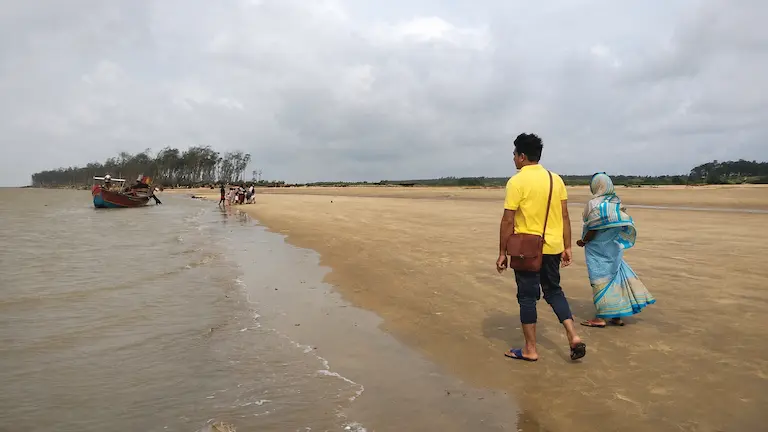
Based on my recent trip, I can tell you that Talsari Sea Beach (also spelled Talasari) is a very beautiful coastal delta. It is located in the Baleswar district of Odisha. It is just an 8 to 16-kilometer drive from the loud and busy town of Digha in West Bengal. What makes this beach different from others is the meeting point of the Subarnarekha River and the Bay of Bengal. When I arrived, the first things I saw were millions of red ghost crabs running on the sand, tall palm trees, and a very calm estuary.
If you want a natural beach with real scientific and geographical interest, Talasari is the perfect place for you. Unlike crowded tourist spots, this beach remains a quiet home to local fishermen and unique marine life.
| Quick Facts | Details |
| Distance from Digha | 8–16 km (25–30 mins by taxi via marine drive) |
| Operating Hours | 05:00 AM to 08:00 PM |
| Best Time to Visit | October to March (Winter) |
| Famous For | Red ghost crabs, Subarnarekha estuary, low-tide walks |
| Nearest Railway | Jaleswar Station, Odisha (36 km) & Digha Station (10 km) |
During my visit to Talsari, the difference from Digha was clear immediately—the loud crowds vanished, replaced by the calming sound of the Subarnarekha river and pure, quiet nature. The real stars here are the red ghost crabs. Their scientific name is Ocypode macrocera, a species studied closely by groups like the Zoological Survey of India.
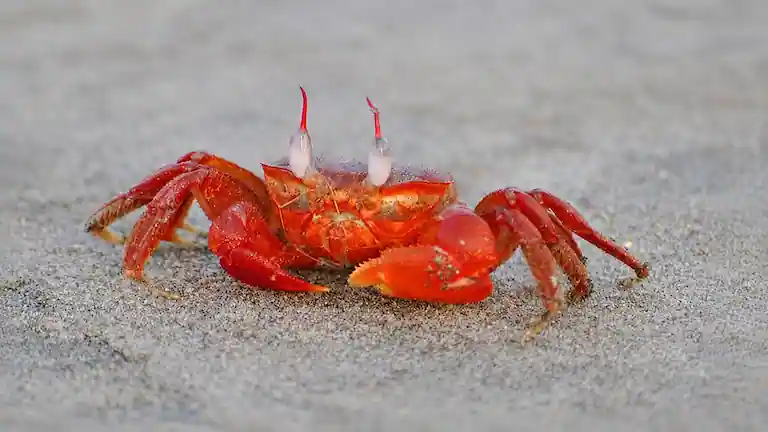
Unlike most ghost crabs that only come out at night, the red crabs of Talsari are active during the day. When the sea water goes out, the wet sand looks like it is covered by a bright red carpet. These crabs are very fast and flatten their bodies against the sand to hide from birds and predators. They are very sensitive and can feel your footsteps. I learned that if you want a good picture, you must stand completely still for a few minutes.
Conservation Note: Sadly, the population of these red crabs is dropping. Environmental pollution and heavy car tires from the nearby marine drive are ruining their sand homes. When you visit, please walk on foot and do not drive cars onto the soft sand.
The absolute best part of my entire trip was experiencing the geography of the Subarnarekha River estuary. Here, the river creates a unique delta where it meets the Bay of Bengal. You will not find a river crossing quite like this anywhere else on the coast.
To get to the main beach, I had to cross a part of the Subarnarekha estuary.
Because the Subarnarekha estuary changes so much, your trip depends totally on the tide. The high tide comes in very fast and reclaims the flat sandbar in just minutes. If you are not careful, the deep water will trap you on the beach, and you will have to hire an emergency boat to get back to land.
Pro Tip: Arrive two hours before the lowest Talsari Beach tide timings. This gives you plenty of time to walk across the empty sand to the main beach. Always watch the local fishermen. If you see them pulling their boats in or moving to higher ground, that is your signal to head back immediately.
Bikash Majhi, a local boatman who has navigated these shifting sandbars for over 20 years, ferried me across the river. He shared a very helpful local secret: “When the sea wind suddenly drops and the seagulls start flying back towards the land, you know the tide is about to rush back in.”
To plan my safe crossing, I always check the daily water times on official websites like WorldTides.info and the Indian National Centre for Ocean Information Services (INCOIS). For live tidal forecasts and wave tracking in this specific coastal pocket, you can also use mobile tools like the Windy.com coastal widget or the eTide HDF app.
If you want the ultimate experience, plan your trip around the moon phases. During Purnima (Full Moon) and Amavasya (New Moon), the Subarnarekha river experiences a tidal bore, creating powerful spring tides. This means the water pulls back significantly further than on a regular day, exposing massive, hidden sandbars that you can explore. However, you must be extra careful, because the high tide also rushes back in much faster and deeper during these moon phases.
| Tide Phase | Action | Danger Level |
| 2 Hours Before Low Tide | Start walking across the estuary. | Low / Safe |
| Exact Low Tide Time | Enjoy the beach and take photos. | Low / Safe |
| 1 Hour After Low Tide | Start walking back to the mainland. | Medium (Be Alert) |
| High Tide Phase | Do not walk! Hire a ₹20 boat crossing. | High / Dangerous |
Talsari Sea Beach sits right on the Odisha-West Bengal border. It is very easy to reach, especially if you are traveling from Kolkata or Baleswar.
Taking a train was my smartest choice. If you are coming from Kolkata (Howrah or Shalimar stations), take a train straight to Digha Station, which is only 10 km from Talsari. If you are traveling through Odisha, get off at Jaleswar Station, which is 36 km away. Make sure your train arrives during the day, as I found that finding a ride after 5:00 PM is very difficult.
From Digha, a taxi or auto-rickshaw takes about 25 to 30 minutes. The journey takes you across the state border from West Bengal into Odisha.
The border crossing itself is very simple. There are no strict police checkpoints or long stops. You will just notice the road signs change from Bengali language to Odia language. However, because it is an interstate border crossing, local auto drivers might charge an extra ₹20 to ₹50 fee to cover their state border taxes. Private taxis cost between ₹300 and ₹500. If you are on a budget, head directly to the Digha Bus Stand or outside the New Digha Railway Station, where shared autos line up. They are cheap at only ₹50 per seat, but you must wait for all the seats to fill up before they depart.
Talsari is 171 km from Kolkata and 290 km from Bhubaneswar. I noticed that if you drive from Baleswar city, it takes about two hours to cover the 90 km distance. The roads in Baleswar district are smooth. There is plenty of safe parking right by the beach.
The closest major airport is in Kolkata (190 km away). Do not hire a direct taxi from the airport, as it will cost a lot of money. Instead, take a train from Kolkata to Digha and then take a short taxi ride to the beach.
The Baleswar district side of the border has quiet, simple guest houses. If you want big resorts, you will need to stay on the Digha side.
Since many travelers stay in Digha and want to visit for the day, here is the exact hour-by-hour timeline I used to make the most of my day trip. Following this schedule helps you avoid the dangerous high tide:
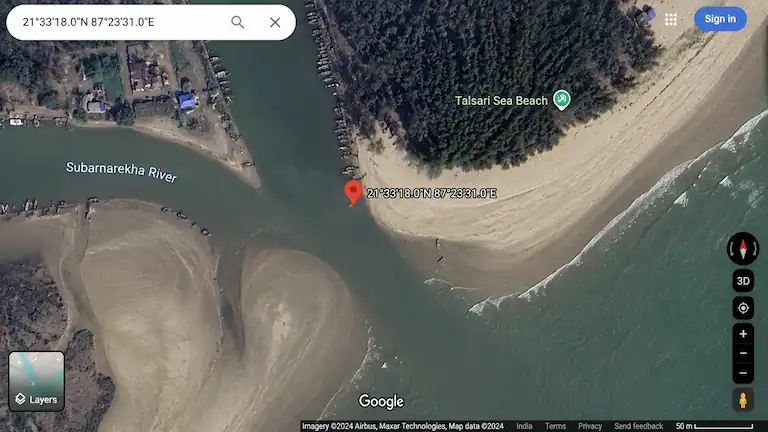
To help you find the local fishermen easily, I have created a custom map point. Head directly to the Subarnarekha River mouth at the exact GPS coordinates: 21°33′18″N 87°23′31″E. Below is a map showing this exact micro-location on the riverbank where I hired the ₹20 local boat for my high-tide crossing:
Take a boat to the Bichitrapur Mangrove Sanctuary, located 10 km away. A private boat for 6 to 8 people costs around ₹1,200 to ₹1,400. The boat takes you to Subarna Island, a major research site where you can spot horseshoe crabs.
While taking the mangrove boat ride near Subarna Island, you might see the rare Horseshoe Crab. These amazing creatures are considered “living fossils.” They are actually more closely related to spiders and scorpions than they are to true crabs. Their special blue blood is vital for modern medical testing, helping to detect dangerous bacteria and keep human vaccines safe. The Subarnarekha delta is one of the few places in India where they come to breed, especially during the high tides of the new moon. Seeing one in the wild is a dream for wildlife photographers, biology students, and eco-tourists.
The flat, wet sand of the Subarnarekha delta acts like a giant mirror. Early mornings provide the best light to photograph the red ghost crabs before the crowds arrive.
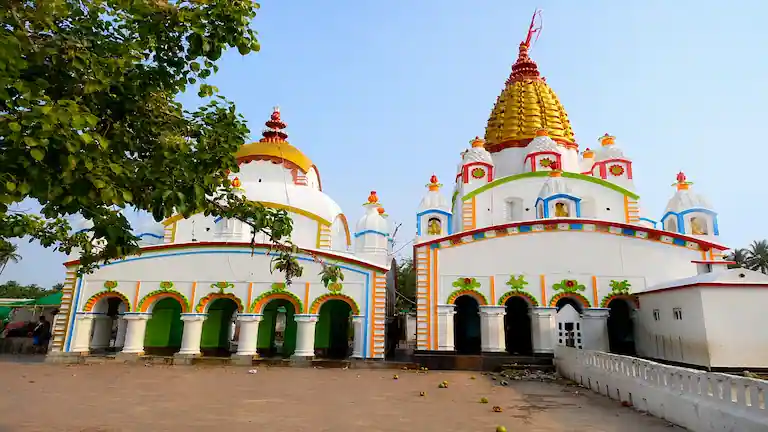
Drive 3 km to the Chandaneswar Temple. It is an ancient Lord Shiva temple famous for its massive 13-day Chaitra Mela spring festival. You can also drive 18 km to the Bhusandeswar Temple to see one of the largest Shiva Lingas in Asia.
Near the Chandaneswar Temple, local shops sell beautiful, handmade seashell crafts (called Sankha) and grass mats. Buying these directly supports the local village workers.
Talsari Sea Beach is a delicate environment. The Ocypode macrocera crabs are losing their homes because tourists drive heavy cars and bikes on the soft sand. Please walk on the normal paths and keep vehicles in the parking lot. Also, skip the big tour companies. I hired local boat drivers directly on the beach so my money went straight to the fishing families. Bring all your plastic bottles back to your hotel dustbin.
In the local Odia language, “Tala” means palm, and “Sari” means row. When I saw the long lines of tall palm and casuarina trees on the beach, the name made perfect sense. The nearby Chandaneswar Temple is over a thousand years old. If you visit during the Chaitra Mela spring festival, you will see thousands of worshipers dressed in bright red, celebrating with loud drums.
There are no fancy restaurants here, but the local Odia and Bengali seafood is amazing.
The best lunch I had started right on the wet sand. I walked down to the docked boats early in the day and bought fresh Pomfret directly from the fishermen. I took my fresh catch to a small beach shack. For a small fee, the owner cleaned it and cooked it in hot mustard oil right there.
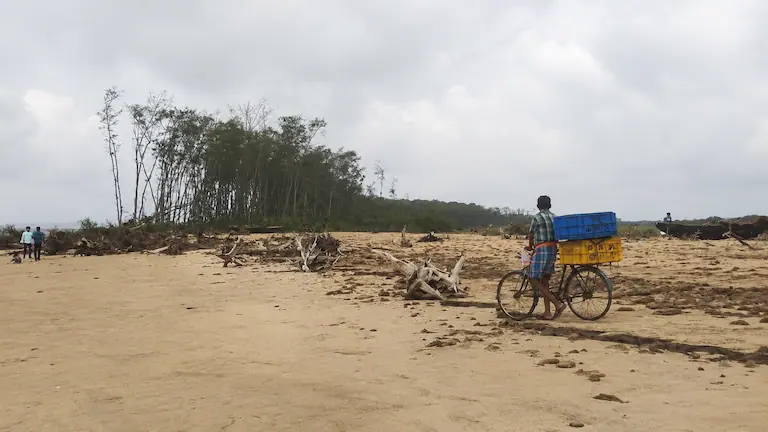
To buy the best seafood, you need to visit the morning “Khuti” (the local fish auction right on the sand). You must be there by 6:30 AM to buy directly from the trawlers before middlemen buy all the stock for the big Kolkata markets. Buying here is much cheaper than in the city.
| Fish Species | Local Auction Price (Per Kilo) | City Price (Per Kilo) |
| Pomfret | ₹300 – ₹400 | ₹700 – ₹800 |
| Hilsa (Ilish) | ₹600 – ₹800 | ₹1,200 – ₹1,500 |
| Bhetki | ₹350 – ₹450 | ₹600 – ₹700 |
| Parshe | ₹200 – ₹250 | ₹400 – ₹500 |
| Local Prawns | ₹250 – ₹350 | ₹500 – ₹600 |
To help you plan, here are the real, ground-level prices from my trip:
| Expense Item | Estimated Cost (INR) | Notes |
| Shared Auto | ₹50 – ₹100 per seat | From Digha. Wait time applies; private auto is ₹300+. |
| Estuary Boat Crossing | ₹20 – ₹50 per person | Prices vary slightly during monsoon. |
| Fresh Seafood Meal | ₹200 – ₹400 per person | Buy raw fish and pay ₹50-₹100 for shack cooking. |
| Mangrove Boat Ride | ₹1,200 for 6 people | Best split with a group. |
Make sure you also try the local Macher Jhol (a light, spicy Odia fish curry) with crispy fried prawns.
It is famous for the millions of Ocypode macrocera (red ghost crabs), the beautiful Subarnarekha river estuary crossing, and the massive flat sandbars that appear during low tide.
It is 8 to 16 kilometers away. You can reach it in 25 to 30 minutes by driving along the Udaipur-Talsari marine drive.
The best time is winter, between October and March. Temperatures stay between 15°C and 25°C, making it very comfortable to walk outside.
Take a three-hour train from Howrah or Shalimar station to Digha Station. From there, hire a taxi or shared auto to cross the border into Odisha.
Yes, but they are very fast and hide when they feel footsteps. You must stand completely still to take a good photo of them.
Yes. You can stay in simple guest houses like the government OTDC Panthasala on the Odisha side, or book bigger resorts with swimming pools just across the border in Digha.
Walking across the estuary during low tide is very safe. However, you must pay attention to the water. When the local fishermen start pulling their boats to land, the high tide is returning. You must head back to land immediately so you do not get trapped by the deep water.
Explore More: Looking for more offbeat coastal escapes and regional travel itineraries? Browse our complete collection of Destination Guides.
Bijoy Pal
I am a travel writer specializing in hidden coastal gems and regional transit routes. Every detail in this guide comes directly from my personal journey through Odisha’s Baleswar district, ensuring you get accurate, field-tested, and ground-level information.