Physical Address
Bankura, West Bengal 722142
Physical Address
Bankura, West Bengal 722142

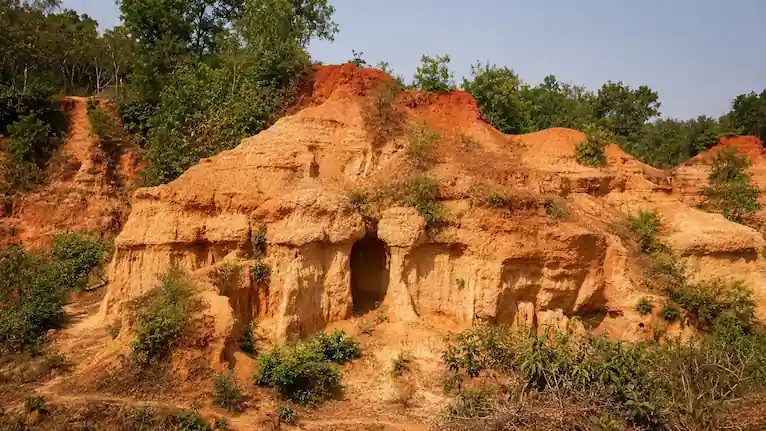
Type “weekend trips from Kolkata” into any search bar, and you will see heavily edited photos of Gongoni—the so-called “Grand Canyon of West Bengal.” But here at Briefvoy, we skip the tourist fluff and give you the actual ground reality.
To ensure this guide is 100% accurate, I personally traveled to Gongoni on 12 February 2026 via the Rupashi Bangla Express. My goal? To verify the train routes, uncover hidden costs, and check the real condition of the gorge to save you time and money.
Gongoni is beautiful. This 70-foot deep valley—a depth officially confirmed by the Geological Survey of India (which recently named it a national geo-heritage site), West Bengal Tourism, and local administration—was carved from red soil by the Silabati River over thousands of years. It is absolutely worth visiting. But go in the wrong month, take a badly timed train, or let local drivers cheat you, and your weekend will be ruined.
Here is exactly how to reach Gongoni from Kolkata, what it really costs, and what is waiting for you there right now.
If you just want the fast facts before you pack your bags, here is all the basic info you need.
| The Logistics | The Ground Reality |
| Location | Garbeta, in the Paschim Medinipur District of West Bengal. |
| Nearest Railway Station | Garbeta (Station Code is GBA). |
| Distance from Station to Gorge | 4.2 km (it takes about 15 to 20 minutes to ride there). |
| Station to Gorge Transport | Local Toto (battery rickshaws). |
| Exact Toto Fare | ₹150 to ₹200. When I went in Feb 2026, drivers asked for ₹250. I talked them down to ₹150 for the round trip plus waiting time. |
| Travel Time from Kolkata | 3 to 3.5 hours on the train. |
| Best Time to Visit | February, March, or November. Try to go early in the morning. |
| Entry Fee | Totally free. If you drive, parking costs about ₹20 to ₹50. |
Hold on before you book those train tickets. You need to know what Gongoni really is first. It isn’t some giant, silent forest, and it definitely is not a huge national park. If you want to have a fun time, you have to dodge a few traps that usually ruin this trip for people.
The ground here is pure red dirt. That means it holds onto heat very badly. In the summer (April to June), the daytime temperature easily jumps past 40°C (104°F). I talked to some local shop owners, and they told me going down into the gorge in May is actually unsafe. You won’t find a single tree for shade down there.
Then comes the rainy season (July to September). The rain turns that fine red dust into a nasty, slippery mud pit. The river also floods. If you try walking on the canyon floor then, you will definitely slip and get hurt. The Best Time to Go: Mid-February to early March, or November to early December.
Most websites say January is the best time to go. Please ignore them.
In December and January, Gongoni becomes a giant, loud picnic spot. Even when I went in February, the top viewing areas still had winter trash everywhere—mostly dirty paper plates and plastic cups. Big crowds show up with huge speakers, cook big meals, and leave garbage behind. Forget about enjoying any peace and quiet. Stay far away on January weekends if you actually want nice photos and a calm walk.
This isn’t the actual Grand Canyon in the USA. It is just a small spot filled with weirdly shaped red rocks. You can easily cover the main areas of the gorge on foot in about an hour. It is a great place to spend half a day, or a nice rest stop if you are driving to Bishnupur. Just don’t pack your bags thinking you will hike here for three days.
Getting to Gongoni is very easy. Taking the train is a lot better, faster, and cheaper than driving a car.
Garbeta is the railway station you need to get to. You can easily catch a train from Howrah or Santragachi in Kolkata. From my own experience, here are the best morning trains:
1. Rupashi Bangla Express (Train No. 12883)
2. Aranyak Express (Train No. 12885)
How to get back to Kolkata:
For your return journey, you can catch the Aranyak Express (12886) from Garbeta station at around 03:40 PM. It will drop you off at Santragachi station around 06:50 PM. This timing turns Gongoni into the perfect, low-cost day trip.
When you step out of Garbeta Station, you will notice a line of cycle-vans and battery-run autos, locally called Totos. This is exactly where unaware tourists end up paying too much.
If you prefer to take your own car, the road conditions are mostly great.
Most travel blogs forget to tell you how much money you actually need. Here is a real, affordable budget for a day trip from Kolkata, whether you are traveling solo or as a couple. This breakdown is based on exactly what I spent during my 2026 visit.
| Expense Type | Estimated Cost (INR) |
| Train Ticket (Second Seating / Sleeper) | ₹100 – ₹120 (One way) |
| Toto to the Gorge (Shared by 2 people) | ₹100 (This is your half of the ₹200 Toto fare) |
| Lunch / Food | ₹150 – ₹200 (For a local Bengali Thali meal) |
| Water & Snacks | ₹50 |
| Total Estimated Budget | ₹500 to ₹600 Per Person |
You do not need to spend thousands of rupees to enjoy Gongoni. It is honestly one of the cheapest travel spots in all of West Bengal.
After your Toto drops you at the top of the cliff, you get an amazing view of a vast, red landscape. Here is how to explore it safely based on what I saw during my trip.
Years ago, climbing down into the canyon was slippery and a bit dangerous. But recently, the local government built a solid set of concrete stairs that go all the way down to the river. I used these stairs, and they make the walk very safe and easy, even if you are traveling with older family members.
When you reach the bottom, you will be right next to the Silabati River.
Do not wear sandals, flip-flops, or heels. While walking on the canyon floor, I noticed the ground is very rough. It is covered in loose stones and sharp chunks of red rock. The fine red dust will also ruin any nice shoes. Stick to a comfortable pair of sports shoes or sneakers with a good grip.
You won’t find any big, fancy restaurants or cafes near the gorge. At the top of the stairs, I only saw a few small village stalls. They sell basic snacks like hot tea, biscuits, bottled water, and Maggi noodles.
If you want a proper, filling meal, ask your Toto driver to stop at the roadside dhabas near Garbeta College on your way back to the station. For just ₹150, I had a hot, fresh Bengali Thali (complete with rice, dal, fresh vegetables, and chicken) right before catching my train home.
There is a place nearby called the “Gangani Eco Tourism and Resort.” However, my Briefvoy advice is very simple: do not stay overnight in Garbeta.
Garbeta is just a normal working town. There is really nothing to do there after dark. If you want to make it a full weekend trip instead of going back home the same day, book a hotel in Bishnupur instead.
Bishnupur is only 27 km away. It has much better hotels, great places to eat, and you can spend your entire next day exploring its famous old terracotta temples.
If you brought your own car, or if you paid a local auto driver for the whole day, there are some very old, hidden places in the villages around Garbeta.
Just a short drive from the canyon, you will find a very old temple from the 1500s. The ancient Bagri kings built it using solid black stone. It has a unique design that looks a lot like the famous temples in Odisha. It is a very peaceful and holy spot, and the best part is that most tourists have no idea it even exists.
People built this fort a very long time ago, between 1555 and 1610. Today, most of it is broken down into ruins. But, the original main gates and the giant red stone walls are still standing tall. It is an amazing background for taking photos. It is also the perfect, quiet spot to watch the sun go down just before you head back to the train station.
If you brought your own car for a road trip, you should take a quick detour to visit Kurumbera Fort. The government protects this ancient monument today. When you walk inside, you will see beautiful stone arches that perfectly mix old Hindu and Islamic building styles.
During my trip in February, I realized that Gongoni is truly one of the most unique places you can visit in West Bengal. It is a wonderful change from the flat, green farm fields you see everywhere else in the state.
If you wake up early to catch the morning train, bargain with the local Toto drivers using the prices in this guide, and avoid the harsh summer heat, you can easily plan a perfect, low-cost trip. Skip the tourist traps, follow the facts in this guide, and enjoy the raw beauty of the Silabati river gorge the right way.
If you love exploring hidden spots without the tourist fluff, head over to our complete library of Destination Guides to uncover your next honest, on-the-ground weekend adventure.
If you love the quiet, uncrowded vibe of Gongoni and want to explore more hidden gems in West Bengal, check out our honest ground-reality guides to these offbeat coastal spots:
Yes, it is very safe during the day. You will always find local families and other tourists walking around the main areas. However, if you are on a solo trip, you should stay close to the main concrete staircase. Make sure to leave the canyon before the sun goes down, as there are no lights or security guards there at night.
No, you cannot. All cars and bikes must be left in the parking area at the top of the cliff. From there, you have to walk down the concrete stairs to reach the canyon floor and explore the riverbank.
No, not at all. The only animals you will see are a few friendly stray dogs waiting for tourists to drop a biscuit. There is no dangerous wildlife living inside the gorge.
Yes, it works well. My Jio and Airtel networks had a strong signal at the top of the cliff. The mobile data only dropped a little bit when I walked all the way down to the bottom near the river.
It is just a popular local nickname. People use it because the deep red soil, the steep cliffs, and the uniquely shaped rocks look like a mini version of the famous Grand Canyon in Arizona, USA.