Physical Address
Bankura, West Bengal 722142
Physical Address
Bankura, West Bengal 722142


Lal Kakra Beach is a huge, empty beach where the water seems to go on forever. When I visited the West Bengal coast recently, the sand in front of me actually started moving. From far away, it just looks like a giant red carpet. But as soon as you take a few steps closer, you realize it is thousands of tiny red crabs running into their holes. It is really amazing to watch, and there are no noisy crowds around to ruin the peace.
You will find this quiet spot right between Mandarmani and the Pichaboni River. Because the beach really belongs to the crabs, it feels totally different from the loud hotels in Mandarmani or the packed streets of Digha. To help you plan your own trip, I put together this simple guide based on what I actually saw there. It covers exactly when the crabs come out, the easiest way to travel, real prices, and where you can stay.
Geographic Location Context: This guide covers the Red Crab Beach in East Medinipur, West Bengal, India (near Mandarmani). If you’re looking for the beach with the same name in Kuakata, Bangladesh, the travel routes are totally different.
The total driving distance from Kolkata is roughly 172 kilometers.
First, cross the Vidyasagar Setu bridge, get on the Kona Expressway, and drive down highway NH16 past Kolaghat. When you reach Nandakumar, turn left onto highway NH116B going toward Digha. You will drive through the towns of Tamluk and Contai. Look out for the Chowlkhola Crossing—this is where you turn to go toward Mandarmani. When you get close to the hotels, you will see a road for the Pichaboni River area. It is just a simple dirt road through a village, but keep going. It takes you straight to the beach.
Note about the road: When you drive on this last dirt path, go very slowly. The dirt road can get very muddy and bumpy, especially after a high tide or a quick rain shower. Because of this, it can be hard to drive if you have a small, low car.
Budget for the trip: Gas will cost you about ₹1,800 to ₹2,800, depending on your car. Toll gates will cost another ₹150 to ₹200 for each way you drive.
If you are coming from Kolkata, just grab a bus to Digha from Esplanade, Karunamoyee, or Howrah. You have plenty of government and private buses leaving all day long. Once you get to Digha, the Digha to Lal Kakra Beach distance is only about 15–20 kilometers. From there, it is a breeze to reach the beach by hopping on a local toto or auto-rickshaw.
Tell the driver to drop you at Chowlkhola Crossing. When you get off, you will see local electric Totos parked right there. Hire one to take you to Dakshin Purushottampur village. The 15-minute ride through the local countryside is quite nice.
If you want to take the train, you can catch a morning ride from Howrah Station:
The biggest mistake travelers make is not checking the Lal Kakra Beach Tide Timing. The red ghost crabs live entirely by the rhythm of the sea. For people looking to explore, this quiet beach changes completely depending on the water and the weather.
| Season | Typical Low Tide Viewing Window | Red Crab Activity Level | Operational Notes |
| Winter (Oct – Mar) | Morning & Afternoon | Highest | Best time for photos and clear, cool morning walks. Temperatures stay between 12°C and 25°C with a refreshing breeze. |
| Summer (Apr – Jun) | Changes Daily (Late evening or early morning) | Moderate | Crabs hide from the hot midday sun. It is best to head out right at dawn or just before sunset to see them. |
| Monsoon (Jul – Sep) | Hard to Predict | Lowest | The nearby villages look beautiful and green, but you cannot swim and exploring is tough because the sea gets very rough. |
Expert Insider Tip: The best time to see the crabs in any season is 1 to 2 hours after the low tide starts. This gives the water enough time to move far back so the wet sand settles. Do not bother going during peak high tide, as you will not see a single crab on the beach.
The huge red carpet on the sand at Red Crab Coast West Bengal is not just a pretty sight—it is the heartbeat of this special beach home. If you walk too hard, the whole red blanket disappears in a second. Here is what makes these crabs so interesting:
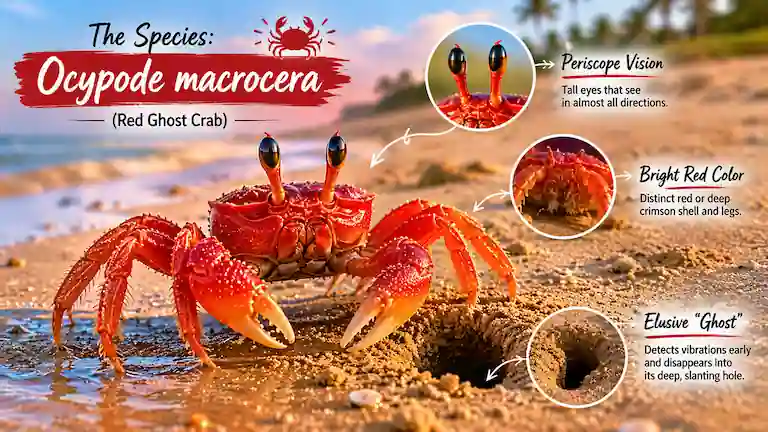
The little animals turning the beach red are called Red Ghost Crabs. They live mostly on dry land, but they always need wet sand and sea water to keep their breathing parts wet so they can stay alive.
Most ghost crabs are pale or look like sand, but this special kind has a bright red or deep crimson shell and legs that stay red all the time. When millions of them come out on the wet sand together, their huge numbers completely cover the beach.
Their scientific name actually means “fast foot” in old Greek. They can vanish in a split second because of two amazing safety skills:
These crabs are very important for keeping Lal Kakra Beach healthy:
Critical Warning for Visitors: Driving cars on the beach, walking with heavy steps, and leaving trash will break their soft homes. This traps the crabs underneath where they cannot breathe and dry out. Never chase or catch them. To keep this beautiful red carpet safe, watch them quietly from far away with a camera zoom or binoculars.
The red ghost crabs can see very well and feel everything around them. They feel even the lightest human footstep from far away and will disappear in an instant.
Walk down to the place where the river meets the sea. This spot creates a very special water home full of food for small sea creatures. It is a peaceful area that is perfect for watching the river water mix gently with the ocean waves.
Sunrise walks at Lal Kakra Beach are a photographer’s dream. Because the beach is wide open and has no big concrete buildings blocking the view, it offers some of the most beautiful and clean sunrise views on the whole coast.
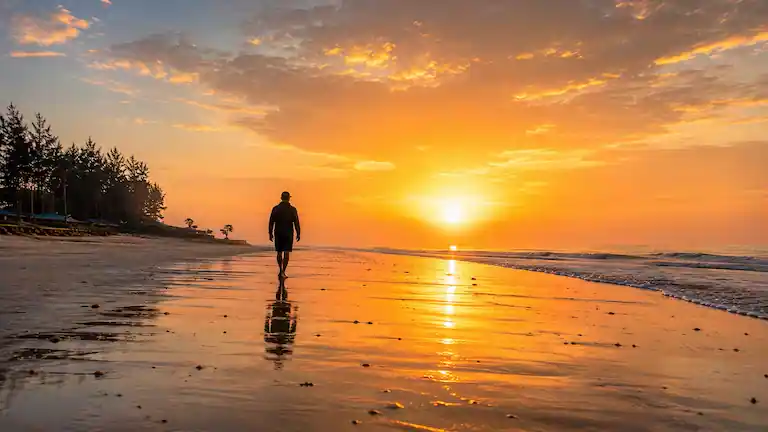
The best way to take photos: Walk out onto the wet sand when the tide is low. Pick a spot and stand completely still for two to three minutes. Once the ground stops shaking, small red eyes will pop back out of their holes, and the beach will turn bright red all around you. If you stay still, you can get amazing close-up photos of the crabs without scaring them away.
To help you plan your money, here is a simple list of normal costs for a weekend trip to Lal Kakra Beach.
For a comfortable stay, you can choose from beach camps, a charming Lal Kakra Beach resort, or quiet, peaceful ashrams.
These camps are right behind the sand hills. Their prices include both a tent and four meals a day (a welcome coconut water, a traditional fish lunch, tea with pakoras in the evening, and a chicken dinner).
If you’re looking for a solid roof over your head and a standard hotel setup, there are spots right where Mandarmani spills over into the Lal Kakra area (places like Pink Pearl Beach Resort or Wave Of Sea Resort are your main options).
This peaceful ashram is just a two-minute walk from the beach gate. It is a very quiet place to rest.
Besides the great wildlife, the village of Dakshin Purushottampur shows you how a normal beach village lives. Long before the sun rises, local fishermen meet to push big wooden boats into the sea.
When they return in the late morning, the whole village works together to pull the heavy boats onto the dry sand. They open the nets to find shiny fish like pomfret, prawns, hilsa, and other small fish. The best fish are sent to big markets to be sold. The rest of the fish are dried in the sun on large bamboo mats using old ways. The local people are very kind and will happily show you exactly where the biggest groups of red crabs live.
If you are exploring the coast and appreciate this authentic village lifestyle, you should also consider visiting Baguran Jalpai; it is another quiet, pristine stretch of sand that offers a similar glimpse into traditional fishing culture and unspoiled natural beauty.
If you want to see more places during your weekend trip, you can easily go to these nearby spots by car or Toto:
For people who like to explore quiet places, this beautiful hidden beach changes a lot depending on the weather.
The cool months offer the best weather for walking along the coast. Temperatures stay between 12°C and 25°C, bringing cool air from the sea and clear blue skies. The low tides happen at regular times, making it safe. This is the best time for taking photos, sleeping in tents on the beach, and seeing the red crabs cover the sand without feeling too hot.
If you like wild and exciting views, the rainy season turns the village fields and trees a bright, beautiful green. You will see big rain clouds moving over the sea. However, you cannot swim in the water and exploring is hard because of the heavy rain, rough waves, and high tides that completely cover the flat sand.
Lal Kakra Beach has a beautiful, wide shore with simple fishing paths and a quiet river. It is a perfect weekend trip for anyone who wants to get away from crowded tourist places. If you are looking for even more island exploration and unique coastal nature, our Jambudwip guide offers great insights into another fascinating destination in the region.
As more and more hotels and crowds come to the beaches of West Bengal, truly quiet and wild places are hard to find. Lal Kakra Beach shows you how beautiful the ocean is when it is left alone. It gives you a great chance to rest away from noisy city life, help local village people, and see a wonderful view of nature that very few city travelers ever get to see.
If you love the untouched, serene environment found here, you should also check out our guide to Bankiput Sea Beach, another hidden gem that offers a similar sense of peace and natural beauty. To explore more secret spots across the state, browse our full collection of West Bengal destination guides to find your next weekend escape.
Pack your bags, check the sea tide times, and go see the bright red beach of East Medinipur before everyone else finds out about it.
Yes, Lal Kakra Beach is a great place to visit if you want a quiet break. It is a rare, peaceful spot where you can see millions of red crabs on the sand. Unlike busy beaches, it offers a real, natural experience. It is perfect if you like taking photos, enjoying nature, and supporting local villages away from city noise.
No, please do not drive your car on the beach. The sand is very soft, and you might get stuck. Also, car tires crush the tiny holes where the crabs live, which harms the beach. Please park your car near the village gate or your hotel and walk to the shore instead.
Yes, Lal Kakra Beach is safe for travelers who respect nature. While it lacks lifeguards and commercial amenities, the village area is peaceful and welcoming. For your safety, avoid swimming deep in the unpredictable river mouth, stay on marked paths, and stick to daylight hours. By following these simple tips, you will enjoy a secure, worry-free, and memorable coastal getaway.
No, there are no food stalls or restaurants right on the sand. You should eat at your beach camp, resort, or the local ashram. It is a good idea to book a stay that includes your meals, or bring your own light snacks and water with you.
Yes, the walk from the village road to the beach is short and flat (about 200–300 meters). However, there are no paths or benches to sit on, so it might be tiring for older people to stay on the sand for a long time. It is best to visit during the cool morning or late afternoon.
Swimming is okay when the water is low, but you must be careful near the river mouth (where the river meets the sea) because the water moves fast and can be dangerous. There are no lifeguards on this beach, so please be very careful and do not swim out too deep.
Bijoy Pal is a digital publisher and SEO expert. He travels to remote spots to study local areas and nature trends. This guide was verified by tracking actual coastal tide data in West Bengal, so you can trust the information.