
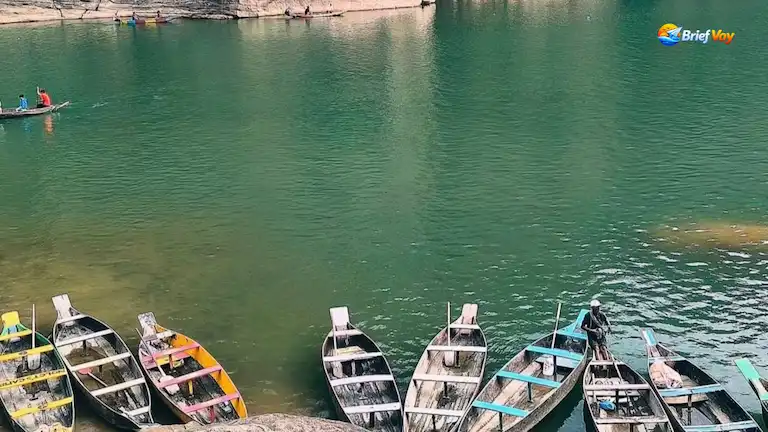
Planning a trip? The best time to visit Meghalaya is from October to April. The air stays cool, mostly between 10°C and 24°C. The sun comes out during these months. The muddy forest paths finally dry up, meaning you can walk safely.
Picking your exact month depends on what you want to see. You have to make one big choice. You can either look at loud, giant waterfalls. Or, you can take a boat ride on a totally clear river.
Go in mid-November for the best trip. Cherrapunji still has big waterfalls. The Dawki river is clear as glass. You also get pink cherry blossoms all over Shillong. The daytime heat is only 20°C. Best of all, you miss the crazy December hotel prices.
Quick Reference: Meghalaya Temperature & Rainfall
Need quick numbers before you book? Here is your weather guide. Notice how the high hills (Shillong and Cherrapunji) stay much colder than the low valleys (Dawki).
| Month | Hill Temp (Shillong / Sohra) | Valley Temp (Dawki / Plains) | Rainfall Level |
|---|---|---|---|
| January | 4°C to 16°C (Cold nights) | 14°C to 24°C (Warm) | Almost Zero (Very Dry) |
| February | 8°C to 19°C (Cool) | 16°C to 26°C (Warm) | Very Low |
| March | 11°C to 23°C (Pleasant) | 19°C to 29°C (Hot) | Low (Spring showers) |
| April | 14°C to 24°C (Warm) | 22°C to 31°C (Hot) | Moderate (Pre-monsoon storms) |
| May | 16°C to 25°C (Warm & Humid) | 24°C to 32°C (Very Hot) | High (Heavy afternoon rain) |
| June | 17°C to 24°C (Misty) | 25°C to 31°C (Humid) | Very High (Monsoon begins) |
| July | 17°C to 23°C (Cool & Wet) | 25°C to 31°C (Humid) | Extreme (Wettest month) |
| August | 17°C to 24°C (Cool & Wet) | 25°C to 31°C (Humid) | Extreme (Heavy downpours) |
| September | 16°C to 23°C (Pleasant) | 24°C to 30°C (Warm) | High (Rain tapers off late Sep) |
| October | 14°C to 22°C (Crisp & Sunny) | 21°C to 28°C (Warm) | Moderate (Mostly clear skies) |
| November | 10°C to 20°C (Chilly nights) | 17°C to 26°C (Pleasant) | Very Low (Best weather) |
| December | 7°C to 17°C (Cold) | 15°C to 24°C (Warm) | Almost Zero (Very Dry) |
Why Most Travel Guides Get Meghalaya Wrong
Most travel sites just tell you to visit between October and March. That basic advice ruins trips every single week.
One late January, I watched a family from Mumbai pay ₹4,000 for a taxi from Shillong to Cherrapunji. They came to see the famous Seven Sisters Falls. But they just stared at a dry, brown cliff. There wasn’t a single drop of water.
Then in July, I met a couple at Dawki. They flew across the country to take photos on that famous clear river. But the heavy rain turned the water muddy and brown. The current was so bad that every single boat was tied to the shore.
Why the “Abode of Clouds” is Different
Meghalaya isn’t like Kashmir or Himachal. We have zero snow or melting ice here. Every waterfall and river relies purely on fresh rain.
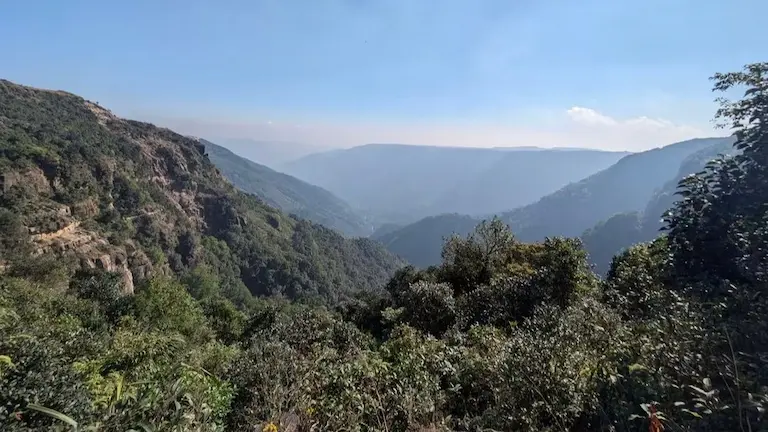
Cherrapunji sits on a high cliff that drops straight into the flat Bangladesh plains. The rainwater doesn’t stay on the hills. It just washes right off the edge immediately.
The Great Meghalaya Trade-Off
This makes one simple rule for your trip. Big waterfalls need heavy rain, so you have to go between June and early November. But a clear Dawki river needs weeks of dry weather for the mud to settle. That clear water only shows up from late November to March.
You cannot get both on the same trip. Look at the table below to match your dates with what you want to see.
The Meghalaya Seasonal Trade-Off Matrix
| Travel Window | Dawki River Clarity | Cherrapunji Waterfalls | Jaintia Hills Pools | Trekking & Caving | Crowd & Hotel Prices |
|---|---|---|---|---|---|
| Late Sep – Oct | Murky to light green | 90% full (Loud and clear) | High flow, milky blue | Good (Trails damp, deep caves closed) | Moderate (Busy during Durga Puja) |
| November | Emerald green (80% clear) | 60% full (Great for photos) | Bright blue | Excellent (Best hiking weather) | High (Book 4 to 6 weeks early) |
| Dec – Jan | 100% glass clear | Low (20% flow, Seven Sisters is dry) | Clear and swimmable (Cold water) | 100% safe (All caves and trails open) | Peak (Highest prices Dec 20 to Jan 5) |
| Feb – Mar | 90% crystal clear | Very low (Mostly dry cliffs) | Clear blue (Warmer water) | Excellent (Dry and sunny) | Low to moderate (Great hotel deals) |
| Apr – May | Slightly green (Spring mud) | 40% to 60% (Filling up with rain) | Good flow, green-blue | Moderate (Slippery in the afternoon) | Moderate (School holiday rush in May) |
| Jun – Early Sep | Muddy brown (Boating closed) | 100% full (Huge monsoon flow) | Brown and rough (No swimming) | Poor (Leeches, fog, flooded caves) | Lowest (Up to 40% to 50% off resorts) |
Why Jaintia Hills Waterfalls Beat Cherrapunji in Winter
You can still see great waterfalls if you visit between December and February. You just need to head in the right direction. Most travel guides treat every waterfall in Meghalaya as the same thing, but driving these routes for BriefVoy showed us that isn’t true.
1. Rain-Fed Cliff Falls in Cherrapunji (Sohra)
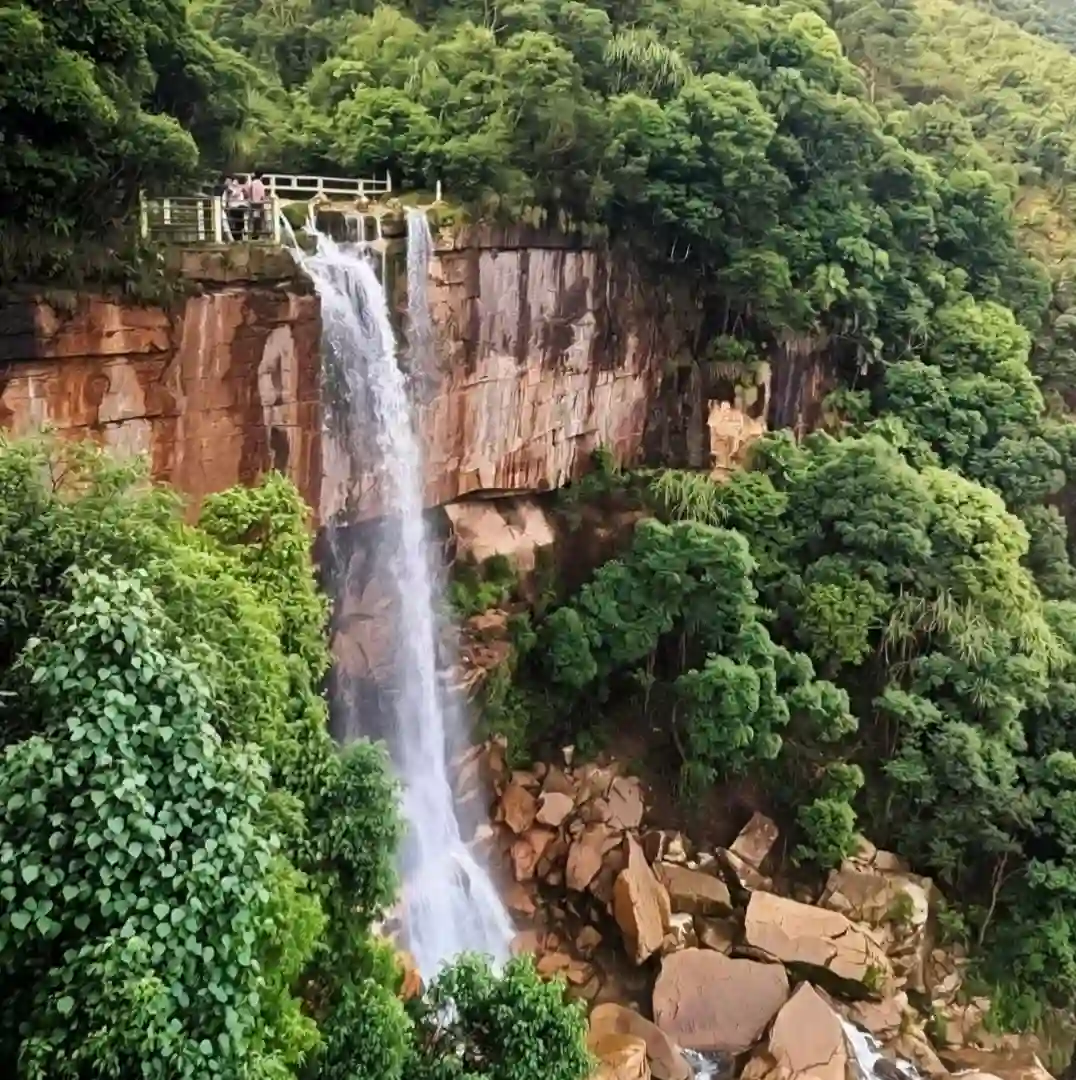
Seven Sisters, Kynrem, and Wah Kaba fall right off high cliff faces. They don’t have rivers behind them, so they only get water when it rains. When the monsoon stops in November, the flow disappears quickly. By late December, you are just looking at bare, dry rock. Nohkalikai still has water, but it drops down to a tiny trickle.
2. River-Fed Pools in the Jaintia Hills (Open All Winter)
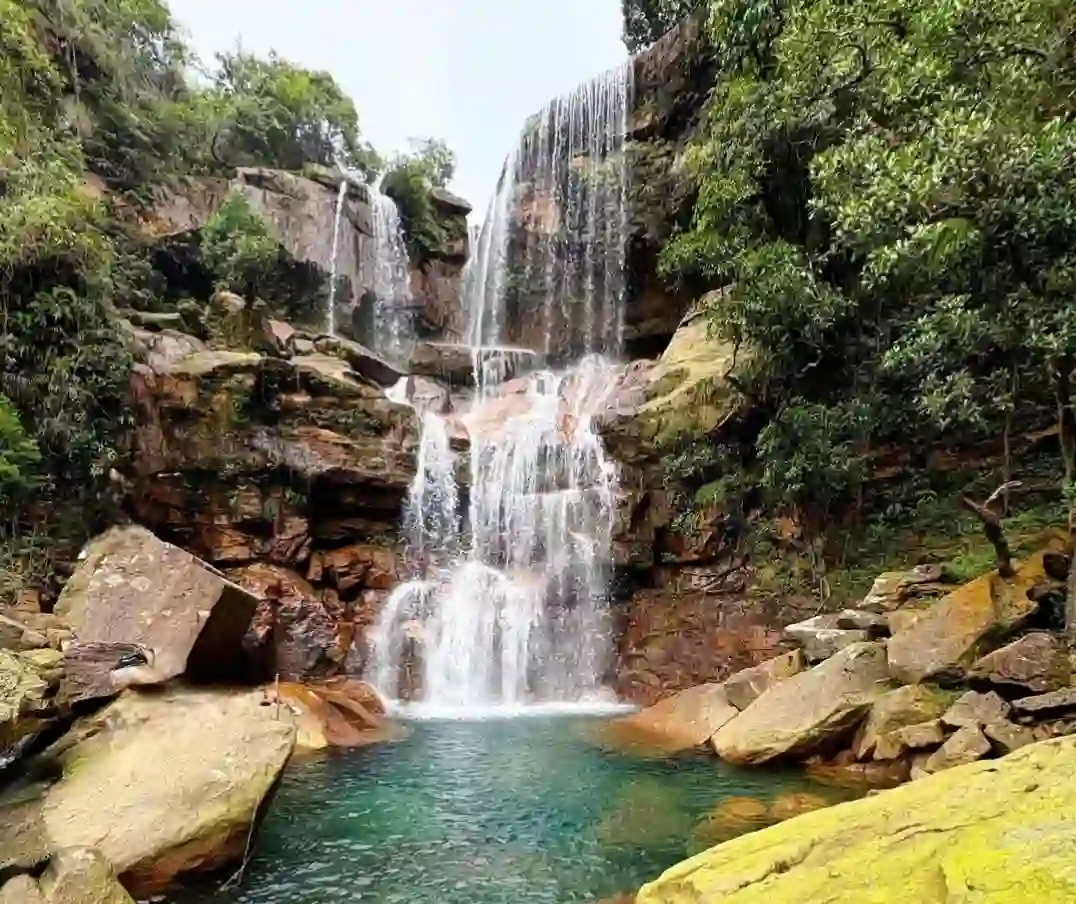
Drive east toward Jowai in the West Jaintia Hills instead. These waterfalls get their water from underground springs and deep rivers, so they don’t run dry. Cherrapunji looks bare by January, but Krang Suri, Phe Phe, and Tyrshi Falls still pump clear blue water. You can rent a life jacket right at the entry point and jump in for a swim.
The 4 Seasons of Meghalaya: Weather, Pros, and Cons
1. Autumn (October to November)
October to November is the best time for this trip. The heavy summer rain is gone. Daytime heat in Shillong and Sohra sits between 15°C and 22°C. At night, the temperature drops down to 10°C or 14°C. The sticky air goes away and the sky is blue.
The grass in Laitlum and Mawphlang is still very green from the monsoon. The Cherrapunji waterfalls have plenty of water left over. Down in Dawki, the river turns clear again by early November. You can also see the Shillong Cherry Blossom Festival right when the trees turn pink.
2. Peak Winter (December to February): Clear Rivers and Caving
Winter gets the most tourists. The sun is out and the days sit around 12°C to 18°C. Walking the 3,500 steps down to the Double Decker Root Bridge feels much easier in the cold January air. But the nights are freezing. Shillong drops to 4°C to 8°C after sunset.
Zero rain means zero mud in the rivers. If you visit Dawki from 10:30 AM to 1:30 PM, you can look right down to the river bed. Dry weather also makes this the only safe time to enter deep caves like Krem Chympe.
3. Spring (March to May): Budget Travel and Swimming
March starts getting warm. Daytime in Shillong hits 20°C to 26°C. Dawki gets much hotter at 32°C. But the Khasi Hills stay nice and cool while the rest of the country sweats.
This is the best time to go swimming. Krang Suri is way too cold in January. Once March arrives, the strong sun warms up the water. You can actually jump off the cliffs and kayak without shaking from the cold.
4. The Monsoon (June to September)
Cherrapunji and Mawsynram see over 11,000 mm of rain a year. July brings non-stop rain for days. The temperature sits at 16°C to 23°C. Thick fog will cover the driving routes.
This is the only time you see the massive waterfalls. The trip also costs much less. Nice hotels cut their prices by 30% to 50%.
Before you pack:
- Whiteouts: Viewpoints often get totally covered in fog. Sleep in Sohra for a few nights. This gives you more chances to see the valleys when the fog actually breaks.
- No Boating: Dawki and Shnongpdeng stop all boat rides. The heavy storms make the river brown and dangerous.
- Leeches and Mud: The rock steps going down to the Root Bridge get very slippery. Leeches will also grab your legs in the wet forest. Keep salt in your pocket to easily remove them.
Month-by-Month Breakdown: What to Expect Every Single Month
Meghalaya in January
January has clear skies and cold nights. It almost never rains. The Dawki river is 100% clear. It is the safest time to do the scary Mawryngkhang Bamboo Trek because the bamboo is completely dry. Bring a heavy jacket for Shillong nights.
Meghalaya in February
February is a great secret month to visit. The big holiday crowds are gone. Homestays are 15% to 25% cheaper. The Dawki river is still super clear. The only downside is the grass in Sohra turns brown instead of green.
Meghalaya in March
March brings spring. It only rains about 4 to 6 days. The days are warm and sunny. This is the best time to swim in Krang Suri Falls or scuba dive in Shnongpdeng because the water isn’t too cold.
Meghalaya in April
April is split in two. The first two weeks are clear and warm. By mid-April, afternoon storms start. This rain wakes up the waterfalls and makes the hills green again. You can also see the Shad Suk Mynsiem dance festival in Shillong.
Meghalaya in May
May brings lots of rain, usually in the afternoon or at night. The mornings are still good for sightseeing. Waterfalls get big again. But the rain washes mud into Dawki, so the river turns a milky green color.
Meghalaya in June
June brings heavy monsoon rain. Nohkalikai and Seven Sisters Falls turn into giant monsters. Do not plan to boat in Dawki. Instead, book a nice resort on a cliff and watch the clouds roll in.
Meghalaya in July
July is the wettest month on earth here. It rains almost every single day. Expect thick fog and roaring rivers. Roads can get blocked by mudslides, so keep an extra day free in your plan.
Meghalaya in August
August is just as wet. The whole state turns bright neon green. The Living Root Bridges look like magic, covered in thick green moss. Bring plastic dry bags for your phones and cameras.
Meghalaya in September
Early September is very wet. But the last ten days are a great time for budget travelers. The heavy rain slows down. The skies clear up a bit, but the waterfalls are still huge. Hotels are still cheap before October begins.
Meghalaya in October
October is when the main travel season starts. The skies turn bright blue. Waterfalls still have 80% to 90% of their water. Trekking paths dry out. The Dawki river is still a bit green, but it starts clearing up.
Meghalaya in November
November is the best month of the year. It barely rains. Dawki gets clear. Waterfalls are still good for photos. Shillong hosts the big Cherry Blossom Festival and the Garo Wangala Festival. Book your hotels 45 days early!
Meghalaya in December
December feels like a winter wonderland. Shillong lights up for Christmas. You get live music in Police Bazar. Dawki is 100% crystal clear. Every cave and hiking trail is open and safe.
Crucial Update: The Truth About Dawki River Clarity
A few years ago in November, I went to the main Dawki bridge. I was shocked. The water looked muddy, even though it hadn’t rained in a week.
Here is the truth you won’t read on generic blogs. They are building a new highway (NH-206) near Dawki. When trucks work or a tiny bit of rain falls, red dirt washes into the river right near the town.
How We Get Clear Water on Our Trips
First, don’t take a boat right under the main Dawki bridge. Tell your driver to go 8 km upstream to a village called Shnongpdeng, or even higher to Darrang. Shnongpdeng is away from the road work. The water there is totally clear.
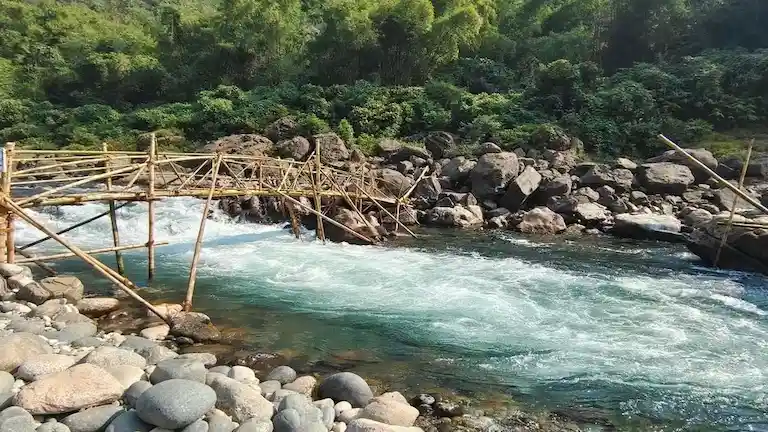
Second, go between 10:30 AM and 1:30 PM. If you go early in the morning, the tall hills block the sun. The water looks dark. You need the sun right overhead to see the rocks at the bottom and get that “flying boat” picture.
Meghalaya’s 3 Micro-Climates: What to Pack
Meghalaya is not flat. You cross three very different weather zones in just one day. You have to pack smart.
Zone 1: The High Central Plateau (Shillong, Laitlum & Mawphlang)
This is high up, between 1,450m and 1,900m. It is the coldest part. In winter, days are 16°C but nights drop to 4°C. The wind at Laitlum Canyons feels freezing. You need warm layers, a fleece, and a thick jacket.
Zone 2: The Southern Rain Escarpment (Cherrapunji & Mawsynram)
This is around 1,000m to 1,400m high. Winter afternoons are sunny and nice (8°C to 19°C). A light hoodie is fine. But from June to September, this area is stuck inside a rain cloud. You need a good rain poncho and clothes that dry fast. Jeans will stay wet for days.
Zone 3: The Tropical Valleys (Dawki & Nongriat)
Dawki and the valley of the Root Bridge are very low, just 50m to 400m above sea level. It gets hot here. Even in January, daytime feels like 24°C to 26°C. If you hike down to Nongriat in winter, wear layers. You will want to take off your jacket and hike in a t-shirt very quickly.
Best Time for Treks, Caves & Festivals
Living Root Bridge Treks (Nongriat)
Go between October and March. You have to walk down 3,500 stone steps. In winter, the steps are dry and the air is cool. You won’t sweat as much.
The Mawryngkhang Bamboo Trek
This is a scary trek where you walk on thin bamboo over a cliff. Only do this from November to March. Walking on wet bamboo in the rain is a bad idea. See how this compares to our Kedarnath trek difficulty level guide.
Deep Caving Expeditions
Easy caves with lights (like Arwah Cave) are open all year. But deep adventure caves like Krem Chympe are dangerous in the summer. Sudden rain can flood them. Only go deep caving from December to early March.
Major Festivals
Love culture? Go in April for the Shad Suk Mynsiem dance in Shillong. Go in mid-July for the muddy Behdienkhlam Festival in Jowai. Mid-November gives you the Garo Wangala Festival and the Cherry Blossom Festival. December is all about Christmas music and food.
How Weather Changes Your Travel Times
You have to travel everywhere by car. There are no trains here. Weather changes how you drive.
Picking the Right Car
Between October and April, the roads are dry. A small car like a Swift or Dzire works fine.
But from June to September, skip the small cars. The rain is heavy and the fog gets very thick. You really need an SUV like an Innova or Sumo for these wet months. Make sure you get a local driver too. They know exactly how to handle the blind corners when you can’t see the road.
Driving Times: Winter vs. Monsoon
Bad weather slows traffic down a lot. Here is how long your drive will actually take depending on when you go:
| Route | Winter & Spring | Monsoon Season |
| Guwahati Airport to Shillong | 3 to 3.5 hours | 4.5 to 5 hours |
| Shillong to Cherrapunji | 1.5 to 2 hours | 2.5 to 3.5 hours |
| Shillong to Dawki / Shnongpdeng | 2.5 to 3 hours | 3.5 to 4.5 hours |
| Cherrapunji to Dawki | 2.5 hours | 3.5 hours |
| Shillong to Krang Suri (Jowai) | 2.5 hours | 3.5 hours |
The Highway Buffer Rule
The drive from Guwahati Airport to Shillong is usually smooth in winter. But in the monsoon, heavy rain causes traffic jams and small mudslides near Nongpoh.
Our Golden Rule: If you fly out of Guwahati between June and September, leave Shillong at least 6.5 hours early. Or sleep in Guwahati the night before. You don’t want a muddy road to make you miss your flight.
Crowd & Cost Guide: Cab Fares and Hotels
Prices change a lot depending on the month. Here is what we see on the ground:
1. High Prices & Exact Booking Windows (Dec 15 – Jan 10 & Mid-November)
During Christmas and the Cherry Blossom Festival, hotels are completely full. A normal taxi from Shillong costs ₹3,500 to ₹4,500 a day. A big Innova costs ₹5,500 to ₹6,500 a day. Mid-range hotels jump to ₹5,000 or even ₹6,500 a night.
Exactly When to Book for Peak Season:
- Cherry Blossom Festival (Mid-Nov): Book your hotels and cabs by August 15th (at least 90 days early). Shillong sells out completely.
- Christmas & New Year (Dec 20 – Jan 5): Book by September 30th (about 75 to 90 days early). Even cab drivers get fully booked.
- Durga Puja Holidays (October): Book at least 45 to 60 days early.
2. Best Value Season (Late Sep – Early Nov & Feb – Apr)
Want good weather and normal prices? Go in February, March, or October. A private cab drops to ₹2,600 to ₹3,200 a day. Good homestays go back to their normal ₹2,500 to ₹3,800 a night. You usually only need to book these about 14 to 21 days in advance.
3. Monsoon Discounts (June – Mid-Sep)
Cabs cost about the same, but hotels drop their prices big time. Luxury resorts in Cherrapunji offer 30% to 50% discounts. If you just want to sit on a balcony and watch the rain, July is super cheap. You can often book these just 7 to 10 days in advance.
Frequently Asked Questions (FAQs)
Which month is best for waterfalls and clear water in Dawki?
The first few weeks of November are perfect. The monsoon storms are finally over, which gives the Dawki river time to clear up and turn emerald green. At the same time, the waterfalls in Cherrapunji still have lots of water left over from the rainy season.
Are waterfalls completely dry in January?
The ones in Cherrapunji definitely dry up, especially cliff falls like Seven Sisters. But you can just drive to the Jaintia Hills instead. Waterfalls there, like Krang Suri and Phe Phe, are fed by actual rivers. They stay full of bright blue water all winter.
Does it snow in Meghalaya?
You won’t ever see snow here because the winter is super dry. However, the nights still get freezing cold. If you wake up early in Shillong during January, you will usually see thick white frost covering the grass and cars.
Is it safe to visit in the monsoon (June to August)?
It is completely safe if you stay on the main highways and hire a good SUV. You just have to skip a few activities. Dawki boating shuts down because the river gets too rough, and exploring deep caves or wet bamboo trails becomes dangerous.
How many days do I need for Meghalaya?
Plan for 6 or 7 days so you don’t spend your whole trip sitting in a car. A great plan is 2 nights in Shillong, 1 night sleeping by the river in Shnongpdeng, and 2 or 3 nights in Cherrapunji to hike the Root Bridge and see the waterfalls.
More Mountain Travel Guides from BriefVoy:
Loved the hills of Meghalaya? Check out our guides to the Eastern Himalayas: