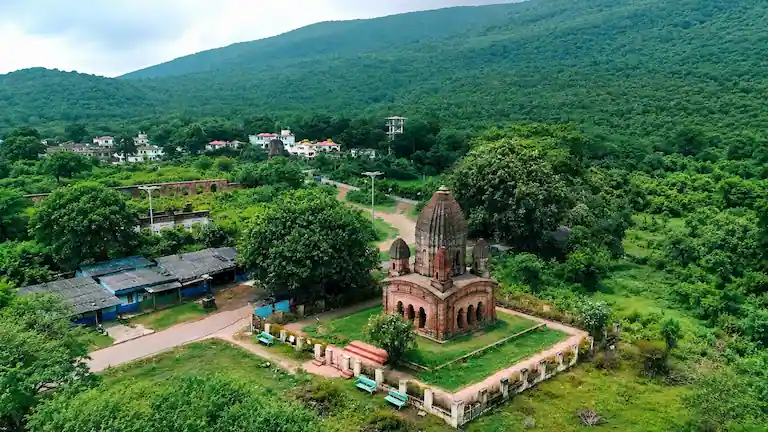
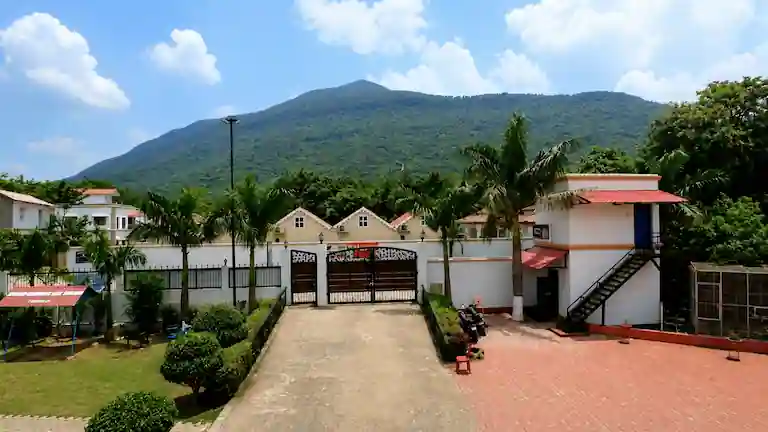
Garh Panchkot is an old ruined fort and temple site at the bottom of Panchet Hill in Purulia, West Bengal. The Panchkot kings ruled from here for hundreds of years. In the 1700s, they fled to Kashipur to escape enemy attacks. Now, people visit this place to see the broken clay temples, walk in the quiet forests, and enjoy a simple weekend trip from Kolkata.
It is a much better choice than Ajodhya Hills if you hate big tourist crowds. I visited the area in July 2026 to check the ground realities. Instead of copying generic tourist stories, I wrote down exactly what I saw. This guide gives you the exact train times, current taxi fares, my walking times, and which forest hotels are actually worth your money. These are the hard facts you need to plan your trip.
The Dark History: What Actually Happened Here
The history of Garh Panchkot comes down to local wealth, regional wars, and village folklore.
The Panchkot kingdom began around 80 to 90 CE when King Damodar Sekhar took power. He set up his rule with support from strong local leaders in the Jhalda area. Five main local groups, called the “Panch Khunt,” helped him. He named the kingdom “Panchkot” to honor them. The word “Garh” simply translates to fort.
Garh Panchkot became their walled capital city much later, between the years 940 and 1750. The kings ruled this forest valley for hundreds of years. During this time, they built several clay (terracotta) temples dedicated to Hindu gods.
This peaceful period ended in the 1740s.
Maratha soldiers invaded Bengal. The local people called these attackers “Bargis.” The Bargis burned nearby villages, damaged the temples, and eventually attacked the main Garh Panchkot fort. The king fled to Kashipur town to survive the raid.
While walking through the site, local guides told me the oral history of this attack. They explained that all 17 of the king’s wives jumped into a deep stone well near the palace. They did this to avoid being captured by the Bargi soldiers.
The kingdom never rebuilt the fort after this attack. The jungle eventually grew over the area, leaving behind only the broken clay temples you can visit today.
Garh Panchkot vs. Other Purulia Places
It is easy to get confused between the different weekend spots in Purulia. I visit these three places regularly for my travel research. Here is a direct comparison to help you choose:
Destination
What it is Best For
Crowd Level
Distance from Kolkata
Garh Panchkot
Old ruins, history, and quiet forests
Low
Around 250 km
Ajodhya Hills
Waterfalls, viewpoints, and hiking
High
Around 300 km
Baranti
Lake views, relaxing, and sunsets
Medium
Around 240 km
Garh Panchkot makes sense if you prefer quiet historical sites. It completely skips the heavy weekend tourist traffic that you normally see at Ajodhya Hills.
Month-by-Month Weather & Best Time to Visit
I travel to this village in every season. Here is the real weather you will face:
October to February (Peak Season): The air feels cool, mostly between 10°C and 22°C. You can walk around the old temples all day without feeling tired. You need to book government rooms one month early because they sell out very fast.
March to Mid-April (Spring): The trees show off beautiful red Palash flowers. It is great for taking photos. But the daytime gets hot, touching 35°C. You will need to carry drinking water.
May to June (Summer – Avoid): The heat goes over 40°C. The stones get too hot to walk near after 9:00 AM. I tell my readers to completely avoid these months.
July to September (Monsoon): Heavy rain turns the whole forest dark green. But the dirt trails on Panchet Hill become pure mud. I actually slipped a few times here, so I do not walk up the hills when it rains.
Top 5 Things to Do (With Real Walking Times)
Put on good walking shoes. I walked to every spot on this list to get the exact timings. Here is what you need to know.
1. The Pancharatna Temple & Ruins
This is the main attraction. It is an old clay temple with five towers. You can still see faded Hindu art on the outer walls.
Building Details: You will notice a few broken temples here. Some have curved roofs with detailed clay work. Right beside them, I saw flat stone temples built by stacking rocks.
Walking Time: I timed the walk from the WBFDC resort gate to these main ruins. It takes exactly 10 to 12 minutes. The dirt path is full of loose rocks and tree roots, so step carefully.
Entry Fee: Free. There is no ticket counter.
Best Time: Go early at 7:00 AM before the morning sun heats up the stones.
2. Trekking the Panchet Hill
This tall, forested hill is right behind the temples.
Walking Time: I climbed the dirt path to find the old guard rooms. It takes about 45 to 50 minutes of walking uphill.
The Guard Quarters: At the top, you will find a gate cut straight into the mountain rock. The king’s guards stood here to watch the valley for enemies.
Safety Rule: The mud here gets extremely slippery. Do not climb this hill if it rains. You do not need a guide for the bottom part, but never walk deep into the jungle alone. If you love quiet woodland getaways, make sure to also check out our detailed Joypur Forest guide for your next trip.
3. Discovering Dhara Spring
Keep walking up past the main ruins to find a natural water spring called Dhara.
Walking Time: I walked uphill for 15 minutes (about 500 meters) from the Pancharatna Temple to get here.
What it is: Water flows out of a stone cut to look like a cow’s head. The old kings built this to get drinking water all year long.
Reality Check: The water looks very clear, but do not drink it. I saw wild animals drinking from the same spot, so it is not safe for us today.
4. Sunset Boat Ride at Panchet Dam
This is a massive water dam on the Damodar River. I took a 15-minute Toto ride from the ruins to reach it.
How to do it: Walk down to the water on the right side of the dam. You will find local fishermen sitting with their wooden boats.
Real Price: I paid ₹400 for a 45-minute boat ride for 4 people in July 2026. Just talk to the boatmen directly to agree on the price.
Best Time: Start your boat ride at 4:30 PM in winter or 5:30 PM in summer. The sunset over the water is beautiful. (Love scenic boat rides? Read our Mukutmanipur Travel Guide).
5. Day Trip to Joychandi Pahar
This is a rocky hill. Many people visit because the famous Bengali movie, Hirak Rajar Deshe, was filmed here.
Getting There: It is 20 kilometers away from Gar Panchkot. You must climb 400 steep stairs to reach the temple at the very top. Read our Joychandi Pahar guide for more details.
Real Price: I hired a local Toto driver to drop me off, wait, and bring me back. It cost ₹600. Some drivers might ask for ₹700.
Ground Realities: Amenities & Emergency Info
Before you go, here is what I actually noticed about the basic facilities on the ground:
Wheelchair Access: Very bad. The dirt path to the main temple is full of loose rocks and bumps. Wheelchairs cannot get to the ruins or the water spring.
Washrooms: There are no public toilets at the ruins or the Panchet Dam boating spot. You have to use your hotel bathroom before you leave your room.
Parking: The WBFDC resort has a large open field that fits about 15 cars. Right outside the main ruins, you can safely park 5 or 6 cars on the side of the dirt road.
Sunset Times: In winter (December), the sun goes down very early (around 5:00 PM). The forest turns pitch black by 5:30 PM. In summer (May), the sun sets around 6:15 PM.
Survival Logistics (Emergency & Money)
Since this is a remote forest village, you must know where to find help if things go wrong:
Nearest ATM: There are no ATMs inside the forest. You will find the last working ATMs near Kumardhubi Station or Dishergarh. Please carry enough physical cash.
Nearest Hospital: If someone gets badly hurt, Sanctoria Hospital near Dishergarh is the closest big hospital. You can find small medicine shops in nearby Chirkunda.
The ruins and forest of Gar Panchkot are a sensitive natural area. I practice and teach the “Leave No Trace” rule every time I visit:
Take Your Trash Back: There are no dustbins in the forest or near the temples. Please carry a small bag for your empty packets and throw them away at your hotel.
Respect the Animals: This is a forest. Please do not feed monkeys or stray dogs. It changes their natural habits and makes them angry and aggressive.
Protect the History: The old clay temples break easily. Please do not touch, climb, or scratch the walls. Do not use bright camera flashes up close on the old bricks.
Stay on the Paths: Walk only on the clear dirt trails so you don’t step on wild plants or get lost in the thick trees.
2026 Verified Travel and Cost Guide
Here is the exact transport data from my own trip in July 2026, so you know exactly what to pay.
Route
How to Travel
Time
Cost (July 2026)
My Advice
Howrah to Kumardhubi
Black Diamond Express (Train 22387)
4 Hours
₹110 (Normal) / ₹400 (AC Chair)
Book early on IRCTC. Make sure you get off at Kumardhubi, not Asansol.
Kumardhubi Station to Hotel
Local Toto or Auto
45 Minutes (20 km)
₹500 – ₹600
Talk to the drivers outside Platform 1. They will charge a little more at night.
Hotel to Panchet Dam
Local Toto
15 Minutes (5 km)
₹200 – ₹250 (Round Trip)
Ask your hotel manager to call a driver for you.
Hotel to Joychandi Pahar
Local Toto
45 Minutes (20 km)
₹600 – ₹700 (Round Trip)
This price includes the driver waiting for 2 hours while you look around.
Driving Directions & Road Conditions
A lot of Kolkata crowds just bring their own cars or bikes for the weekend. Here is the route I take and the ground reality of the roads:
The Best Route: Kolkata to Dankuni to Burdwan to Asansol to Dishergarh to Gar Panchkot via NH19.
Total Distance: 250 kilometers. Expect to drive for 5 to 6 hours.
Real Road Conditions: NH19 is smooth and fast all the way to Asansol. The real problem starts after you cross the Dishergarh river. Those last 15 to 20 kilometers are broken village roads full of potholes. You have to drive this final part very slow in low gear, or you will smash the bottom of your car.
Network Check: Will your phone work?
I tested different SIM cards while walking around the village. Here is the ground reality:
Jio: The best network here. You get strong 4G at the hotels. It drops to 2 bars when you walk inside the temple ruins.
BSNL: Great for normal voice calls. But the internet speed is terrible.
Airtel / Vi: Barely works. My phone just said “Emergency Calls Only” all day when I was near the hills.
My Advice: If you only have an Airtel SIM, download an offline Google Map before you step out of Kumardhubi station.
Exact Weekend Budget Breakdown
How much cash do you actually need to carry? Here is the exact cost per person for a 1-night, 2-day trip from Kolkata:
Budget Traveler: Normal train seat + shared Toto + basic village room (like Palash Bithi) + simple meals = ₹2,000 to ₹2,500 per person.
Comfort Traveler: AC train seat + private Toto + WBFDC Govt Resort + good food and the boat ride = ₹4,000 to ₹5,000 per person.
Where to Sleep (The Best Local Stays)
Watch out for fake booking websites. Only use official links or call the hotels directly. Here are the places I actually trust:
Most private resorts offer secure parking and sit right at the bottom of the Panchet forested hills.
Hotel Name
What It Feels Like
Cost (Per Night)
My Booking Notes
WBFDC Eco Tourism
Govt Forest Lodge
₹1,500 – ₹3,500
Massive area with the best views. Sells out fast, so book 2 months early on the real WBFDC site.
Panchet Residency
Family Resort
₹3,000 – ₹5,000
Good food and secure parking. Pick this if you are bringing kids.
Palash Bithi
Village Homestay
₹1,500 – ₹2,500
Very basic and quiet. Just remember it is 11 km away in Baranti.
Garpanchkot Resort
Nature Camp
₹2,000 – ₹3,500
Right up against the trees. Good spot if you like morning birds.
My Pick: I always tell people to grab the government WBFDC cottages. They are safe, clean, and sit right at the bottom of the hill. It is the best value for your money.
Where to Eat & Local Food
Finding food here can trip you up if you do not plan ahead. Here is the ground reality about the food scene:
Where to Get Main Meals
Do not look for big restaurants or cafes because they do not exist here. You will eat your lunch and dinner right inside your hotel’s kitchen.
Crucial Tip: You must order your meals a few hours in advance. The staff needs time to walk to the local village market to buy fresh ingredients for your plate.
Where to Get Snacks: You will find 2 or 3 tiny tea stalls right outside the main temple ruins. They only sell hot tea, bottled water, and packed biscuits.
Local Dishes to Order
The village food is simple, fresh, and cooked with strong mustard oil. Tell your hotel cook to make these exact items:
Postor Bora: Crispy, deep-fried patties made of poppy seeds.
Deshi Murgi-r Jhol: A spicy, thin chicken curry made with local village chickens. It is amazing with hot rice.
Ruti and Ghughni: Hot flatbread served with a spicy yellow pea curry. This is the best local breakfast you can get.
Neighboring Spots for a 3-Day Trip
People usually visit more than just Garh Panchkot. If you have an extra day, visit these places. Check out our complete Purulia travel guide and our full library of destination guides for more details.
1. Baranti Lake (Muradi Dam)
Baranti is a small village about 12 to 15 kilometers away.
Why Go: The dam has a beautiful, quiet lake with small hills around it. It is famous for its bright red Palash flowers in spring and lovely sunsets.
How to Go: The road goes through local villages. It takes 30 to 45 minutes to drive there from Garh Panchkot.
2. Maithon Dam & Kalyaneshwari Temple
Maithon Dam is a massive water dam on the border of West Bengal and Jharkhand.
Why Go: You can visit this on your way back home. It is about 35 to 40 kilometers away.
The Temple: Right before the dam, you can visit the Kalyaneshwari Temple, an old and very famous Kali temple.
How to Go: From Maithon, the Kumardhubi train station is very close (about 10 km), so it is easy to catch your train back to Kolkata.
3. Koro Hills & Kashipur Rajbari
If you love history, visit these two places.
Why Go: The Kashipur Rajbari (palace) is the big house where the Panchkot kings moved after they ran away from the Bargis. Nearby, the Koro Hills have a beautiful, quiet forest that very few tourists visit.
4. Rakab Forest & Keshargarh Fort Ruins
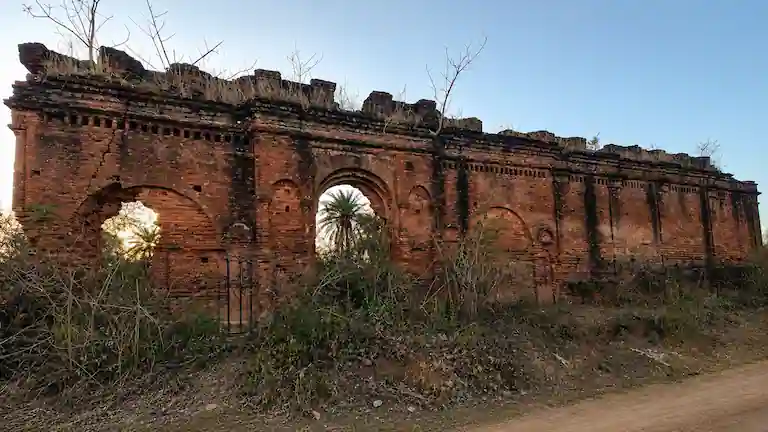
The overgrown, historical brick ruins of Keshargarh Fort hidden deep in the forest.
If you love raw history and offbeat travel, you have to visit this spot.
Why Go: Before the Panchkot kings moved to the Kashipur Rajbari, their capital was actually at Keshargarh. Today, the broken stone walls and gateways of the Keshargarh Fort are hidden deep inside the dense trees of the Rakab Forest.
The Vibe: It is deeply historical and completely off the standard tourist map. It used to be a royal hunting ground, and you can still walk the quiet dirt trails through the Sal and Palash trees.
The Ultimate 2-Day Itinerary
If you catch the morning Black Diamond train from Howrah, here is the exact time plan I use for this weekend trip.
Day 1: The Ruins and the Lake
11:30 AM: Reach your hotel from Kumardhubi station and drop your bags.
1:00 PM: Eat a hot Bengali lunch inside the hotel dining room.
2:30 PM: Walk down to the main ruins. It takes exactly 10 minutes. Spend an hour checking out the broken temples and the Dhara water spring.
4:00 PM: Catch a local Toto to Panchet Dam.
4:30 PM: Hire a wooden boat from the local fishermen. The sunset over the huge water is incredible.
6:30 PM: Head back to your room before the forest gets totally dark.
Day 2: The Hills and Going Home
7:00 AM: Wake up early and walk along the quiet dirt roads near your hotel.
9:00 AM: Finish your breakfast, pack up, and check out of your room.
10:00 AM: Get a Toto and head to Joychandi Pahar.
10:45 AM: Climb the steep stairs to the top of the rocky hill to see the whole district from above.
1:30 PM: Start your Toto ride back to Kumardhubi station.
2:45 PM: Reach the station. Buy your drinking water outside, then go straight to Platform 2. You will wait here for the Black Diamond Express (Train 22388) that arrives at 4:49 PM.
What to Pack Checklist
Since you are heading into a remote forest village, you need to pack for the ground reality:
Physical Cash (at least ₹4,000): UPI apps like Google Pay will fail because the internet is weak. Toto drivers and boatmen only take cash, and there are zero ATMs near the hotels.
Jio or BSNL SIM: My Airtel network was completely dead near the ruins. Bring a Jio or BSNL phone if you actually need to make calls.
Tough Walking Shoes: Do not bring flat sandals or heels. You will be walking on loose rocks and slippery mud to reach the old temples.
Mosquito Spray: The forest bugs and mosquitoes come out in full force the second the sun goes down.
A Light Jacket: Even in warmer months like March or October, the night wind blowing off the huge water dam gets surprisingly cold.
Who Should NOT Visit This Place
Gar Panchkot is a lovely, quiet village, but it is not for everyone. You should NOT go if:
You want luxury and nightlife: There are no bars, shopping malls, or fancy coffee shops here. The village goes to sleep very early.
You have severe walking problems: The old ruins are inside a wild forest with bumpy, rocky paths. Wheelchairs cannot reach the main historical spots.
You expect 24/7 room service: Local forest hotels have very few staff members. Kitchens need to know what you want to eat hours in advance. If you prefer a completely flat, coastal destination with easy walking paths instead of rocky hills, read our comprehensive Gangasagar travel guide.
Official Links for Booking & Planning
I see a lot of fake websites trying to scam tourists. To keep your money safe, only use these exact government links to book your trip:
It is famous for its broken clay temples hidden inside a quiet forest. Hundreds of years ago, Maratha soldiers (called Bargis) attacked and ruined this capital city of the Singh Deo kings.
How many days do I need for this trip?
One night and two days is plenty of time to see the old ruins, take the boat ride, and relax. If you also want to visit nearby spots like Baranti or Maithon Dam, stay for two nights.
Is Garh Panchkot safe for families?
Yes, it is very safe and the local villagers are helpful. Just remember it is a real forest. Do not walk into the deep woods or near the ruins after sunset because of wild animals and snakes.
Can I actually see the well where the queens died?
You can ask the village guides to show you the exact spot, but there is not much to see today. The old stone well from the local story is now totally buried under dirt and tall grass.
Do I really need an AC room?
If you visit between December and February, a non-AC room is completely fine. But if you come in March, October, or the summer months, you must book an AC room. The daytime heat gets trapped in the valley and the rooms get very hot.
About The Author: Bijoy Pal is the lead travel researcher for Brief Voy. Born and raised in West Bengal, Bijoy focuses on finding the real ground facts for weekend trips across Purulia, Bankura, and the Rarh region. He personally rides the local trains and buses for every route he writes about, whether covering the ruins of Panchet or researching his detailed Gongoni Garbeta travel guide. This ensures his guides give you the exact, honest details you actually need for your trip.
Bijoy Pal
Hi, I’m Bijoy Pal. Welcome to my page. As a travel expert and the Founder of BriefVoy.com, my mission is simple: to give you real facts and clear steps for hard-to-reach places. I believe travelers deserve the truth, not just edited photos and fake stories. That’s why I skip the basic tourist fluff and useless top-10 lists. Instead, I use my own hands-on experience to show you the exact ground reality of unique destinations. My goal is to give you honest, practical guides so you can plan your next adventure with total confidence.