Physical Address
Bankura, West Bengal 722142
Physical Address
Bankura, West Bengal 722142

Most people searching for a Gangasagar travel guide fall into a ₹7,000 private taxi trap. Travel agents want you to think that visiting this island is too hard to do alone. Here is the truth: you do not need an expensive tour to visit the Kapil Muni Temple. I recently made a complete budget Kolkata to Gangasagar trip by train and ferry. I handled the local transport and the confusing river crossings all by myself. The whole trip cost me less than ₹500.
To reach the island, you must cross a huge river controlled by ocean tides. Because of this, knowing the exact Gangasagar ferry timings and tide rules is the most important part of your trip. In this guide, I will show you the exact train routes, the real boat schedules, and the true ticket prices. You will learn how to skip the travel agents, save your money, and enjoy a peaceful trip without ever getting stuck in the mud.
Gangasagar (people also call it Sagar Island) is a quiet island at the very bottom edge of West Bengal, India. It belongs to the South 24 Parganas district and the total Kolkata to Gangasagar distance is roughly 130 kilometers.
What makes this island so special is its location. It sits right where the holy River Ganges flows into the massive Bay of Bengal ocean. Locals call this sacred meeting point the Sangam.
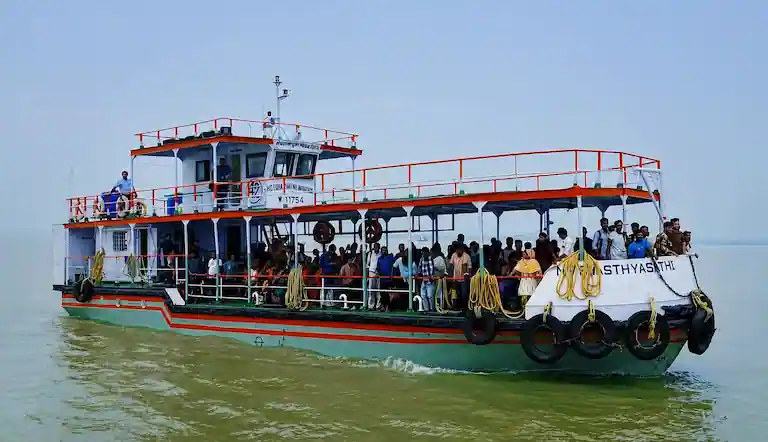
Since it is a real island, you won’t find any direct roads or bridges connecting it to the mainland. You cannot just drive straight to the Kapil Muni Temple. Instead, you have to take a train or car to a mainland town called Kakdwip. From there, you must hop on a government ferry boat to cross the wide Muriganga River and finally reach the island.
Before we go through the step-by-step route, here is a quick summary of the whole trip. Take a screenshot of this table on your phone to use during your journey:
| Feature | Details |
| Where it is | Sagar Island, South 24 Parganas, West Bengal |
| Distance from Kolkata | About 130 kilometers |
| Total Travel Time | 4 to 5 hours (one way) |
| Best Months to Visit | October to March (Winter season) |
| Mainland Ferry Point | Kakdwip Lot No. 8 (Harwood Point) |
| Island Ferry Point | Kachuberia Ghat |
| Total DIY Travel Cost | ₹300 to ₹500 (Round trip, per person) |
Your trip here will change completely depending on the month you choose to travel. (For a complete month-by-month crowd calendar and tips on dodging the heavy ferry lines, read our dedicated guide on the Best Time to Visit Gangasagar).
This is the perfect time for a peaceful and quiet trip. The weather is cool and pleasant (around 15°C to 22°C). This cool weather makes the long journey and the walks to the temple very comfortable.
Monsoon (July to August): Heavy rains and big sea storms make the river water very rough. For your safety, the government sometimes cancels the ferry boats completely. If this happens, you can get stuck on the island for days.
Summer: The weather is very hot and sticky. There is almost no shade on the open beach to protect you from the sun.
Every year in mid-January, for the Makar Sankranti festival, this quiet island turns into a giant city of tents. This is the famous Gangasagar Mela. It is the second-biggest religious festival in India after the Kumbh Mela.
If you visit the island during these few days, all normal travel rules change:
My local advice: If you are traveling with older parents or small children for a relaxing trip, do not visit during the Mela in January. Go in November, December, or February instead. In these winter months, the weather is beautiful, the island is peaceful, and the trip is very easy.
You can’t just drive your car straight to the Kapil Muni Temple. The trip actually happens in four parts. Here is the exact way to do it on your own and save your money.
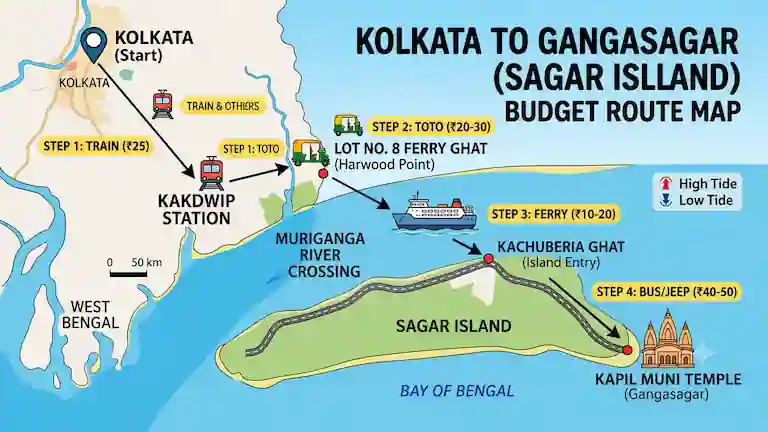
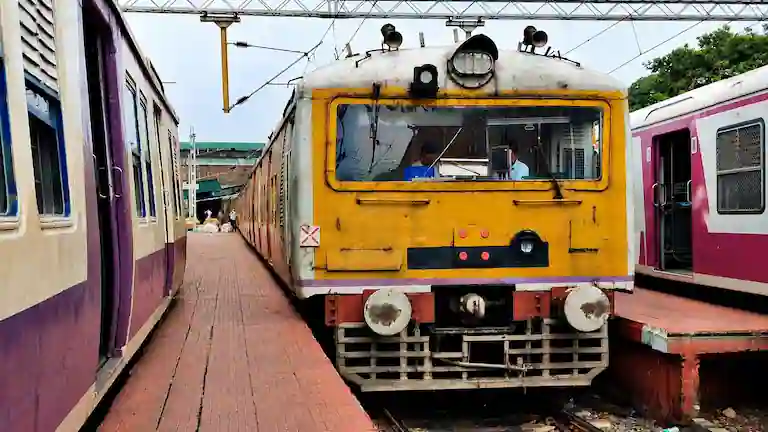
Skip the highway traffic and take the local train. It is the cheapest and fastest way.
When you get down at Kakdwip Station, just walk outside to the main road. You will see a line of shared Totos (e-rickshaws) and magic vans waiting.
This is the main part of the trip. You have to cross the big Muriganga River on a government boat (called a vessel) to finally reach Sagar Island.
When you get off the boat at Kachuberia Ghat, you are finally on Sagar Island! But the temple is still 30 kilometers away at the other end of the island. Walk straight out of the boat area, and you will see a big bus stand.
The bus or jeep will drop you right at the Gangasagar Bus Stand. From there, the beach and the temple are an easy 10-minute walk.
The hardest part of planning your own trip to Gangasagar is dealing with the river tide. The boat schedule is not like a train. It changes every single day because of the ocean.
(Deep Dive: For full ticket costs and daily tide rules, read our Gangasagar Ferry Timings guide.)
Here is a quick summary so you do not get stuck:
The tide timings change by about 45 to 50 minutes every day based on the moon. A boat that crosses safely at 1:00 PM today might be stuck in the mud at 1:00 PM next week.
You do not have to guess the boat times! Just open the Google Play Store on your phone and download the free app called “GangaSagar – Vessel Time Table“.
The local government updates this app every day after 6:00 PM. It shows the exact boat schedule and low tide times for the next day. Always check this app the night before you travel. It is the best local secret for planning your trip.
The main reason millions of people visit this island is to take a holy dip where the river meets the sea (the Sangam) and pray at the Kapil Muni Temple.
Unlike the rough waves of Digha, the water here is calm and shallow. The beach is very wide and flat.
You will find safe changing rooms and clean toilets near the beach, managed by the local administration. Many local priests sit near the water. You can perform a short puja (prayer) with them, but always agree on the donation amount before you sit down to avoid arguments.
After your bath, walk back up to the Kapil Muni Temple. It is a bright red and yellow temple dedicated to the great sage Kapil Muni.
This island is mostly about peace, prayer, and slow living. Here are the best things to do:
As mentioned above, taking a dip at the confluence is the ultimate spiritual activity here. The flat sand makes it safe to stand in the shallow water.
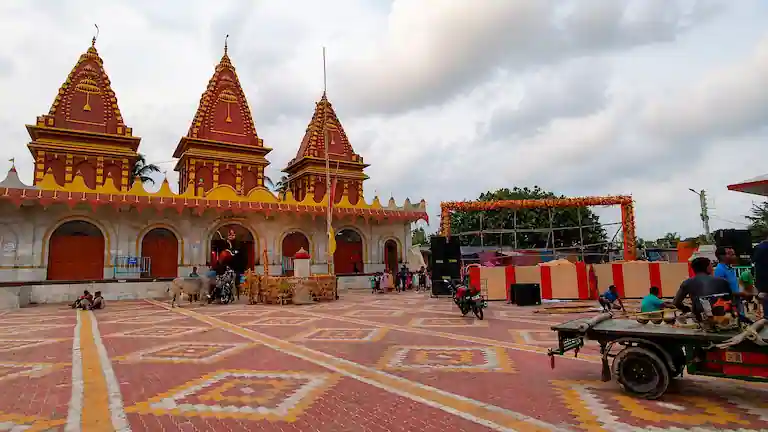
The spiritual heart of the island. Make sure to visit during non-Mela months to sit quietly inside the temple complex and soak in the serene atmosphere.
Located a short distance from the main beach, this tall red-and-white lighthouse offers a stunning view of the entire island and the Bay of Bengal. It is a great place to take photos, especially in the afternoon.
You will not find fancy restaurants here. Instead, you should experience the simple, pure food offered by the local religious centers. You can visit large Ashrams like the Bharat Sevashram Sangha, which serve pure vegetarian Bengali meals (Bhog) sitting on the floor at exact times.
The ISKCON Temple & Prasadam (Budget Hack): If you want a spotless, peaceful place to eat or sleep, visit the ISKCON Gangasagar Guesthouse (located very close to the Kapil Muni Temple). They serve a fantastic, pure vegetarian Jagannath Rajbhog Thali for just ₹150 (or a regular thali for ₹100). Note that you must pre-book your lunch with them in the morning, and strictly no outside food (especially onion or garlic) is allowed anywhere on their premises.
If you have extra days, there are beautiful coastal spots just a short distance back on the mainland. You can combine these with your Gangasagar trip:
You will not find fancy luxury resorts on Sagar Island. It is a simple village area. But getting a clean, safe room for the night is very easy. Here are the three main places people stay.
If you want the best comfort, book a government guest house. The Gangasagar Tourist Lodge is the top choice. You get an AC room, a clean toilet, and safe parking for ₹1,000 to ₹2,000. My tip: You have to book these online on the West Bengal tourism website long before your trip. They are almost always full.
The main road from the bus stand to the Kapil Muni Temple is full of small hotels. If you visit in the quiet winter months, skip online booking. Just walk in, ask the manager to show you the room and the bedsheets, and pay right there. A room usually costs between ₹800 and ₹1,500.
If you want to save money, stay at a large charity Ashram like the Bharat Sevashram Sangha.
Want a stress-free weekend trip from Kolkata? Just follow this schedule. I made this exact timeline to match the river tides so you never get stuck waiting for a boat.
Here is a quick, honest breakdown of exactly what a 1-night, 2-day trip cost the two of us. We tracked every rupee so you don’t have to guess:
| Where the Money Went | Real Cost (For 2 People) |
| Sealdah to Kakdwip Train (Round trip tickets) | ₹100 |
| Local Toto / Auto (Kakdwip Station to Lot 8 Ghat and back) | ₹100 |
| Muriganga River Ferry (Lot 8 to Kachuberia and back) | ₹80 |
| Local Bus On The Island (Kachuberia Ghat to Temple and back) | ₹200 |
| Clean Ashram Room / Budget AC (1 Night stay) | ₹1,000 |
| Simple Vegetarian Food (4 local meals) | ₹600 |
| Our Total Spending | ₹2,080 (Just ₹1,040 per person) |
Gangasagar is safe, but it is still an island far from the city. Here is what you really need to know to stay out of trouble:
A big river cuts this island off from the city. Tour guides usually hide this to sell packages, but here is the real medical situation:
Yes, but I really don’t recommend it. It’s a completely exhausting day. Even if you catch the 6:00 AM train from Kolkata, you won’t reach the temple until around 11:00 AM. By the time you take a quick dip and grab lunch, you have to turn right around and leave by 2:30 PM sharp. If you push it any later, you run a huge risk of getting stuck at the ferry ghat in the dark.
Technically yes, but please don’t. It’s incredibly expensive, and you’ll easily waste 4 to 6 hours just sitting in the vehicle queue. Do what the locals do instead: drive up to Kakdwip, leave your car at the secure “Mohana” government parking lot right near Lot No. 8, and just walk onto the passenger vessel.
Not yet. While the government finally laid the foundation stone for the new Muriganga river bridge in January 2026, construction will take at least two to three years. So right now, there is absolutely no road connection. You still have to take the ferry.
Yes, absolutely. Since it’s a major pilgrimage site, there is heavy police security everywhere and the locals are very used to tourists. Just stick to one golden rule for peace of mind: finish all your travel during daylight hours. Do not attempt the river crossing after dark.
It’s exactly 30 kilometers. When you get off the boat, don’t fall for the local Toto drivers who try to hustle you by saying the temple is “just down the road.” It’s a solid one-hour drive. Skip the Totos and get straight on a government bus or a shared Jeep (Trekker) instead.
About the Author: Bijoy Pal writes comprehensive destination guides and explores the hidden spots of West Bengal. He goes to every place himself using local trains and buses. He never guesses the details or copies from other websites.