Physical Address
Bankura, West Bengal 722142
Physical Address
Bankura, West Bengal 722142

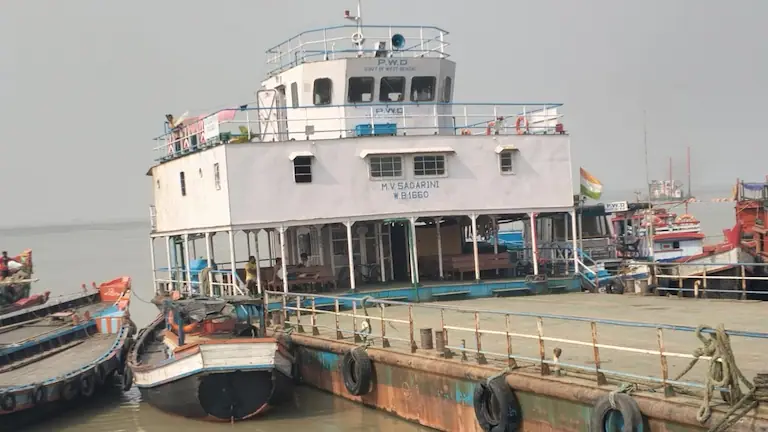
Most travelers check Gangasagar ferry timings expecting a fixed, train-like schedule. This is the biggest mistake you can make.
Sagar Island sits right where the river meets the sea, so the boats only run when the water is deep enough. If you arrive at low tide, the river level drops, the boats stop, and you can easily lose 3 to 5 hours sitting in the waiting hall.
In this guide, I’ll show you how the daily tide changes work, how to check live boat times on your phone, and how to get through the ticket counter without getting stuck.
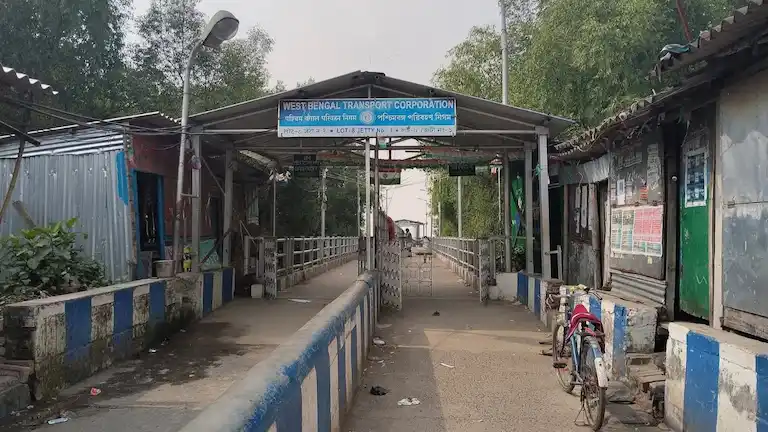
Always choose the government-run Kakdwip Lot No. 8 (Harwood Point) ferry ghat. It is significantly safer than the alternative Namkhana route and operates large, stable vessels managed by the West Bengal Surface Transport Corporation (WBSTC).
The most crucial fact about the Gangasagar crossing is that the daily schedule is never the same two days in a row.
When the tide goes out (Bhata), the river water level drops drastically. The heavy steel passenger vessels cannot safely navigate the thick mud banks, forcing all ferry operations to a complete stop. This low-tide pause lasts between 3 to 5 hours every single day.
Because ocean tides follow the moon’s pull rather than a standard 24-hour clock, this low-tide window shifts forward by about 45 to 50 minutes every day.
Relying on a blog post with an old “fixed schedule” guarantees you will get stuck.
The water level is not the only thing that stops the boats. During the summer and monsoon months (April to August), sudden local storms called Kalbaisakhi (Nor’westers) can hit the river. If strong winds begin, the port authority will instantly stop all ferries for your safety, even if it is high tide.
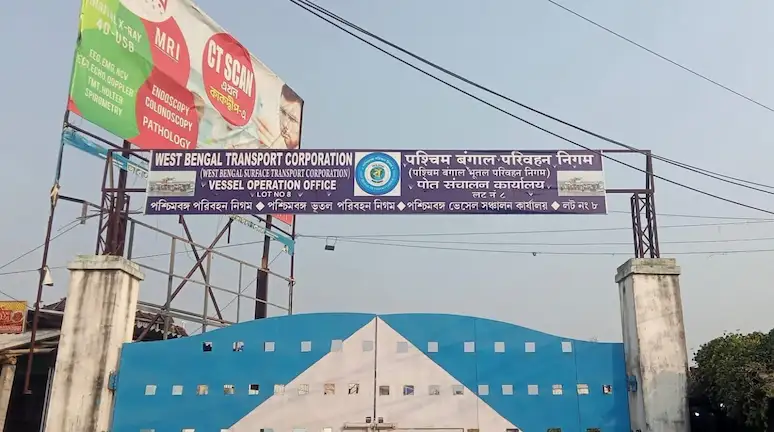
You do not need to calculate the daily tide shifts yourself. The local port office provides daily updates through a free Android app.
Unlike small wooden tourist boats, the Lot 8 crossing uses massive government ships run by WBSTC. You will ride on large, heavy vessels with names like M.V. Swasthyasathi or M.V. Sagar. Understanding the layout helps you get the best seat.
If you arrive right after the water drops, don’t stress. You just have to sit tight at Lot 8 until the water comes back.
The main waiting shed is huge and covered, so you won’t be stuck standing under the sun. There are plenty of plastic chairs and ceiling fans running inside.
If you get hungry or bored, there are tea stalls just outside the gate selling hot chai, bottled water, and biscuits. Paid toilets are right next to the ticket counter—just make sure you have some small change on you and carry your own pocket soap or sanitizer.
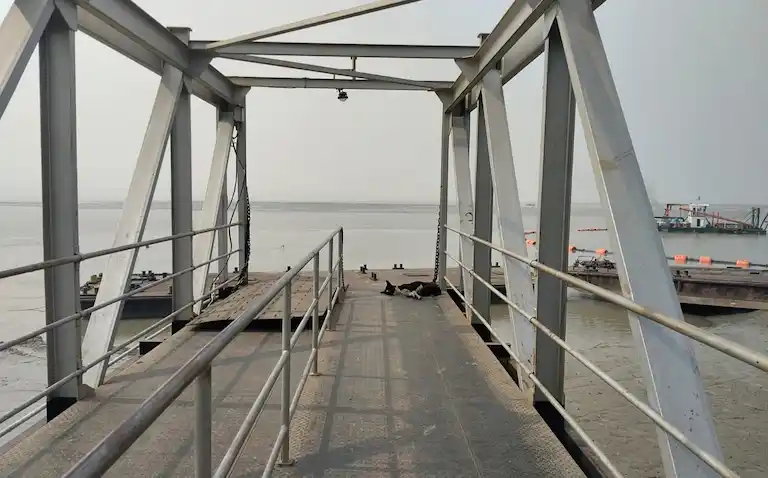
There are no luggage lockers here, so keep your bags near you while you sit. Getting onto the boat can be tricky because as the tide changes, the angle of the metal walking ramp changes with it. During mid-tide, the ramp gets very steep and slippery. If your bags are heavy, do not carry them yourself. You can pay one of the red-shirt porters at the gate around ₹30 to ₹50 per bag to carry your luggage safely onto the boat for you.
A major concern for travelers with older parents is what happens if a medical emergency occurs while the ferry is stopped during low tide. The West Bengal government has a strict emergency plan. High-speed hovercrafts and special shallow-water speedboats are kept ready at Lot 8 and Kachuberia. If there is a real medical crisis, these fast boats can glide over the mud flats even during low tide to rush patients to the mainland hospital in Kakdwip.
The return journey from Sagar Island follows the exact same tide logic. However, the crowd is different.
Because hundreds of pilgrims finish their temple visit at the same time, the bus stand at Kachuberia gets very crowded right before the boats start running again after a low tide. (To understand exactly how to navigate local island transport and temple darshan timings, refer to my full Gangasagar travel guide).
The last boat from Kakdwip Lot 8 to Sagar Island leaves around 9:30 PM. The last boat coming back from Kachuberia leaves at 9:00 PM. Just remember, these times can change if the river water is too low.
Normally, no. From February to December, the boats only run during the day. The only time they run all night is during the big Makar Sankranti festival in January. (If you want to know what to expect during this massive event, check out my post on the best time to visit Gangasagar).
No, you cannot take your car or motorcycle on the boat. You have to leave your vehicle at the parking lots near the Lot 8 gate. It is very safe and costs about ₹100 to ₹150 for the whole day.
Yes, it is very safe. The government uses big, heavy steel ships that do not shake much, even when the river gets rough. You should avoid the Namkhana route because those are small wooden boats that wobble a lot in the wind.
A one-way ticket for the government boat costs just ₹10 to ₹20 per person. You must buy it with cash at the counter. You cannot book these paper tickets online or pay with UPI.
About the Author: Bijoy Pal is a local traveler from West Bengal who loves exploring the state. He has been to Sagar Island many times to check the actual boat timings, travel routes, and real costs in person. He writes simple, honest travel tips and guides to help you save time, avoid tourist traps, and travel without getting stuck.

