Physical Address
Bankura, West Bengal 722142
Physical Address
Bankura, West Bengal 722142

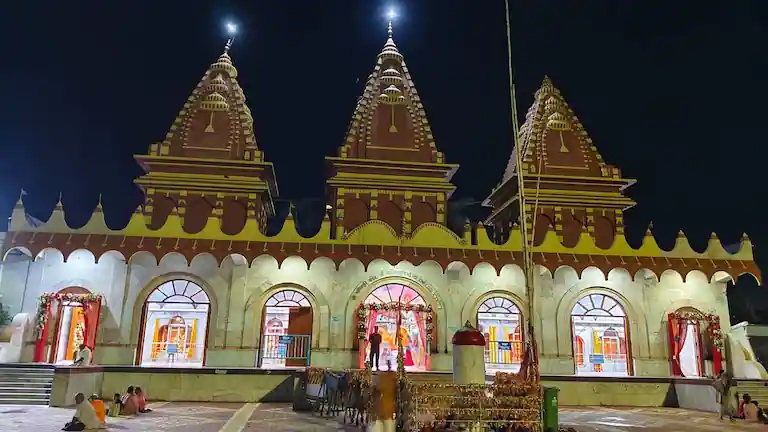
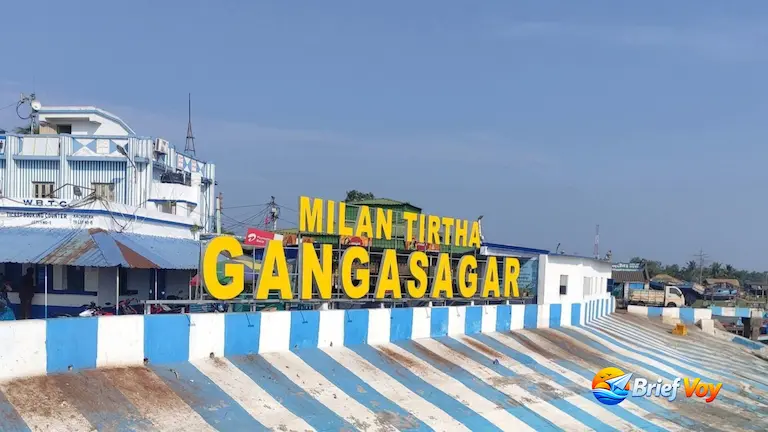
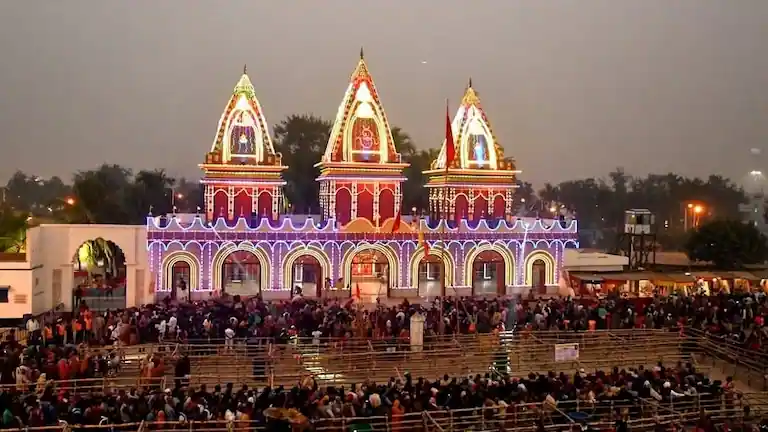
When most people think of Gangasagar, they imagine millions of pilgrims packed tightly on the beach for the big January Makar Sankranti Mela. But what if you are traveling with older parents? Or maybe you just want to listen to the ocean waves and pray at the Kapil Muni Temple in peace. If so, finding the best time to visit Gangasagar beach avoiding crowds is your main goal. That means you need to skip the January festival completely.
Travel agents usually won’t tell you this, but Sagar Island is actually empty and very quiet for 10 months of the year. Below, I will show you the exact months to visit. You will learn when the long ferry lines disappear, when hotel prices drop, and how to enjoy the peaceful side of the island.
(Note: Planning a trip with older parents or need to see the exact train route from Kolkata? Read our complete Gangasagar Travel Guide & Ferry Timetable for the full step-by-step route).
If you are in a hurry, here is a quick guide on when to plan your trip:
Many people will tell you that winter is the best time to go. But locals know a secret: February is actually the perfect month to visit Gangasagar.
People who live there call this the “Mela Hangover.” Here is why February is so great:
The government spends a lot of money to get the island ready for the big January Mela. They fix the broken roads, add extra streetlights, and give the temple a fresh coat of paint.
If you visit in February, all these new changes are still there, but the millions of people have gone home! You get to drive on the brand-new, smooth 30km road from the ferry ghat to the temple with almost zero traffic.
Also, the beach is very clean in February. The government clears out all the festival trash right after the Mela ends, leaving the sand spotless just for you.
During the January Mela, a very basic hotel room or Ashram bed can cost three times its normal price. Many places are fully booked 6 months in advance.
By the first week of February, the hotel owners are desperate for tourists. A room that cost ₹2,500 in January will suddenly drop back down to ₹800 or ₹1,000. You can walk right in without booking ahead of time and easily get a sea-facing room.
February is the end of winter in West Bengal. The cold January winds are gone, and the days feel really nice (around 22°C to 25°C). You don’t need to pack big winter jackets anymore, but you also won’t get sweaty walking from the bus stand to the beach.
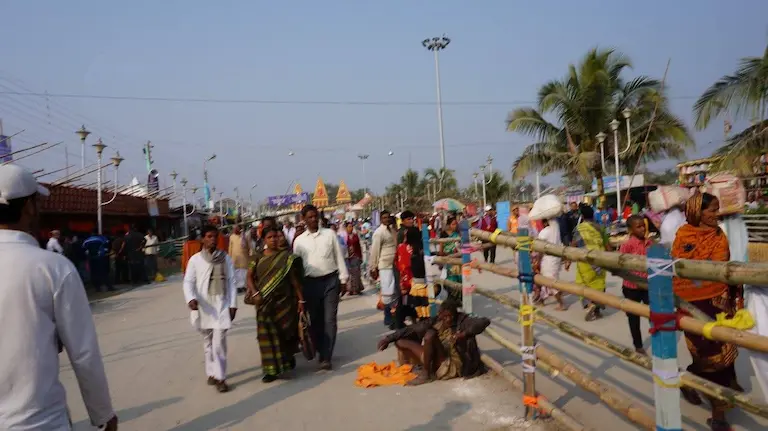
To help you figure out the best time to visit Gangasagar, here is a realistic look at what the island feels like during different parts of the year.
This calendar shows exactly what to expect at the major choke points on your journey.
| Month | Temple Queue | Ferry Queue (Lot No 8) | Beach Crowd | Hotel Prices |
| January (Mela) | 3 – 5 Hours | 3 – 5 Hours | Extreme | ₹2,500+ (Peak) |
| Feb – March | No Wait (Walk-in) | 10 Minutes | Very Low | ₹800 – ₹1,000 |
| April – June | No Wait (Walk-in) | 10 Minutes | Low | ₹800 – ₹1,000 |
| July – Sept | No Wait (Walk-in) | High risk of delays | Very Low | ₹800 – ₹1,000 |
| Oct – Dec | 10 – 20 Minutes | 20 Minutes | Medium | ₹1,000 – ₹1,500 |
If you are traveling during the peak winter months but want to avoid the Gangasagar Mela crowds completely, consider exploring the lesser-known, serene beaches of neighboring Purba Medinipur, such as the quiet sands of Bankiput Sea Beach or the hidden Baguran Jalpai coastline.
Here is a quick look at what the weather actually feels like during the year:
| Weather | Winter (Dec to Feb) | Summer (Mar to May) | Rainy Season (Jun to Sep) |
| Heat Level | 12°C to 25°C | 30°C to 35°C | 26°C to 31°C |
| Stickiness (Humidity) | 60% to 70% | 75% to 85% | 85% to 95% |
| Rain | 10mm to 20mm | 50mm to 120mm | 250mm to 350mm |
| Wind | 10 to 15 km/h | 15 to 20 km/h | 20 to 30+ km/h |
| Sunrise | Around 6:15 AM | Around 5:15 AM | Around 5:05 AM |
| Sunset | Around 5:15 PM | Around 6:00 PM | Around 6:15 PM |
| Sun Strength | Normal | Extreme | High |
Important Note for Summer Travelers (April – June):
Why avoid April to June? It isn’t just the 35°C air temperature and Extreme UV Index. You are required to leave your shoes far away before entering the Kapil Muni Temple courtyard. By 11:00 AM in May, the sand and stone courtyard become so scorching hot that it is physically painful to walk barefoot to the shrine.
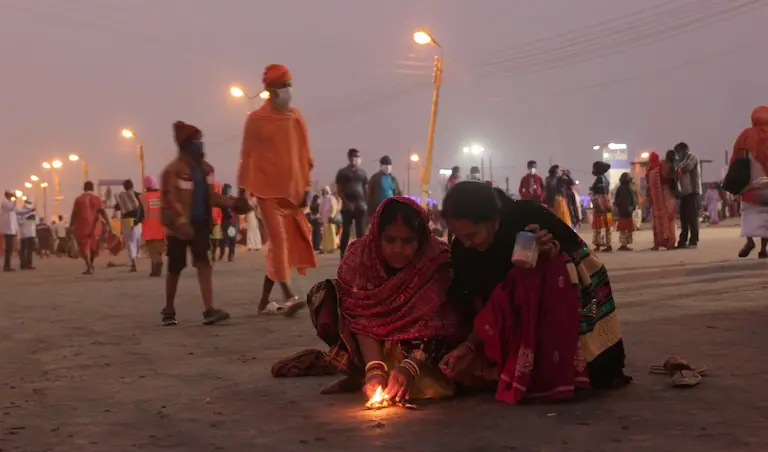
Not everyone travels the same way. Here is a quick breakdown to match your specific needs:
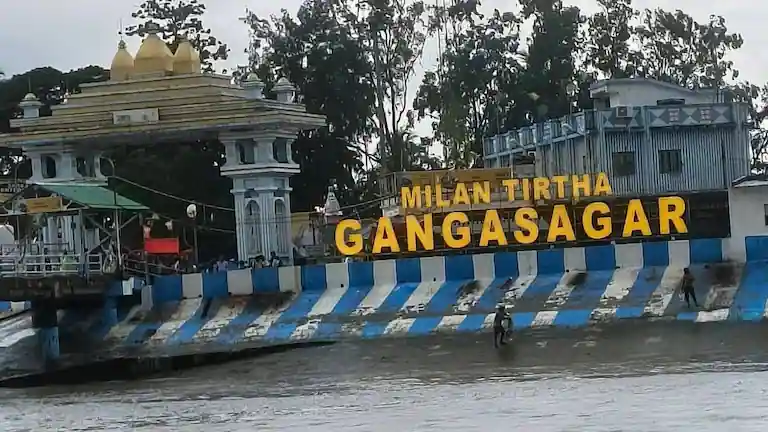
The biggest mistake tourists make is forgetting that Gangasagar is a real island. You cannot drive a car straight there. You have to cross the massive Muriganga River on a government ferry boat from Kakdwip (Lot No. 8) to Kachuberia.
The number of crowds directly changes whether this boat crossing takes 45 minutes or 4 hours. (For official vessel notices, you can always check the West Bengal Inland Water Transport portal).
During the peak festival in January, the lines for the ferry boat at Lot No. 8 can stretch for over a kilometer long. Even though the government runs extra boats non-stop, you might have to wait in a fenced line for 3 to 5 hours just to step foot on a boat. If you are traveling with older parents, this wait can be very tiring.
If you visit during these months, the boat ride is actually very peaceful. You just pay your ₹15 at the ticket counter and walk right onto the ship. There are no long lines. You can easily grab a window seat and just watch the birds fly over the water.
No matter how empty the island is, the boats still stop running during Low Tide (Bhata) because the heavy ships get stuck in the mud.
Here is a local secret: The low tide shifts by about 45 to 50 minutes every day based on the lunar cycle. If the ferry stops at 1:00 PM today due to mud, it will stop around 1:45 PM tomorrow. Do not rely on yesterday’s schedule!
(Deep Dive: Want to know the exact boat schedules, ticket prices, and how to check the daily tide app? Read our full guide on Gangasagar Ferry Timings.)
Use this interactive calculator to understand how the crowds and tide shifts will impact your specific travel month:
Enter today’s ferry stop time (low tide) to instantly calculate when the ferry will pause on your exact travel date.
Understanding these coastal tide cycles is crucial across the entire South 24 Parganas district. If you plan to explore nearby coastal spots on the same trip, be sure to check how tides affect ferry crossings in our Mousuni Island trip guide or when planning a drive down to Bakkhali Sea Beach.
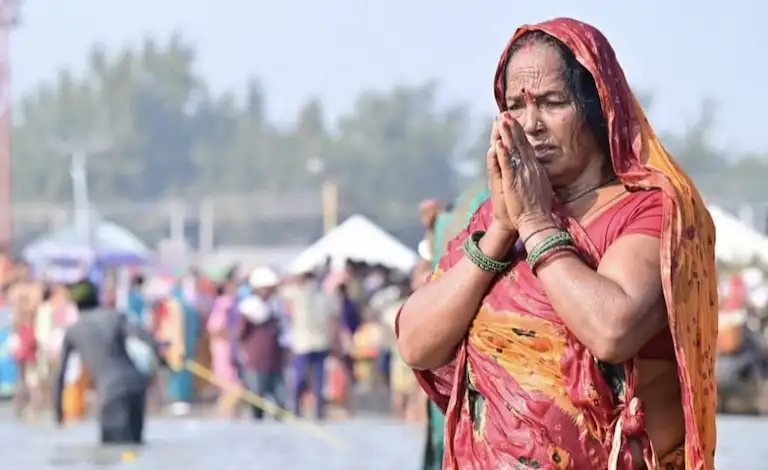
Most people visit the island just to take a holy bath at the "Sangam"—the exact spot where the River Ganga meets the sea.
If you want a peaceful bath, here is what you should do:
Even in the quiet months, the island can suddenly get busy for a day or two. Look at your calendar for these dates before you pack your bags:
Going when it is quiet is great, but remember that an empty island also means a few things will be closed.
Gangasagar is a quiet, holy place. It is not a noisy tourist spot. If you want to hear the temple bells and walk on an empty beach without people pushing you, go in November, December, or February.
Do not go in January unless you really want to see the huge festival crowds. Also, stay away during the heavy rains in July and August so you stay safe.
(Tip: You can check the West Bengal Tourism website for quick updates before you pack your bags).
Yes, the island is open all year, but your trip will depend a lot on the weather. The best time to visit Gangasagar is during the winter months from November to February because the air is cool. Try to avoid the rainy months from June to September. Heavy rain makes the Muriganga river unsafe. When the storms get bad, the government simply stops running the ferry boats, and you might get stuck.
There is no strict rule for clothes. But it is a temple, so people expect you to dress simply and cover your knees and shoulders. Loose cotton clothes work best in the heat. Just remember one big thing: you must leave your shoes far away before you enter the temple area. If you go during the hot summer months, put on thick socks. The sand and stones get so hot they will actually burn your bare feet.
A 1-night, 2-day trip is the best choice if you want to relax. Covering the complete Kolkata to Gangasagar distance and coming back on the same day takes at least 10 hours of travel. That is very tiring for anyone. If you stay for one night, you can wake up early, watch the sunrise over the sea, and finish your holy bath before the afternoon heat starts.
Yes, the temple is open every single day. The big festival tents and food stalls pack up after January. But the actual temple, the local village shops, and the Ashrams are always open. You still get to see everything you came for, just without the massive crowds and pushing.
This saying means you can visit other holy places many times, but Gangasagar only once. A long time ago, the journey here was very dangerous. People had to cross the wild Sundarbans jungle in small wooden boats. Many died on the way. Today, the trip is totally safe with big ferries and good roads, but locals still use the old quote!
Author Bio: Bijoy Pal is a West Bengal travel expert and passionate writer dedicated to uncovering hidden coastal gems. By combining deep local knowledge with practical advice, his destination guides help readers navigate tricky island routes, avoid heavy crowds, and plan perfectly timed adventures.