Physical Address
Bankura, West Bengal 722142
Physical Address
Bankura, West Bengal 722142

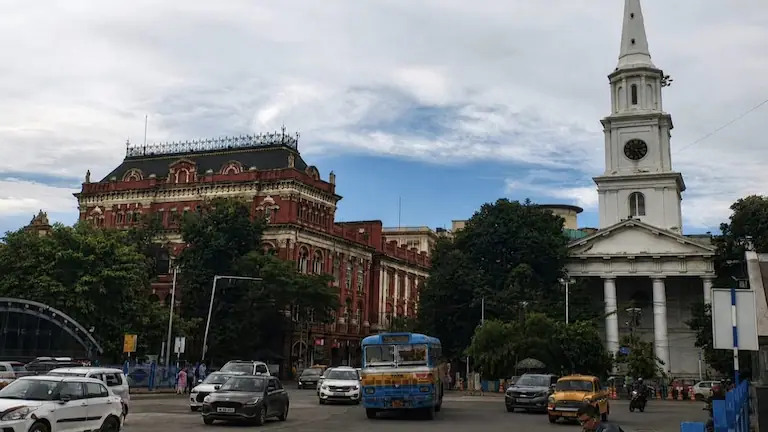
If you want to explore the old streets, you need to know the ground reality. The best Kolkata Heritage Walks take proper planning. You need to know exactly where to start, the best time to beat the heat, the real street costs, and the paths that keep you away from heavy crowds.
Long ago, the British split this city in two. They built the European “White Town” near Dalhousie Square and left the native “Black Town” in North Kolkata. If you really want to understand Kolkata’s past, you have to walk through both of these areas.
During my last walk in April 2026, I started at 6:30 AM just to watch the city wake up. I strongly suggest you do the same thing. Below, I have shared my personal walking routes. You will find the latest 2026 prices, exact Google maps, and secret stops that most tourists just walk right past.
First, decide if you want to pay a tour company or walk alone. Many travel websites will try to push you toward expensive ₹2,500 private tours. You do not always need them.
This is one of the most popular heritage walks. It shows you the grand buildings from the old British days. Please do not do this walk at 11:00 AM in the summer. The hot sun and loud office traffic will make you feel sick. The best time to start is 7:00 AM on a quiet Sunday morning.
Click here to open this exact route in your Google Maps app.
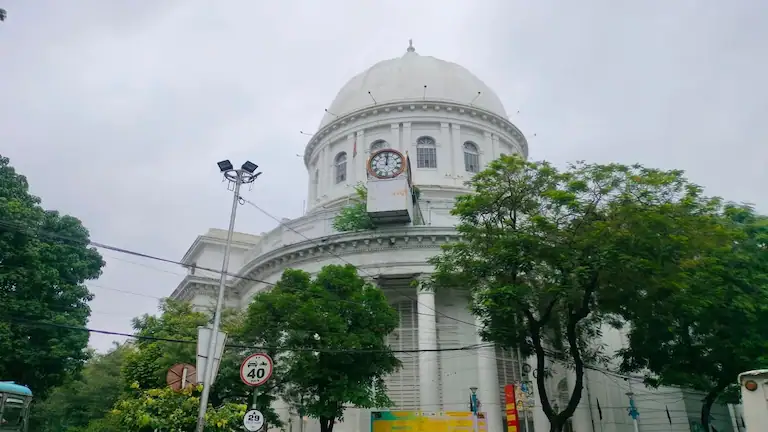
Starting Point: Get out at Gate 3 of the Chandni Chowk Metro Station to begin.
Start at the big pond right in the middle of the square. This water was here way before the British came, and it used to give drinking water to the whole old city.
Designed by Thomas Lyon in 1777, this giant red-brick building was built to be an office for the junior workers (called “writers”) of the East India Company. Look up at the roof to spot the exact statues of Minerva, Zeus, and Hermes. Later, in 1930, three young freedom fighters named Binoy, Badal, and Dinesh attacked this building. That is why the whole area is now called B.B.D. Bagh!
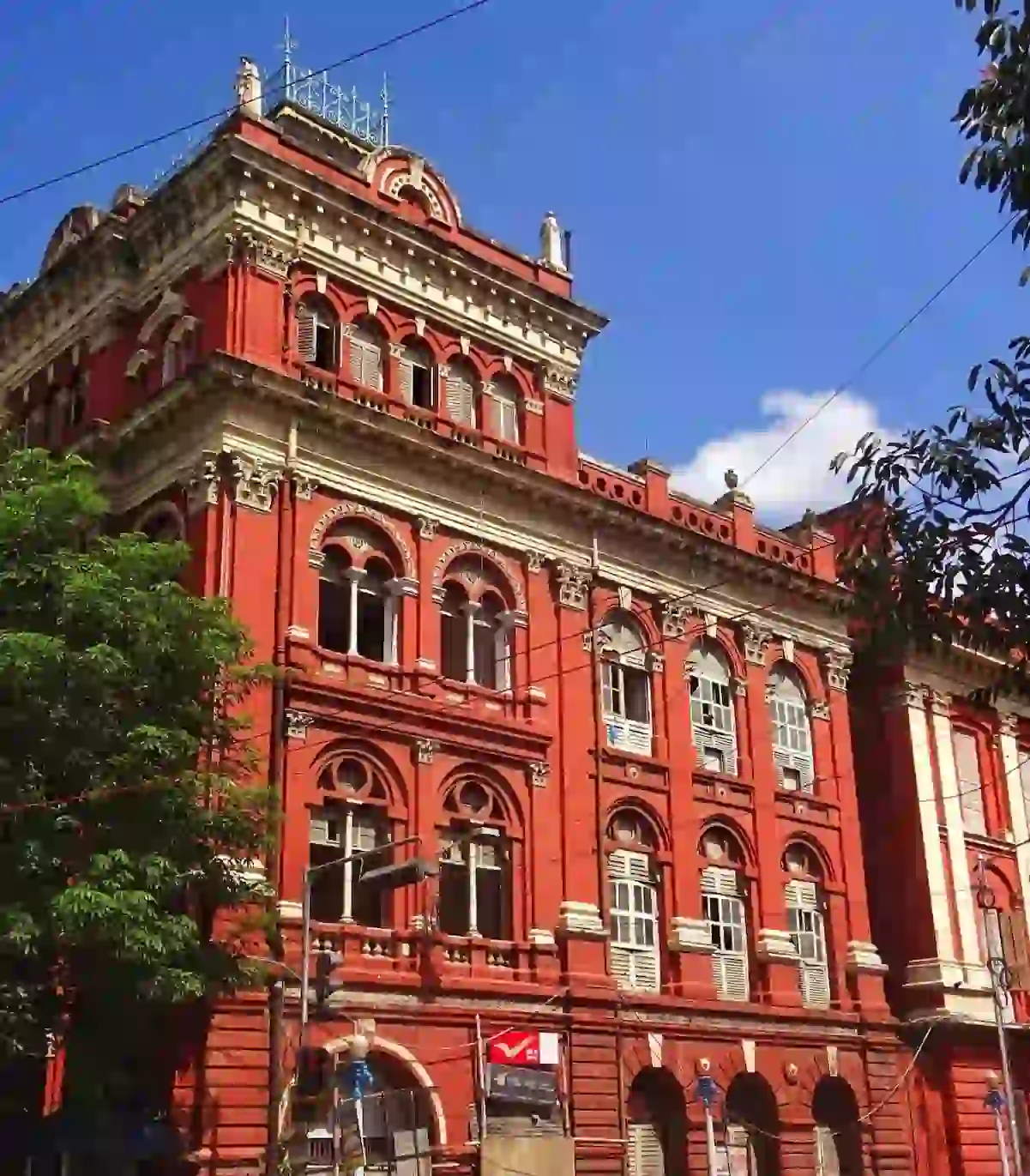
As you walk by, look up at the beautiful designs on these two office buildings. They show just how rich the city was in the 1800s.
Built in 1868, the GPO is famous for its massive Corinthian columns. Look down at the ground near the building to find some brass lines. These lines show exactly where the walls of the old Fort William used to stand. Even crazier, this is the exact spot of the famous “Black Hole of Calcutta.” In 1756, British prisoners were locked in a tiny, dark room (just 14 by 18 feet) overnight. Right next door is the old Dead Letter Office.
(Entry: ₹10). Go inside the church yard to find the grave of Job Charnock. Old guidebooks like to say he “founded” Kolkata. But official records from the [Link to Kolkata Municipal Corporation or recognized historical society] prove the city existed long before he arrived! While inside this 1787 church, look for Johann Zoffany’s painting of “The Last Supper” (he painted real Kolkata residents as the Apostles) and the tall Second Rohilla War Monument.
Keep walking until you see this massive, beautiful white building. It was built for the top British boss in India. Today, the Governor of West Bengal lives here.
End your walk at this building with huge pillars. The design was copied from a famous old tower in Greece. It was built to say thank you to Charles Metcalfe, a man who fought to give India a free press.
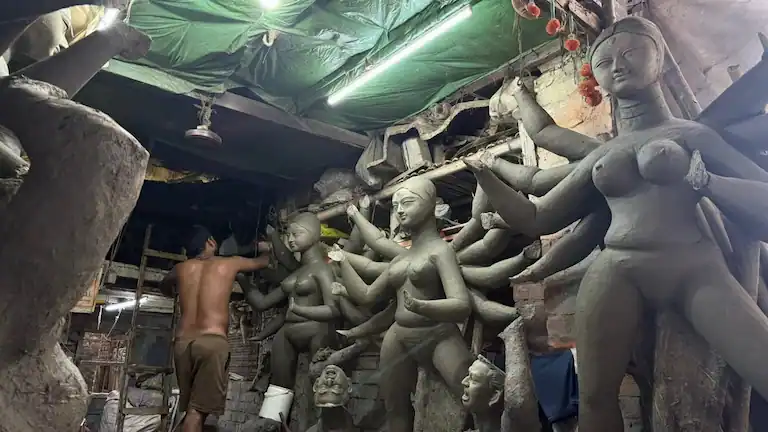
Kumartuli is the old part of Kolkata where artists make thousands of huge clay statues for the Durga Puja festival. Just be careful when you walk here: the small streets are very tight and full of wet mud, bamboo sticks, and people working very fast.
Click here to open this exact route in your Google Maps app.
(For more royal history, take a quick train from the city to see the 9-spired Sarbamangala Temple in Burdwan, built by the Maharaja in 1702).
Starting Point: Get out at the Sovabazar Sutanuti Metro Station. Try to start your walk by 8:00 AM so you can actually watch the artists while they work.
Walk down Banamali Sarkar Street. People have been making clay idols in these small lanes for almost 300 years. During my last walk, I briefly spoke with an older artist from the famous Pal family. While his hands moved quickly to shape the clay, he explained how they still mix mud from the Hooghly River with a handful of soil from a forbidden place, keeping a 300-year-old rule alive.
Walk toward the river to see the old boat stop. Back in the 1800s, this was a huge, busy port for large steam boats carrying goods up and down the water.
Walk south to see this huge royal palace from the 1700s. It was built by a king named Raja Nabakrishna Deb. Step inside to look at the massive central courtyard (thakurdalan) with its heavy twin pillars. This is where they hold one of the city’s oldest family (Bonedi) Durga Puja festivals. Lord Robert Clive actually visited this exact courtyard in 1757 right after the British won the Battle of Plassey.
End your walk at the beautiful old family house of the Tagore family. The famous poet Rabindranath Tagore, who won the Nobel Prize, was born right here.
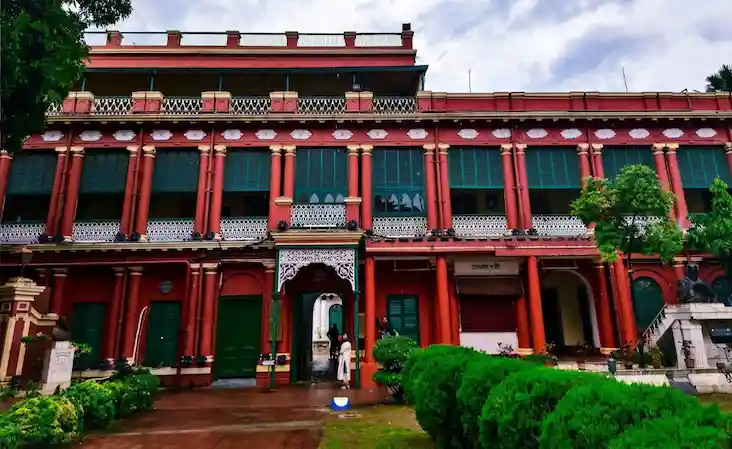
Out of all the Kolkata heritage walks, this one takes you right through the famous college and book area of Kolkata. (Note: Bow Barracks is a 15-minute taxi ride from College Street, but putting them together makes for a really fun day out).
Click here to open this exact route in your Google Maps app.
Starting Point: Get out at Central Metro Station (Gate 2 or 3). Walk for about 5 minutes to reach the start of College Street.
This is the largest second-hand book market in the world. Walk deep into the very narrow lanes to see books piled up everywhere. Pro tip: Bring actual paper money, because many small sellers will not accept phone payments.
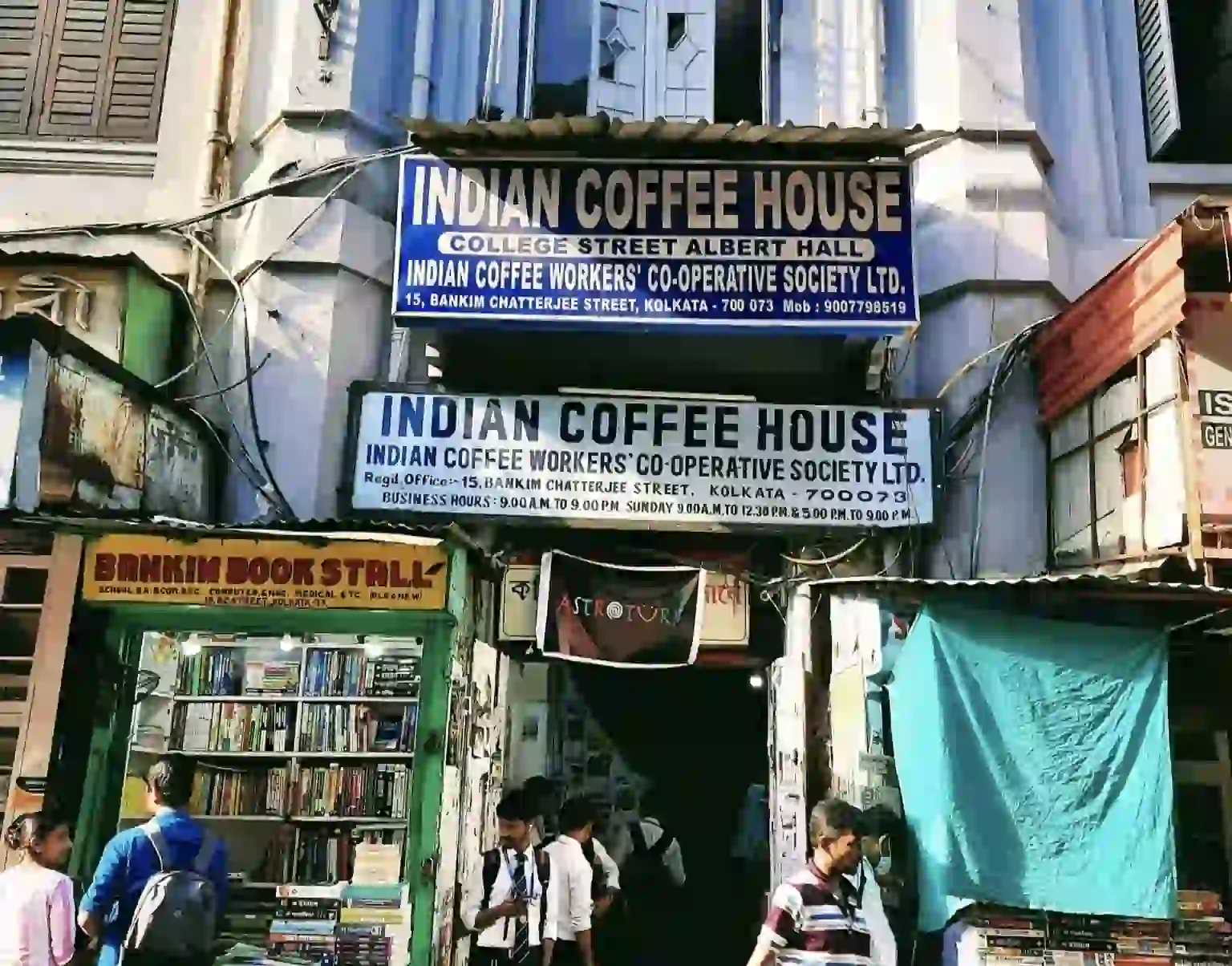
Walk up the stairs of the old Albert Hall building (built in 1876) to find this famous coffee shop. It opened in 1942. Today, waiters in white uniforms still serve black coffee while college students loudly argue about politics at their tables.
Walk past these old college buildings. A long time ago, this school helped change education in India and taught some of the country’s smartest scientists.
You really need to stop here and drink their famous Daab Sherbat (a sweet coconut water drink). This tiny shop opened in 1918. Back then, it was actually a secret hiding place for Indian freedom fighters!
Catch a yellow taxi for a quick ride over to Bow Barracks. These red-brick buildings were built a long time ago for soldiers during the World Wars. Today, it is a quiet, friendly neighborhood where Kolkata’s Anglo-Indian families live.
If you want to see the old, very religious side of Kolkata, take a walk along the Adi Ganga. This is the oldest part of the Hooghly River, and it has been here for hundreds of years.
Click here to open this exact route in your Google Maps app.
Starting Point: Walk out of Gate 2 at the Kalighat Metro Station.
Walk right next to the water. A long time ago in the 1400s, this was a huge waterway for rich traders before the river naturally changed its path.
While you are walking, you will pass small, very old shrines on the street that most tourists never notice.
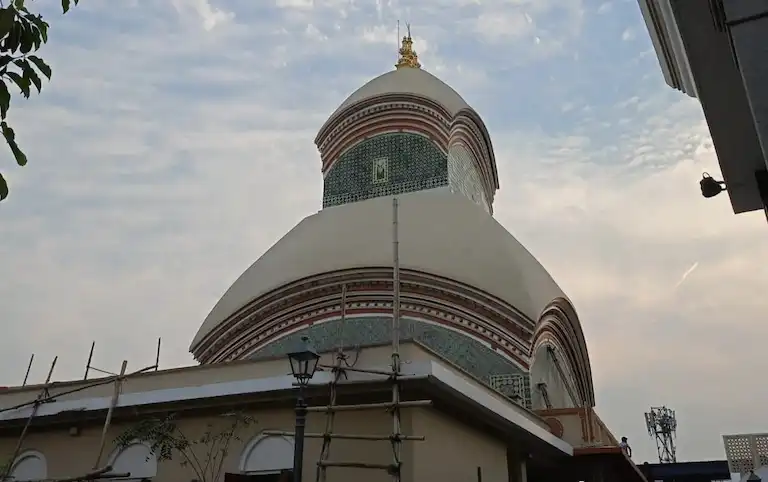
This temple was rebuilt in 1809. It is one of the 51 holy Shakti Peethas. Hindu stories say this is the exact place where the right toe of the Goddess Sati fell to earth. It is loud, crowded, and full of heavy history. (If you want to experience the other major pilgrimage site in West Bengal, check out my complete budget guide to planning a Kolkata to Gangasagar trip).
Restroom Tip: Use the paid public toilets near the main front gate of the Kalighat Temple.
The Scams You Must Avoid: Watch out for this trick. Local men or temple priests (pandas) will walk up to you. They will say they can get you inside very fast if you give them a “small gift.” Do not listen to them. That small gift turns into them forcing you to pay ₹1,000 once you get through the gates. Just say “No,” leave your shoes at a safe flower shop outside, and stand in the normal line like everyone else. Also, hold your bag very tight so nobody steals your wallet in the crowd.
If you have extra days in the city, I highly suggest adding these two routes to your trip to see different sides of Kolkata’s history:
Start at the South Park Street Cemetery. Built in 1767, it is filled with massive gothic tombs covered in moss. After that, walk down Park Street to see old Anglo-Indian bakeries like Flurys and historic restaurants that date back to the 1920s jazz era.
Kolkata was built by immigrants. In the very tight lanes near Bowbazar and Brabourne Road, you can walk to Jewish Synagogues (like Magen David), an old Armenian Church, Chinese Temples in Tiretta Bazaar, and Parsi Fire Temples. All of these different religious buildings sit within a 15-minute walk of each other.
| Heritage Route | Best Time to Start | Ideal For | Difficulty Level |
| Dalhousie Square | 7:00 AM (Sunday) | Architecture & History | Easy (Paved roads) |
| Kumartuli & Sovabazar | 8:00 AM (Any day) | Photography & Culture | Moderate (Muddy/crowded) |
| College Street | 10:00 AM (Weekdays) | Books & Heritage Food | Easy (Busy streets) |
| Kalighat & Adi Ganga | 6:30 AM (Any day) | Religion & Mythology | Hard (Intense crowds) |
Before you leave your room for a long day of walking, make sure you have these 10 items in your bag:
When it rains here, the streets flood. The old, narrow lanes in North Kolkata turn into small rivers very fast. Do not wear sneakers. Bring cheap waterproof sandals and a strong umbrella. Even though your feet will get wet, the grey clouds actually give you beautiful, soft light for taking photos.
If you visit during these months, you are in luck. The temperature stays between 15°C and 25°C. This is the only time of year you can do the Dalhousie Square walk at 11:00 AM and not sweat through your shirt. It is perfect walking weather. Winter is also the best time of year to catch a morning train out of the city and explore the incredible red rock canyons of Gongoni in Garbeta.
Photographers need to set an alarm for 6:00 AM. If you reach Bagbazar Ghat or the Victoria Memorial by 6:30 AM in December, you will see the famous winter fog. It wraps around the old buildings and gives you the best natural light for pictures.
Kolkata summers are brutal. It gets extremely hot and humid. Do not try to walk around in the afternoon. Plan your walks from 6:00 AM to 8:30 AM. I always mix ORS powder in my water so I do not feel dizzy from the heat. Also, stick to routes like College Street where you can quickly hide inside an AC cafe. (If the city heat becomes completely unbearable, consider escaping south for a weekend along the quiet coastline at Bakkhali Sea Beach).
The city turns into a massive street party. Walking during the day is tough because the police block the roads. Instead, go walking at night to see the bright festival tents (pandals). Just remember: do not try to visit Kumartuli right before the festival. It is too crowded with workers, and you won’t be able to get inside.
This is the perfect time for Route 3. The local families put up beautiful lights all over the red-brick buildings. Taking a walk through Park Street and Bow Barracks at night during Christmas week is a must-do.
During big festivals, prepare for loud noise and crazy traffic. Taxis might refuse to take you, or they will ask for triple the price. Watch out for pickpockets in huge crowds, especially at Kalighat. Always keep your phone and cash safe in your front pockets.
Yes, Kolkata is very safe for solo walkers. I walk these streets all the time without any issues. Your only real worry is pickpockets in packed places like the Kalighat temple. Just keep your wallet and phone in your front pocket and you will be fine.
No, you don’t have to hire one. But I strongly suggest it. Those muddy alleys twist and turn, so finding the best workshops by yourself is hard. Plus, the artists are working fast and speak Bengali. A guide knows exactly who to talk to without making the workers angry.
Come between November and February. The air is cool and the sun won’t burn you out. It is the only time of year you can spend six hours on the street and actually enjoy it.
About the Author: Bijoy Pal is the founder of Brief Voy, a travel blog focused on offbeat destinations across South Asia. He has walked the streets of Kolkata for over 5 years, personally verifying every fact, price, and route on the ground—from checking ticket counters to manually tracking walking distances. All guides on Brief Voy are field-tested and 100% human-written to help visitors experience the honest, daily reality of India’s cities.