Physical Address
Bankura, West Bengal 722142
Physical Address
Bankura, West Bengal 722142

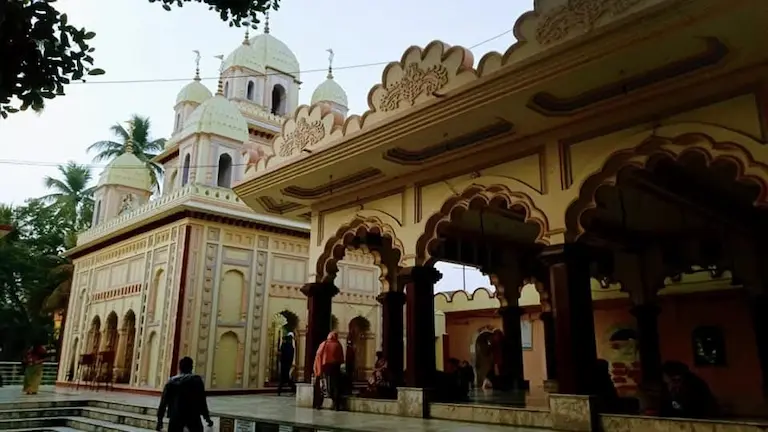
Inside the Sarbamangala Temple in Burdwan, you will see a rare 18-armed stone idol of Goddess Durga. Built in 1702, it is the first Navaratna (nine-spired) temple from old Bengal. For centuries, only the Burdwan Royal Family prayed here. Today, anyone can visit this important piece of local history.
If you want to go there, this guide shares real facts for a good trip. You will learn how to walk the narrow town roads and where to buy your daily Bhog (prasad) ticket. This helps you have a smooth and easy temple visit.
| Quick Facts | Details |
|---|---|
| The Goddess | Sarbamangala (also called Mahisasur Mardini) |
| Address | D.N. Sarkar Road, near Ramna Maidan, Burdwan 713101 |
| The Idol | 1,000 years old, 12×8 inches big |
| Year Built | 1702, by Maharaja Kirti Chand Mahtab |
| Design | 9 roofs (Navaratna style), clay art, and a 5,000 sq ft prayer hall |
| Ticket Price | Free to enter |
| Camera Rules | Yes in the courtyard. No photos inside the main room. |
| Run By | Sarbamangala Trust (their office is inside the gate) |
The temple gates open and close right on time every day.
You can go to pray any day of the week.
To eat the afternoon meal (Anna Bhog), you need a coupon. You can’t just go in and sit down.
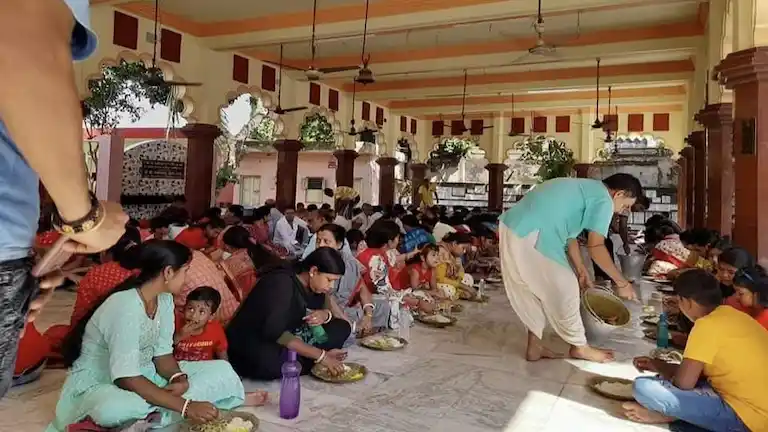
Insider Tip: Use the taps in the courtyard to wash your hands before eating. Remember to clean up your own spot when you are done.
Bringing older family members? Here is what you need to know.
The black stone idol is actually much older than the temple. It is about 1,000 years old, dating back to the Pala or Sena kings.
She is tied deeply to Bengal’s past. Poet Mukunda Chakraborty even mentions her in his famous old poem, the Chandimangal Kavya. If you love old architecture, pair this trip with historic Kolkata heritage walks.
Locals say fishermen found the idol by chance around 350 years ago. A few men picked up a heavy black stone near the Damodar River. Without knowing it was a holy statue, they just used it to crack open snail shells.
At that time, workers burned shells in big kilns to make building lime. One day, someone accidentally tossed the stone into the hot fire. When the fire died down, the stone was completely fine. It was untouched by the heat. That is when people finally noticed the carving of the Goddess.
The story starts with Maharaja Sangam Roy from the Burdwan royal family. He had a dream where the Goddess asked him to bring her home. Many years later in 1702, his relative, Maharaja Kirti Chand Mahtab, built the big temple you see today. When the old Zamindari landlord system ended, things changed. In 1959, Maharaja Sir Uday Chand Mahatab handed the temple over to the Sarbamangala Trust Board. They still manage it today.
India has 51 main Shakti Peethas. These are the holy spots where Goddess Sati’s body parts fell.
The old books say her navel fell at Vakreshwar or Nandikeshwari in Birbhum. But the people here strongly believe it actually fell in Burdwan. That is why locals treat this spot like a hidden Shakti Peeth. Thousands come to make wishes, giving it the exact same respect as the Kalighat temple.
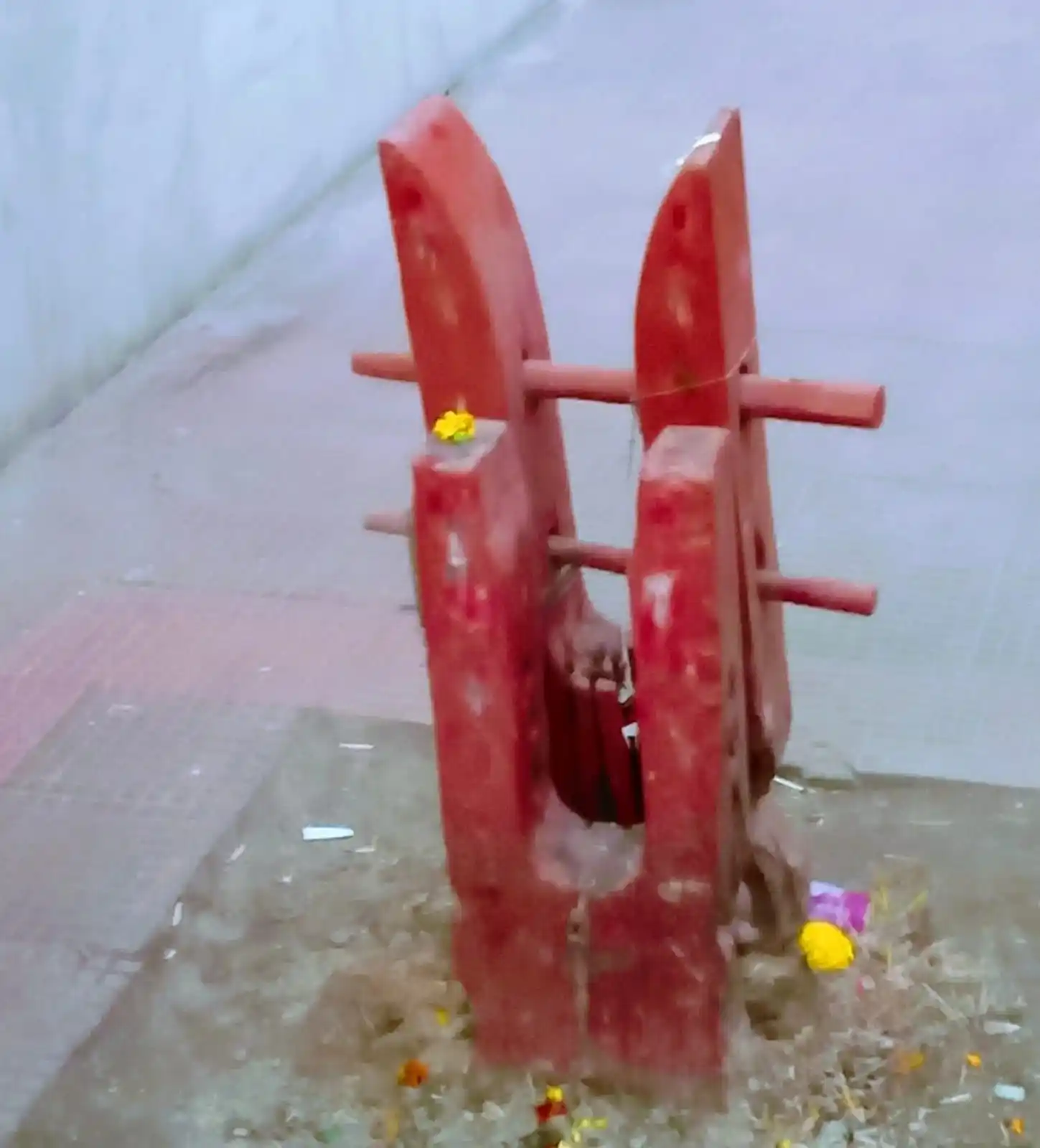
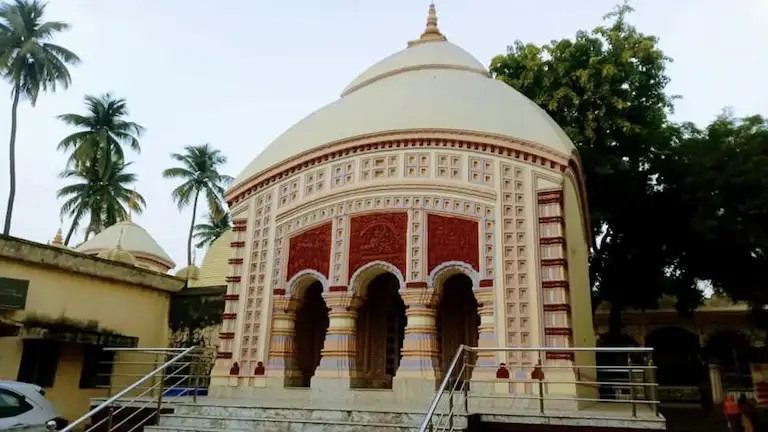
Before 1702, temples in Bengal mostly used an Aatchala (eight-roofed) design. Sarbamangala Temple was different. It was the first Navaratna (nine-spired) temple built in the region.
The temple looks like a layered chariot:
There is a big 5,000 square foot Nat Mandir (prayer hall) right in front of the main shrine. People sit in this large covered area to pray and watch the daily Aarti.
The courtyard also has five smaller Shiva temples. Two are built with white stone (Rameshwar and Baneshwar). The other three are made of black soapstone (Mitreshwar, Chandreshwar, and Indreshwar).
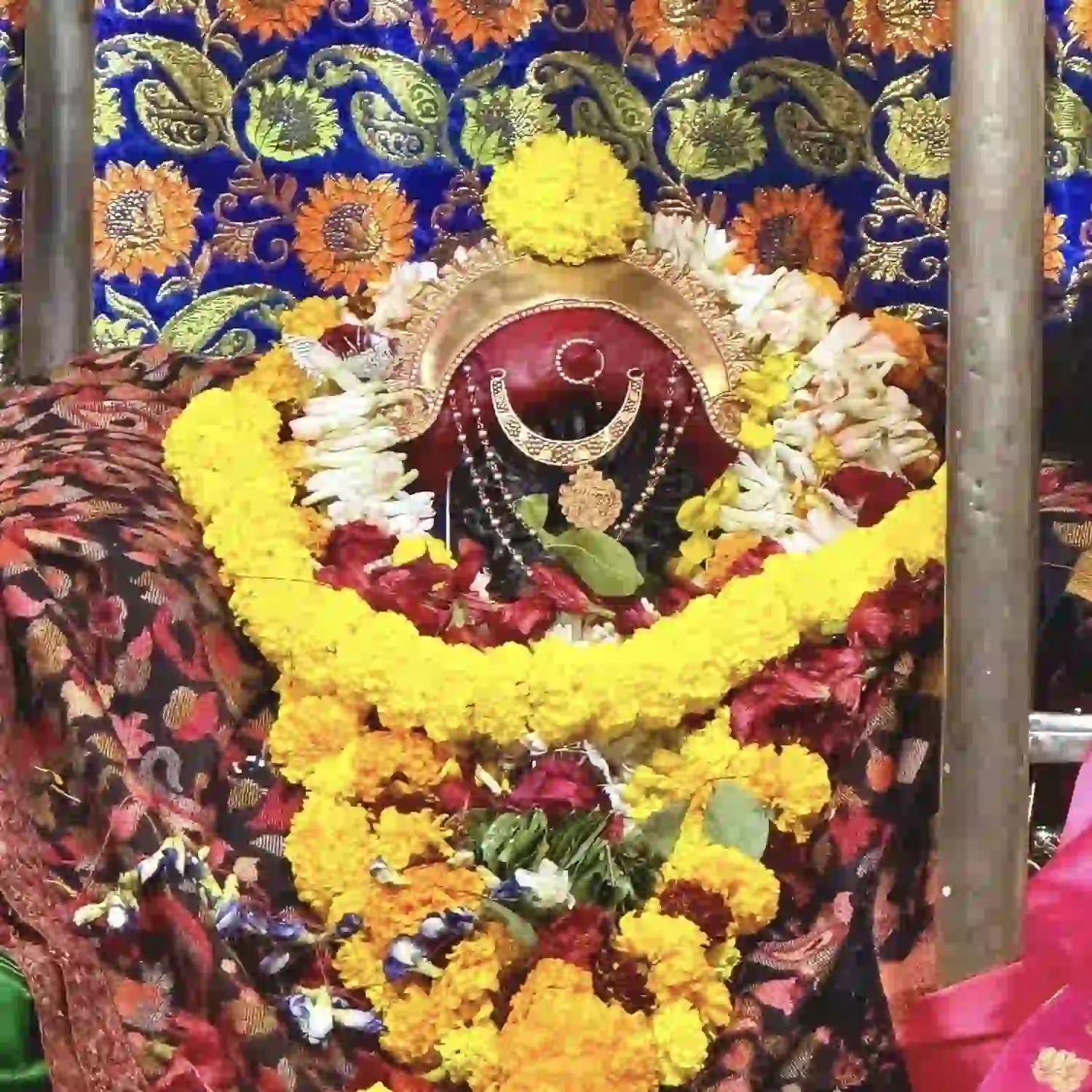
The main idol is made from one solid block of black touchstone (Kasthi Pathar). It is 12 by 8 inches in size. Past builders used this stone because it stays smooth and strong for hundreds of years.
Most Durga idols in Bengal have 10 arms. But the Sarbamangala idol has 18 arms. This shows her as the demon slayer, Mahisasur Mardini.
Burdwan starts its Durga Puja festival right at this temple.
On the first day, priests put a holy water pot (Ghat) in a horse carriage. Drummers play as the carriage tours the old streets. Other local clubs wait for this. They only start their own puja after the carriage returns and puts the pot back inside the temple.
Crowd Tip: The main gate gets too crowded during Navaratri or Durga Puja. Ask a local shopkeeper to show you the staff side gates. It is much faster to get in and out from there.
Burdwan is on National Highway 19. It is an easy 100 km trip from Kolkata.
Coming from Kolkata by morning train? Here is a simple half-day plan:
Coming with a big family? Book a tempo traveller from Kolkata for an easy highway drive.
If you reach after 11:00 AM, the Bhog counter will be closed. But you still have good places to eat and sleep nearby.
Local Sweets: Do not miss Burdwan’s famous Sitabhog and Mihidana. Grab a fresh box from any sweet shop near Curzon Gate.
Burdwan has other old places near the temple. At Nawab Hat, the 108 Shiva Temple has exactly 108 small temples built in a circle in 1788. Right in the town center is the Curzon Gate, or Bijay Toran, a huge archway built in 1902.
The Burdwan Rajbari is the old royal palace that now belongs to Burdwan University. Just a short trip away is the Tomb of Sher Afghan. This is the real grave of Mughal Empress Nur Jahan’s first husband.
Want a longer weekend trip? Drive further into Bankura to explore the red-soil trails of Joypur Forest.
You do not have to follow a strict dress code. Just wear simple and decent clothes. Try to avoid shorts and sleeveless shirts so you respect the holy place.
You can take pictures of the outside areas, the courtyard, the Nat Mandir, and the Shiva temples. But you cannot take photos of the main 12×8 inch idol inside the main room. That is not allowed at all.
Maharaja Kirti Chand Mahtab from the Burdwan royal family built the temple in 1702.
Experts say the black touchstone idol comes from the Pala or Sena time. This means it is around 1,000 years old.
You can simply visit the Sarbamangala Trust Board office. You will find it right inside the temple area at D.N. Sarkar Road, Bahir Sarbamangala Para, Purba Bardhaman.
About the Author: Bijoy Pal writes about travel and runs the blog Brief Voy from West Bengal. He travels around South Asia to find local history, culture, and hidden temples, regularly updating his regional destination guides with real facts from his own visits so you can plan easy trips without reading normal tourist books.