Maastricht feels completely different from the rest of the Netherlands. Hidden down in south Limburg between Belgium and Germany, it swaps flat canals for rolling hills. Before looking up things to do in Maastricht, know that the Romans built it as a river crossing (Mosa Trajectum). Today, it has a warm, almost southern-European vibe.
Our team went there in person to check real ticket prices, feel the cold cave temperatures, and find the bakeries locals actually use. We ignored generic tourist lists to write this guide. We explain how to navigate the old center, compare the underground tunnels, and share the unspoken rules for eating out.
To help you plan, we built this interactive map. We marked historic sights in red, local food spots in blue, and nature escapes in green.
Maastricht Explorer Map
Maastricht Explorer
Interactive walking spots & landmarks
Vrijthof Square
50.8492° N, 5.6877° E • Maastricht
Sights
Here are the 21 sights, neighborhoods, and food spots you actually need to see.
What Makes Maastricht Different? (The Local Vibe)
Maastricht isn’t your typical Dutch city. People actually dress up just to go shopping. The second the sun comes out in February, the cafe terraces fill with wine drinkers. Their local language even sounds like a mashup of Dutch, French, and German.
Watch out for these three massive events that completely take over the town:
TEFAF (The European Fine Art Fair) – March: Rich art buyers fly in for two weeks. Hotel prices shoot up by 400%, and top restaurants book up months ahead of time.
Carnaval (Vastelaovend) – February/March: The whole place shuts down for a wild three-day street party. Museums lock their doors, and quiet dinners do not exist here.
André Rieu Concerts – July: The famous local violinist plays massive outdoor shows in the main square. Hotels sell out 10 months early. Cafes charge €100 or more just for a seat to eat during the music.
The Historic City Center
1. Vrijthof Square
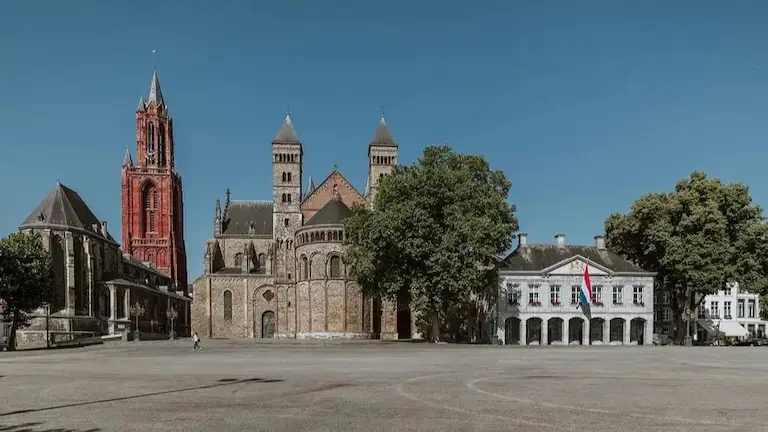
Vrijthof square, the historic heart of Maastricht, flanked by Sint Janskerk and the Saint Servatius Basilica.
The Vrijthof is the huge, tree-lined heart of Maastricht. Old churches sit on one side, and a long wall of outdoor cafe terraces sits on the other. It is where everyone meets up. In the winter, it hosts a big Christmas market with an ice rink.
Address: Vrijthof, 6211 LE Maastricht
Opening Hours: 24/7 (Public square)
Admission Fee: Free
Reservation Rules: Just walk up to most cafes (except during the July concerts).
2. Basilica of Saint Servatius (Sint-Servaasbasiliek)
This is the oldest church still standing in the Netherlands. It was built right over the grave of Saint Servatius (who died in 384 AD). You must visit the Treasury (Schatkamer). Inside, you will see heavy 12th-century metal art, very old cloths, and the saint’s gold shrine.
Reservation Rules: Just walk in; no booking needed.
3. Sint Janskerk (St. John’s Church)
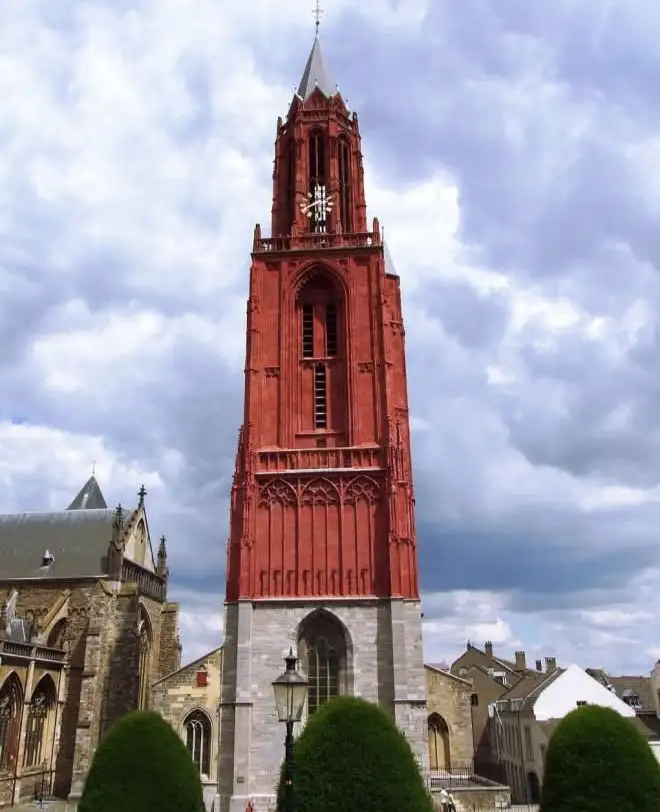
Climb the striking red tower of Sint Janskerk for the best panoramic views of the city.
Right next to the Catholic church is the Protestant St. John’s Church. You cannot miss it—the tall tower is painted bright red. If you climb the narrow 218 steps to the top, you get the best view of the old city center.
Address: Vrijthof 24
Opening Hours: Monday-Saturday 10:30–16:00 (Tower often closes during bad winter storms)
Admission Fee: Church entry is free; €4.00 for adults to climb the tower.
Reservation Rules: Pay the worker at the door; no online booking.
4. Helpoort & The Old City Walls
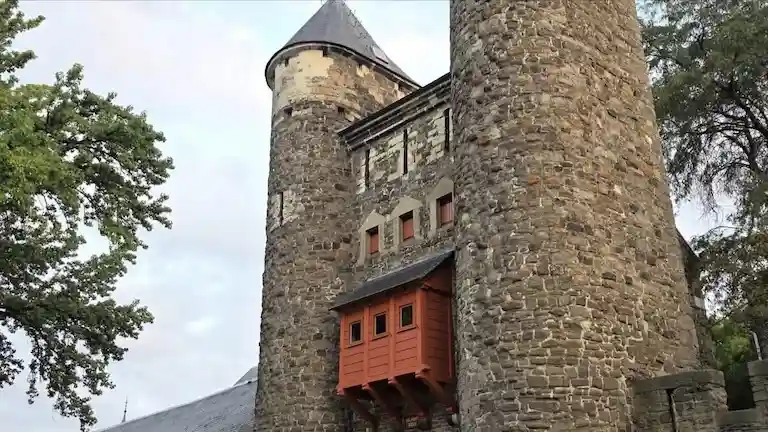
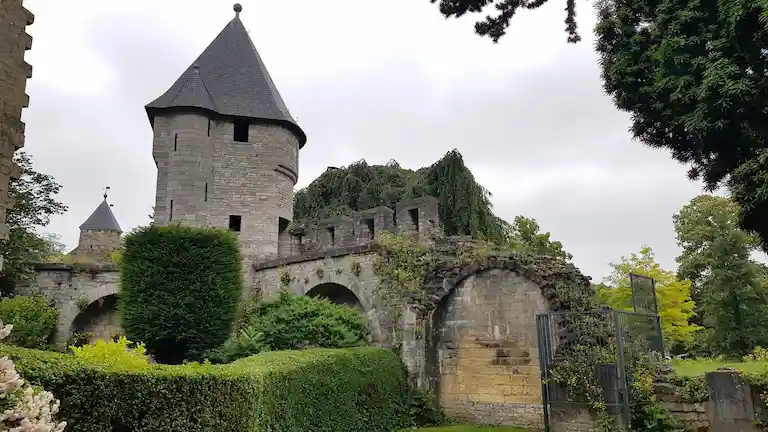
Built in 1230, Helpoort (Hell’s Gate) is the oldest surviving stone city gate in the Netherlands.
Dating back to 1230, Helpoort (Hell’s Gate) is the oldest stone city gate in the Netherlands. Walk straight through the arches and follow the defense walls south into the City Park (Stadspark). You will pass ancient cannons aiming right at the river.
Address: Sint Bernardusstraat 24B
Opening Hours: Outside is open 24/7. The inside room is open daily 13:00–16:30 (Easter to late Autumn).
Admission Fee: Free
Reservation Rules: Just walk in.
5. Basilica of Our Lady (Onze-Lieve-Vrouwebasiliek)
Locals just call this 11th-century church “Sterre der Zee” (Star of the Sea). It is very dark inside because it was built with thick stone walls and tiny windows. Step into the side room—it is lit only by hundreds of candles lit by locals and visitors.
Address: Onze Lieve Vrouweplein 7
Opening Hours: Daily 08:30–17:00
Admission Fee: Free (Small €3 fee for the Treasury room)
Reservation Rules: None.
6. Jekerkwartier (The Latin Quarter)
Walk past the ancient stone walls and quiet green parks in the Jekerkwartier.
Many weekend visitors miss this area, but the Jekerkwartier is the prettiest old district in town. The narrow Jeker river flows right under the old stone houses. You can spend hours walking past old watermills (like the Leeuwenmolen), quiet school buildings, and old city walls.
Address: Jeker Quarter (South of Vrijthof)
Opening Hours: 24/7 public streets
Admission Fee: Free
Reservation Rules: None.
Museums & Culture
7. Boekhandel Dominicanen (The Bookshop in a Church)
In 2006, the city turned a 700-year-old church into a massive bookstore. A Coffeelovers cafe sits in the back where the altar used to be. You can drink coffee while looking up at the beautifully restored 14th-century ceiling paintings.
Address: Dominicanerkerkstraat 1
Opening Hours: Tuesday-Saturday 09:00–18:00 (Thursday until 21:00); Sunday 12:00–18:00. Note: It does not open until 13:00 on Mondays.
Admission Fee: Free
Reservation Rules: None.
8. The Bonnefanten Museum
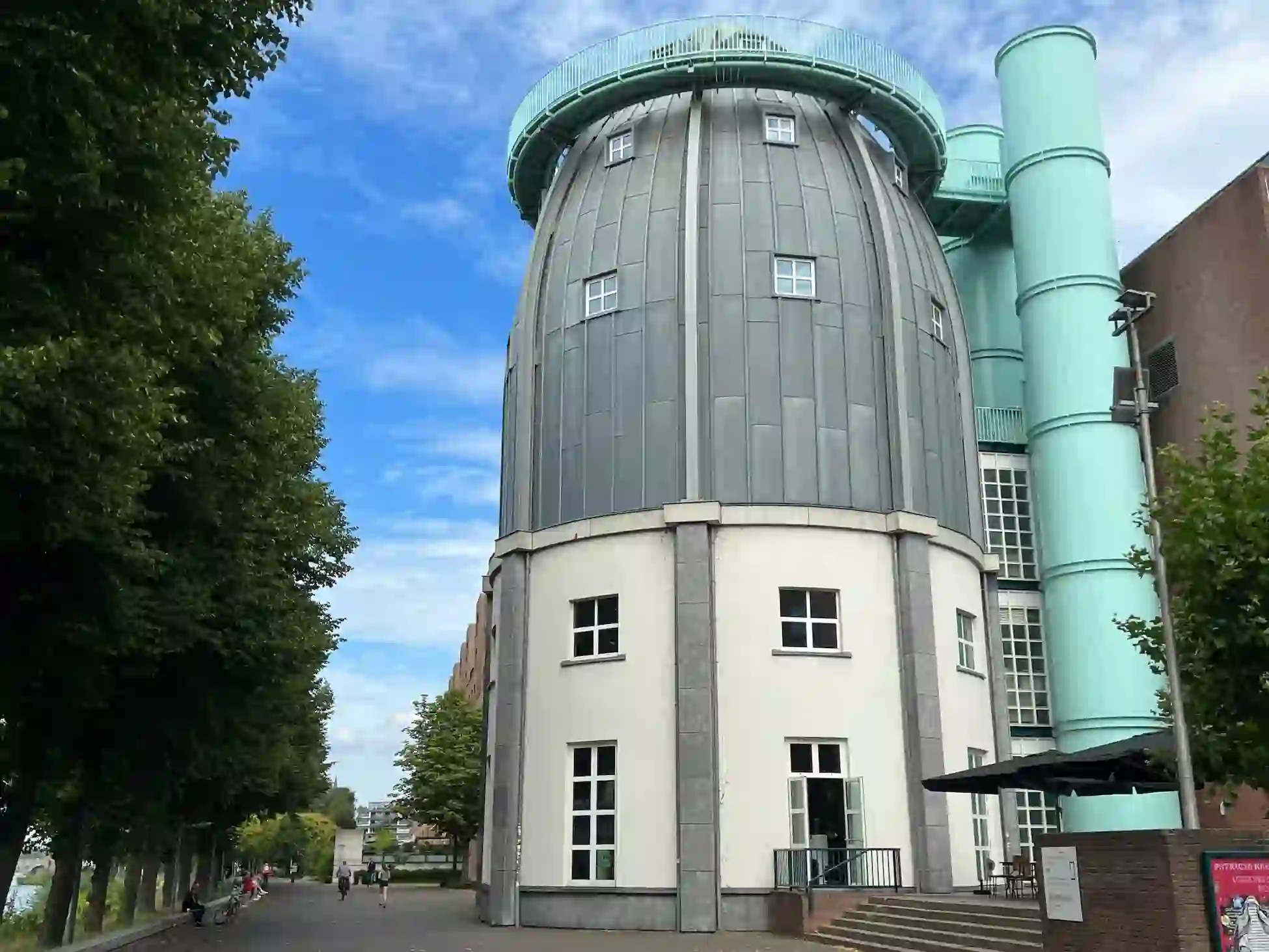
You can easily spot the Bonnefanten Museum along the river by its unique rocket-shaped tower.
You can easily spot this museum on the east side of the river by its rocket-shaped tower. Inside, they put old medieval wood carvings and early Italian paintings on the lower floors. On the upper floors, they show very modern and unusual art.
Address: Avenue Ceramique 250
Opening Hours: Tuesday-Sunday 11:00–17:00; Strictly closed on Mondays.
Reservation Rules: Walk-ins are fine, but booking online saves time in the summer.
The Underground Networks & Nature
Many travel guides mix up the underground tunnels. Do not make this mistake. The stone caves south of town are completely different from the military tunnels under the city center.
9. Mount Saint Peter (Grotten Noord & Zonneberg)
These are the massive stone caves south of the city. People dug stone out of here for hundreds of years. During WWII, thousands of locals hid in the North Caves. Famous painter Rembrandt’s masterpiece, The Night Watch, was hidden in a special room down here to keep the Nazis from taking it.
Insider Tip: Our local cave guide turned off his flashlight to show us pitch black. “If you wander off the path here, you won’t find your way out,” he warned us. “The temperature stays 10 degrees all year, so without a jacket, the cold gets you before the dark does.”
Address: Luikerweg 80 (Noord Entrance)
Opening Hours: Daily tours; times change by season. The caves stay exactly 10°C (50°F) all year. Bring a warm jacket, even in the summer.
Admission Fee: €11.50
Reservation Rules: You MUST book 48 hours in advance online. You cannot walk in alone because it is too dangerous.
10. The Kazematten Waldeck
This is not a big stone cave. The Kazematten is a tight network of brick military tunnels from the 16th to 18th centuries. Built right under the city’s west walls, soldiers used these small tunnels to listen for enemies digging above them so they could blow them up.
Address: Waldeckpark (Near Tongerseplein)
Opening Hours: Set 60-minute tour times on weekends and holidays.
Admission Fee: €9.95 for adults.
Reservation Rules: You must book online in advance.
11. Fort Sint Pieter
A brick fort with five sides built in 1702. It sits right on top of the Mount Saint Peter caves. It was built up high to shoot at attacking French armies. You can buy a combined ticket to see this fort and the caves on the same day.
Right past the caves sits the ENCI quarry. This giant old cement mine is now a beautiful nature park. Climb the metal stairs to the high viewing deck over the cliffs. It looks much more like southern France than the flat Netherlands.
Address: Luikerweg (South of the caves)
Opening Hours: Daily 08:00–sunset
Admission Fee: Free
Reservation Rules: None.
Modern Neighborhoods
13. Wyck (The Trendy East Bank)
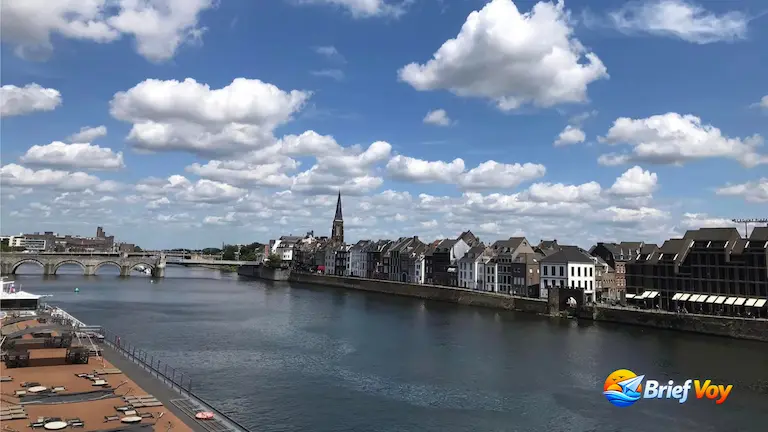
Cross the historic Sint Servaasbrug stone bridge to reach the independent art shops and boutique stores of the Wyck district.
Cross the old Sint Servaasbrug stone bridge to reach Wyck. The main street here is Rechtstraat. This area has the city’s best independent shops, high-end vintage clothing stores, and great food markets. It is much more relaxed than the busy west side of the city.
Address: Wyck District (East of the River Maas)
Practical Hack: Do not go shopping here on a Monday morning. Almost all independent shops and cafes in Wyck are strictly closed until 1:00 PM on Mondays.
14. Sphinxkwartier & The Sphinxpassage
In 1834, Petrus Regout started the Dutch Industrial Revolution right here with his big glass and pottery factories. Whole families worked long, hard hours in his factories. Today, the giant white Eiffelgebouw (Eiffel Building) is the center of a cool new neighborhood. You have to walk through the Sphinxpassage—a long hallway covered in 30,000 tiles showing the tough history of the factory workers.
Address: Sphinxcour
Opening Hours: Passage open daily 08:00–sunset.
Admission Fee: Free
Reservation Rules: None.
Essential Local Food & Drink
Maastricht has strict food rules. Skip the standard Dutch pub snacks and eat the local Limburg food instead.
15. Eat Authentic Limburgse Vlaai
This famous local pie uses a soft, bread-like crust. Bakers fill it with fresh fruit (like cherries, apricots, or plums) or sweet rice pudding (rijstevlaai).
Local Picks: Skip the tourist traps on the main squares. Head to Bakkerij Mathieu Hermans (Zakstraat 9) for amazing apricot pie, or Patisserie Peter Lemmens (near St. Pieter) for gooseberry pie.
Opening Hours: Tuesday-Saturday 08:30–17:00 (Most bakeries close Sundays and Mondays).
Cost: About €3.50 a slice.
Reservation Rules: Just walk up to the counter. Expect a line on Saturday mornings.
16. De Bisschopsmolen
This is a real, working 7th-century watermill hidden inside the Jekerkwartier. The big wooden water wheel outside grinds the grain they use to bake their bread and famous pies.
Insider Tip: As one of the bakers told us while loading the oven, “We don’t use normal flour here. If it’s not local Kollenberger spelt grain ground by our own water wheel outside, it doesn’t go in the pie.”
Admission Fee: Free to walk in, look at the wheel, and watch the bakers work.
Reservation Rules: None.
17. Kibbeling at the Friday Market
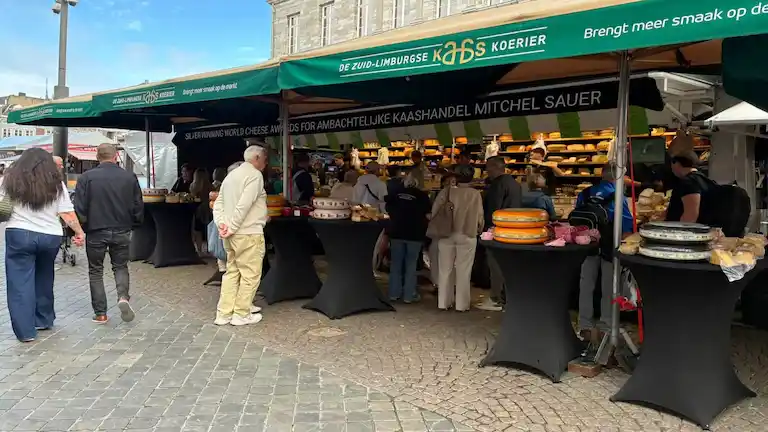
Alongside fresh fish, the Wednesday and Friday markets at the main square are the best places to sample massive wheels of local regional cheese.
If you are in the city on a Wednesday or Friday, go to the Market Square (Markt) right in front of the 17th-century City Hall. Find the fresh fish trucks and order hot Kibbeling—chunks of fried white fish served with a great garlic sauce.
Address: Markt, 6211 CH Maastricht
Opening Hours: Wednesdays and Fridays 09:00–15:00.
Admission Fee: About €5.50 a portion.
Reservation Rules: Just wait in line at the food truck.
18. Café Sjiek (The Zuurvlees Experience)
Café Sjiek is a massive local favorite. You need to order the Zuurvlees—a sweet and sour beef stew made with vinegar and apple butter. Eat it like a local: poured over thick fries with apple sauce on the side. Pair it with a cold Brand Up or Gulpener beer.
Reservation Rules: They do not take reservations. You must stand at the bar with a drink and wait until a table opens up.
19. Coffee & Peanut Butter at Blanche Dael
Opened in 1878, this is the oldest coffee roaster in the city. They roast great coffee beans, but they also roast fresh peanuts to make their own amazing peanut butter (pindakaas). The smell inside the shop is incredible.
Opening Hours: Tuesday-Saturday 09:30–18:00; Sunday 12:00–17:00. Note: Only open 13:00–18:00 on Mondays.
Admission Fee: None.
Reservation Rules: None.
20. Drink Local Craft Beer at Brewery Bosch
Beer lovers need to see Brewery Bosch. It is an old steam brewery from 1758 that looks exactly like it did in the past. It closed in 1970, but they kept the big copper pots and the brewer’s old house in perfect condition.
Address: Wycker Grachtstraat 26
Opening Hours: Tours run only on Friday, Saturday, and Sunday afternoons.
Admission Fee: €17.50 (This includes a big tasting of local beers and cheeses).
Reservation Rules: You must book online before you go.
21. Take the Stiphout Ferry on the River Maas
To see the city from the water, take a boat tour with Rederij Stiphout. They leave from the city center and sail south to Mount Saint Peter and the Belgian border.
Address: Maaspromenade 58
Opening Hours: 45-minute trips leave every day at 10:30, 12:00, 13:30, and 15:00. The longer 2-hour trip leaves at 11:30 and 14:00.
Admission Fee: €14.50 adults / €9.50 kids.
Reservation Rules: You can just walk up in the winter, but you should book online in the busy summer months.
The “Rainy Day in Maastricht” Checklist
Dutch rain happens, even in summer. If it starts pouring, do this:
Go Underground: The caves stay perfectly dry and a constant 10°C (50°F) all year. Book a tour to hide from the weather.
Hide in the Bookshop: Boekhandel Dominicanen is huge. You can easily kill two hours reading and sipping coffee inside this old church.
Museum Hop: Check out the Bonnefanten Museum for art or the Museum of Illusions to stay completely indoors.
Watch a Movie in an Old Factory: Head to Lumière Cinema in the Sphinxkwartier for a film and dinner.
Transportation & Regional Logistics
Getting Around by Car, Bus & Bike
Since you are in the Netherlands, biking is huge. But watch out—Maastricht actually has steep hills! Renting a bike is still the fastest way to escape the crowded walking streets and reach spots like the ENCI Quarry.
The €2 Parking Hack: Driving in the old center is a nightmare. Just park at P+R Maastricht Noord. It costs only €2 for the whole day, and that price includes a free shuttle bus straight into town. Seriously, do not park anywhere else.
Where to Rent Bikes: Grab an OV-fiets at the train station if you have a Dutch transport card. If not, go to Fietsverhuur Maastricht right nearby.
Cost & Safety: Standard city bikes cost around €15 a day. The bike paths are wide, totally safe, and kept completely separate from car traffic.
Got More Time? Best Day Trips from Maastricht
Staying longer than two days? You are in the perfect spot to easily cross borders.
Valkenburg, Netherlands (15 minutes by train): A beautiful small town famous for hilltop castle ruins. If you visit in winter, they hold a massive Christmas market right inside the underground caves.
Aachen, Germany (45 minutes by bus): Catch Arriva bus 350 from the train station. In under an hour, you can soak in German hot springs and see Charlemagne’s huge 8th-century Aachen Cathedral.
The Ultimate 48-Hour Weekend Itinerary
Want a simple plan? Here is exactly how we spent a relaxed weekend in Maastricht. This route helps you avoid closed museums and locked shops.
Day 1: History, Heights & The Underground (Best on a Friday or Saturday)
09:30 AM – Morning Bake: Head to De Bisschopsmolen. Eat a slice of cherry pie while watching the old water wheel grind the grain.
10:30 AM – Tower Views: Walk through the Jekerkwartier to Vrijthof square. Pay €4 to climb the red Sint Janskerk tower for great city photos.
12:00 PM – The Bookshop: Go to Boekhandel Dominicanen to browse books inside a beautiful old church.
01:00 PM – Lunch: Walk to the Market Square. Grab some fresh Kibbeling (fried fish) from the food trucks.
02:30 PM – The Cave Tour: Bike or take the bus to Mount Saint Peter. Grab your warm jacket for a booked 1-hour tour inside the cold North Caves.
04:30 PM – Walk the Walls: Head back to the center. Walk through the City Park and pass right through Helpoort (Hell’s Gate).
07:00 PM – Dinner: Go to Café Sjiek. Order a local beer at the bar while you wait for a table. Then, order the famous Zuurvlees stew.
Day 2: Trendy Wyck, Art, & The Industrial North (Best on a Saturday or Sunday)
09:30 AM – Breakfast in Wyck: Cross the Sint Servaasbrug bridge. Grab breakfast at a local cafe by the river.
10:30 AM – Local Shopping: Walk down Rechtstraat to check out the art shops, vintage clothing, and food markets.
12:30 PM – Bonnefanten Museum: Walk south to this museum. Spend two hours viewing the mix of very old and modern art.
02:30 PM – The Sphinxkwartier: Cross the river on the Hoge Brug walking bridge. Walk the long Sphinxpassage hallway to learn the area’s factory history.
03:30 PM – Coffee Break: Stop at the new Blanche Dael roastery for an afternoon coffee.
05:00 PM – Brewery Time: End your trip with a booked history tour and beer tasting at Brewery Bosch.
Where to Stay (Hotel Recommendations by Budget)
Just like in all of our destination guides, we verified these hotels in person. Make sure to stay inside the main city ring so you can easily walk to dinner.
1. The Budget Option: The Social Hub Maastricht (Starts around €75 – €100/night)
Right next to the Sphinxkwartier. Formerly The Student Hotel, this huge, modern space offers a game room, a gym, and quiet workspaces. It is perfect for saving money in a fun neighborhood.
2. The Mid-Range Local Favorite: Townhouse Design Hotel (Starts around €120 – €160/night)
Found in the Wyck district, just three minutes from the train station. The lobby feels like a living room, and staff welcome you with a hot bowl of soup at check-in. This is our top pick for most travelers.
3. The Ultimate Luxury: Kruisherenhotel (Starts around €250+/night)
A 15th-century monastery transformed into a 5-star hotel. You literally sleep and eat inside a massive old church. The style perfectly mixes ancient stone walls with modern furniture.
The Briefvoy Budget Breakdown (2026)
To show you real prices, here is what a 2-day trip to Maastricht costs per person based on our actual receipts.
Expense Category
Average Cost (Per Person)
Notes / Local Reality
Accommodation
€85 – €120
For a standard hotel in Wyck, split by two people.
Food & Dining
€65
Covers coffee, pie, a street food lunch, and dinner with a beer.
Attractions
€30
Covers one cave tour and one main museum ticket.
Local Transport
€5 – €15
Varies if you rent a bike or take a bus to the caves.
Total Daily Cost
€185 – €230
Eating out here costs slightly more than in other Dutch cities.
Frequently Asked Questions
How many days do you need in Maastricht?
You can see the main sights in one fast day. But to do it right, you need a 2 to 3-day weekend trip. The extra time lets you walk through the Wyck and Sphinxkwartier neighborhoods, enjoy a long dinner, and explore the nature parks.
Is Maastricht worth visiting?
Yes. People often call it the most beautiful city in the southern Netherlands. It kept its old Roman history, has amazing food, and sits right next to nature. It feels completely different from busy cities like Amsterdam or Rotterdam.
What food is Maastricht famous for?
Maastricht has the best food in the Limburg region. You must try Limburgse Vlaai (a fruit pie with a special crust). You also need to eat Zuurvlees (a sweet and sour beef stew poured over fries). Finally, try Rommedoe (a very smelly, strong local cheese).
Editor’s Note: The Brief Voy team wrote this guide. We never take free trips, and we refuse to copy other travel lists. We went to Maastricht to check every single detail in person. We stood right at the ticket counters to confirm the 10°C cave temperatures and checked the strict no-reservation rule at Café Sjiek ourselves. We do the hard work on the ground so you get the real facts.
Brief Voy
As Managing Editor at Brief Voy, I ensure our guides remain brutally accurate and strictly focused on raw logistics. My mission is to cut the tourist fluff and deliver honest, boots-on-the-ground facts for independent travelers.